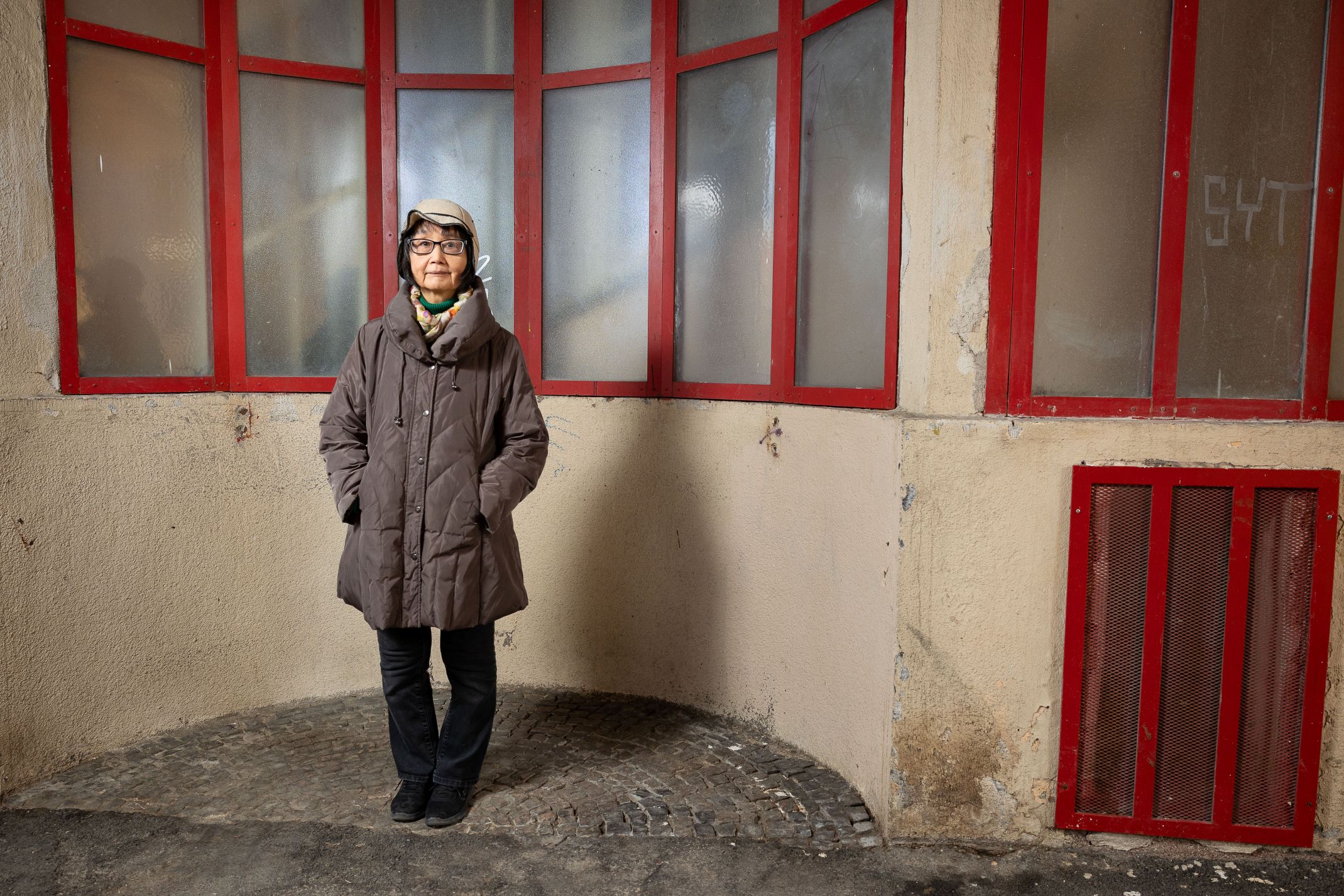
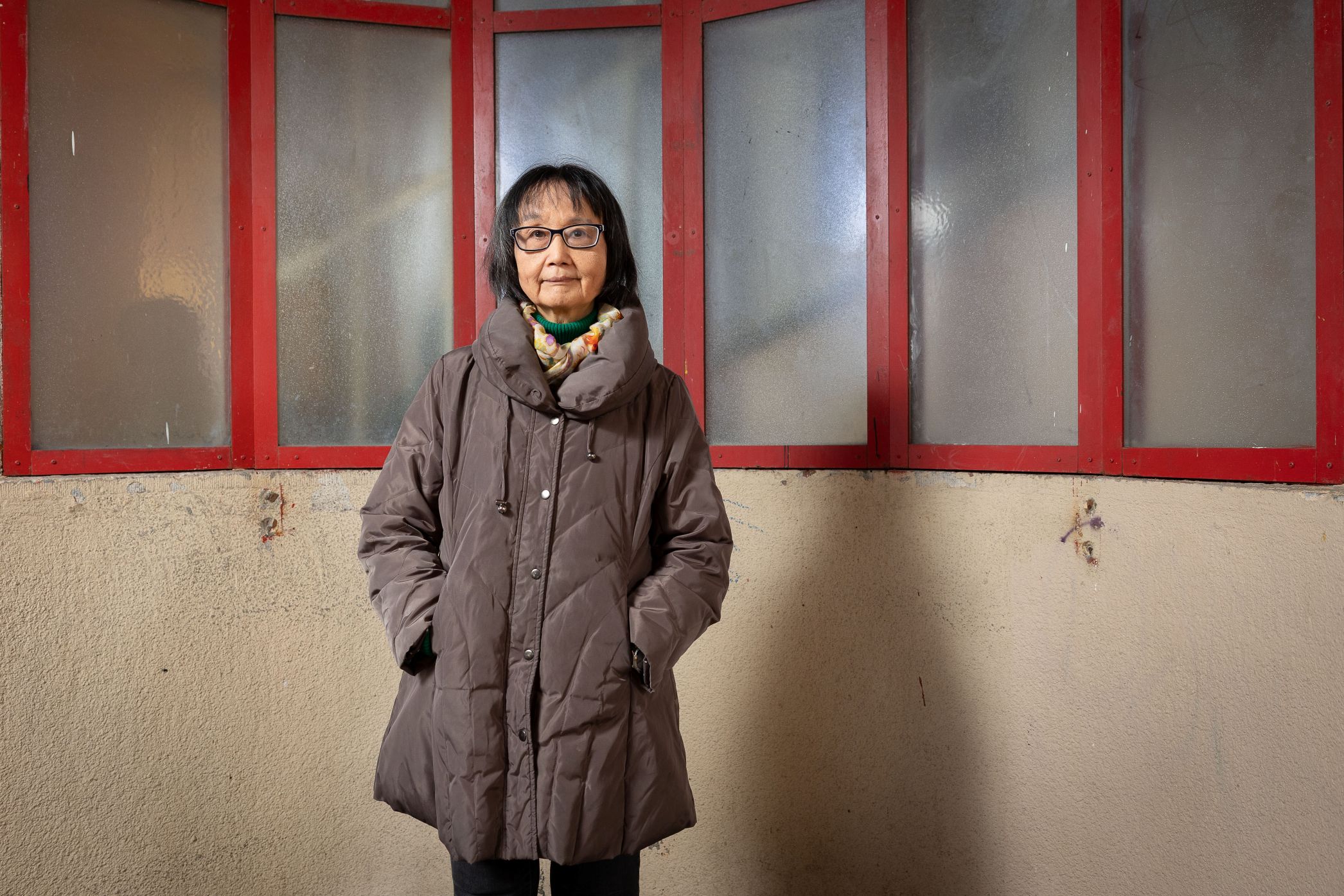
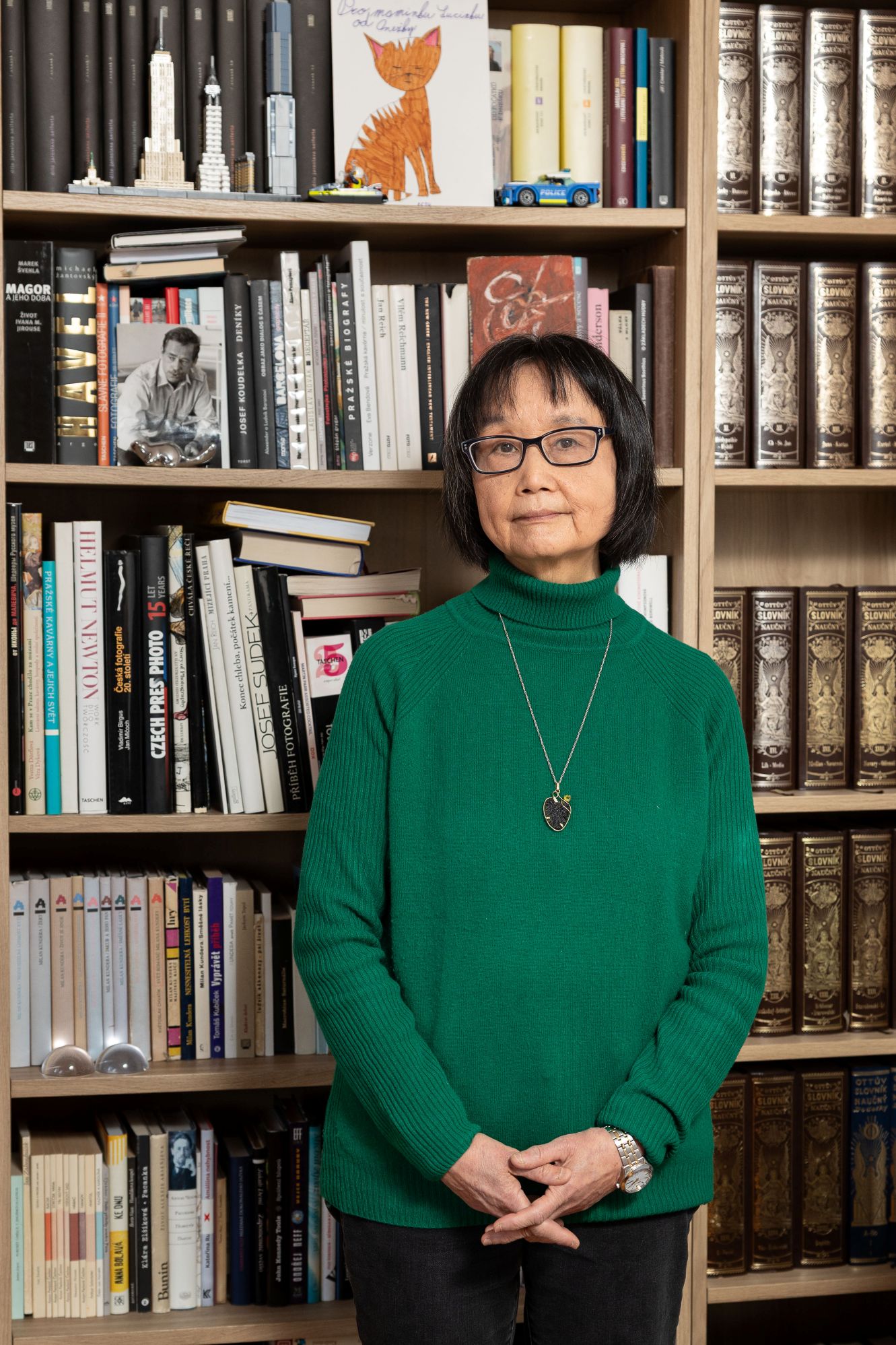
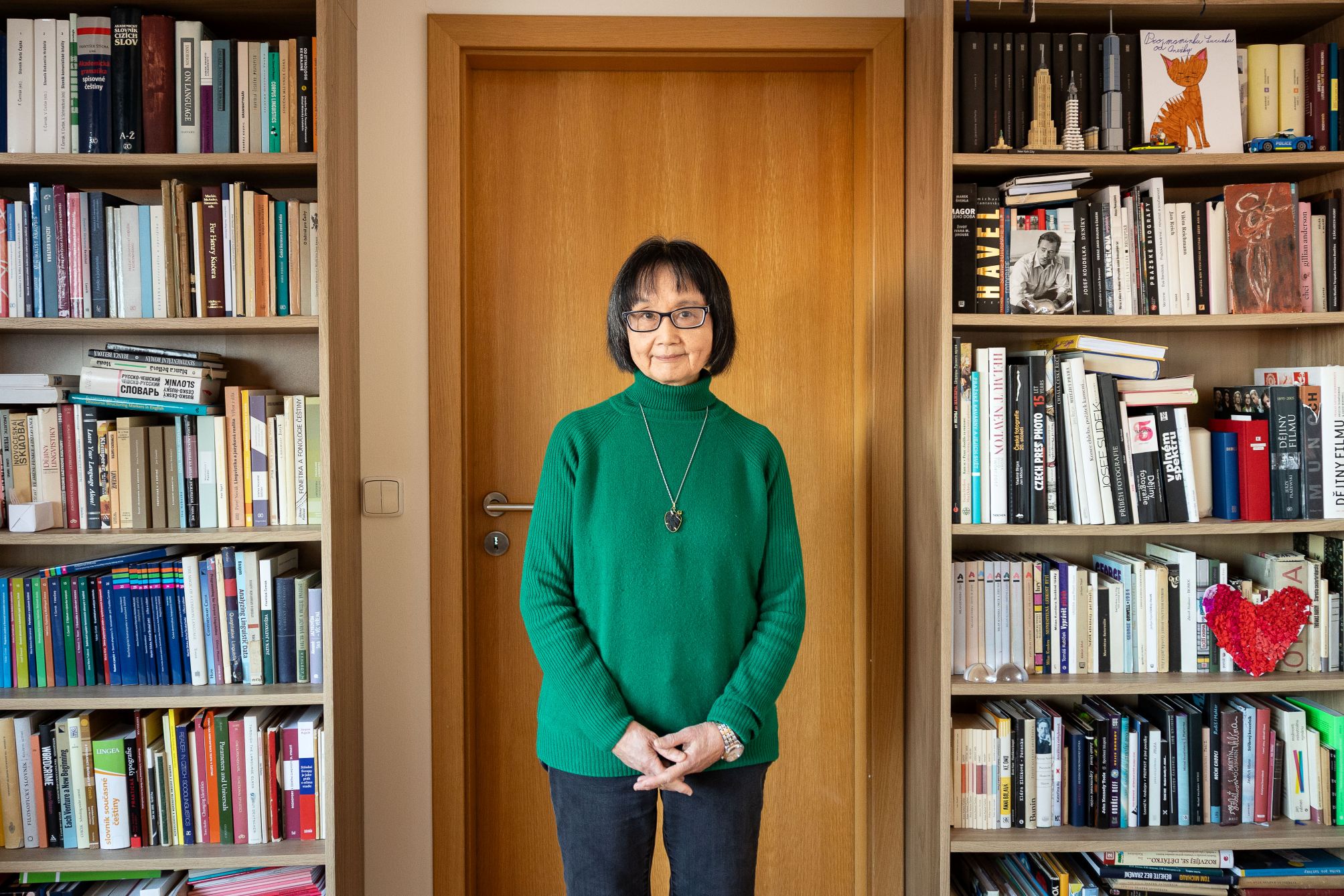
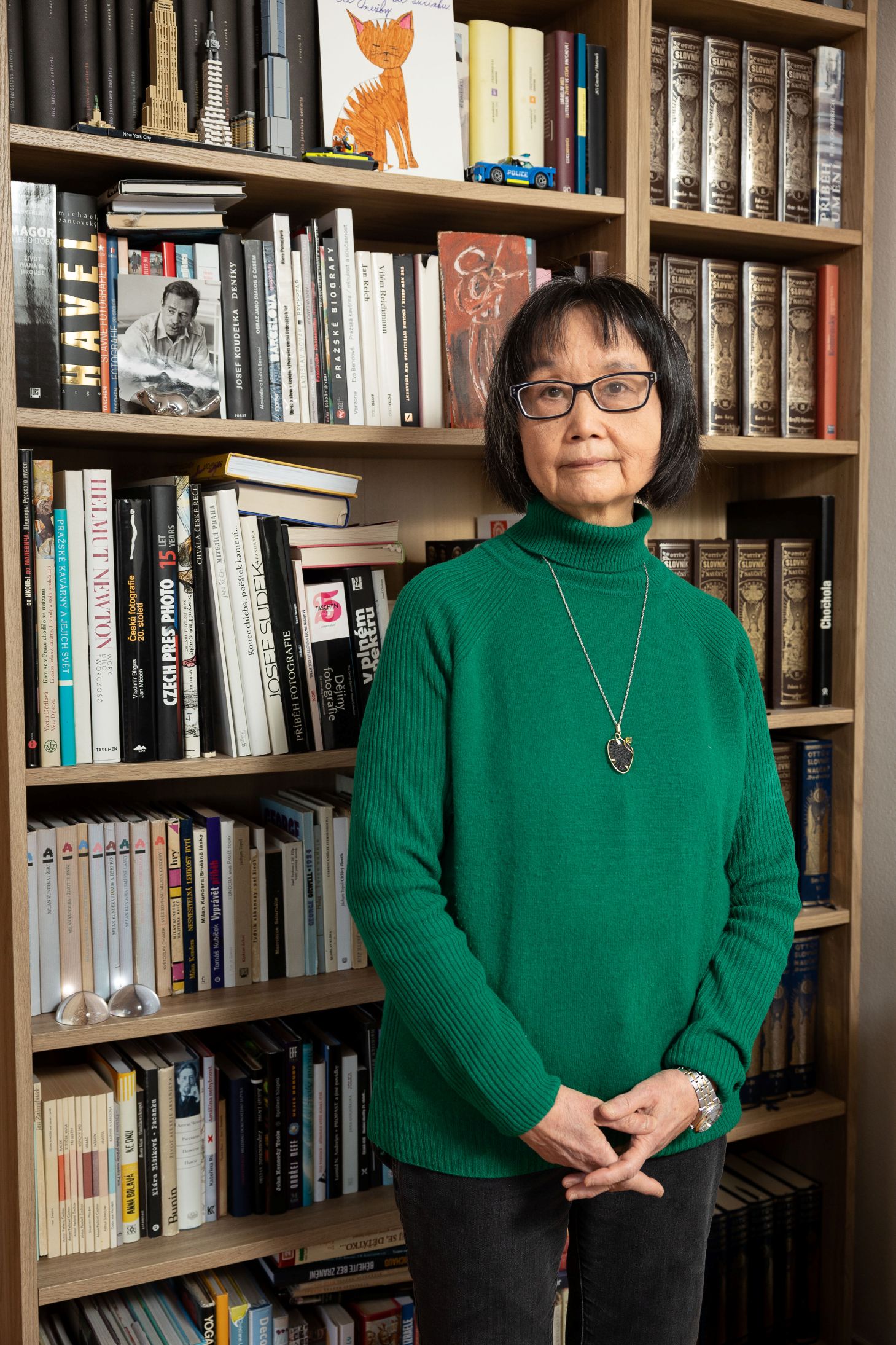
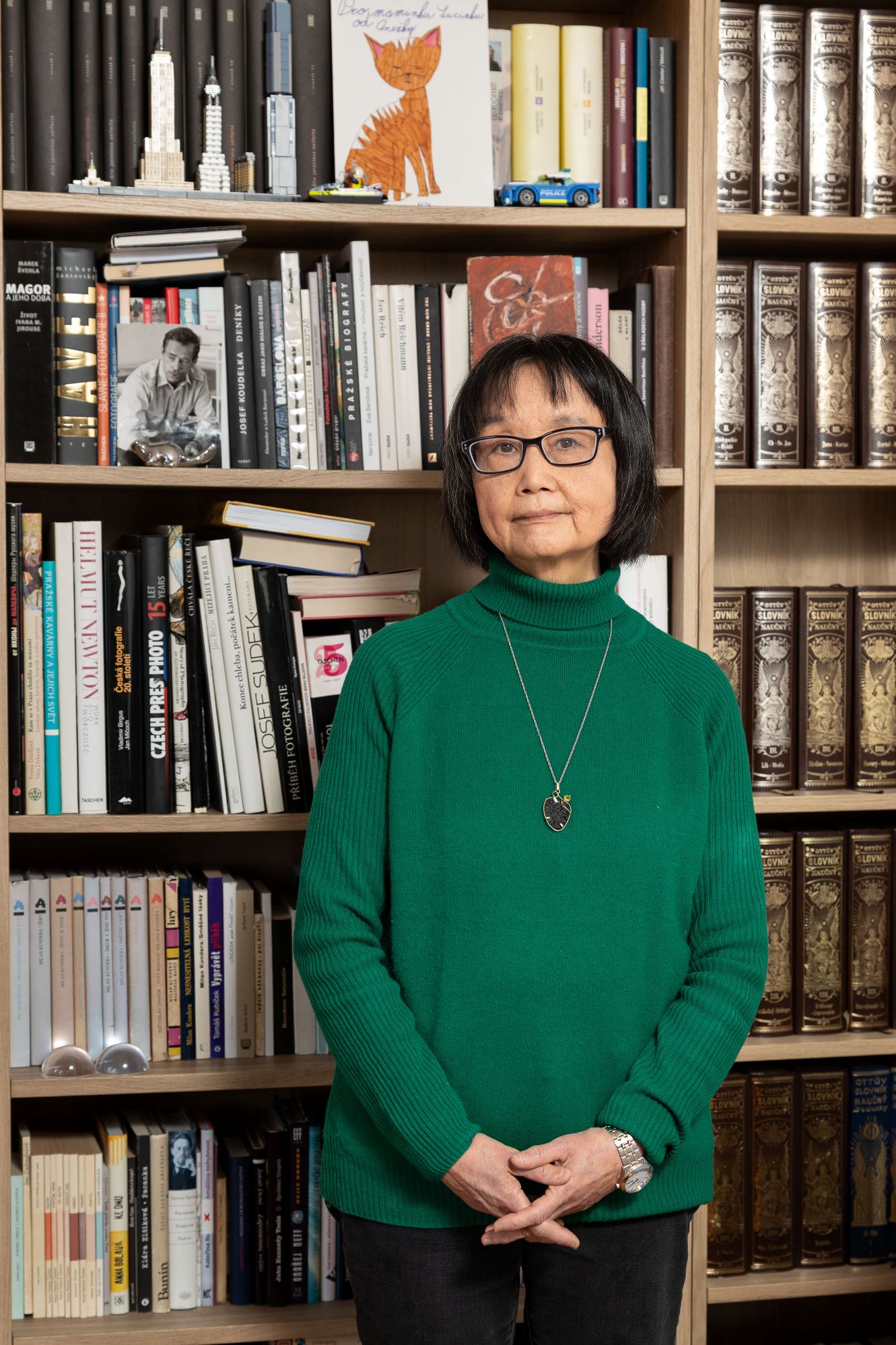
 A magnificent story of a bright and modest Japanese woman who listened to Slavic composers as a child, then graduated in Russian Studies from Waseda University in Tokyo before moving to California to study Slavic Studies and linguistics. Her research is going remarkably well. Masako Ueda Fidler lectures at the prestigious Brown University, part of the renowned Ivy League, where she conducts research and teaches – believe it or not – Czech. Since 2012, she has been fostering close collaboration under a multidisciplinary memorandum of understanding between Brown University and Charles University. “And it’s wonderful,” says Ms. “Mako” in flawless Czech. The whole story has a truly golden flourish: on 19 February, Masako Fidler received the Gold Medal of CU’s Faculty of Arts.
Congratulations on your well-deserved award. What was it like to receive such a prestigious academic honour at Charles University in Prague?
It is a great honour – not only for me, but for all the participants who have actively contributed to various joint projects and collaborations. I see this as recognition for everyone involved, especially since our inter-university agreement is truly built on meaningful projects. When we launched the initiative in 2012, we set a two-year trial period.
Is that how your collaboration began?
It was broader and more multidisciplinary right from the outset. Brown’s administration said we’d see how it would work out. And I said that if it didn’t make sense, they should feel free to let it go, to end it.
You want it to mean something – not just for the sake of a “piece of paper.”
Of course. Surprisingly, it was nice to see more and more colleagues and other departments gradually joining the memorandum. The interest was there. We should make our agreement even more visible! I don’t know how well-known it is throughout Charles University, but at Brown University it can sometimes be quite difficult – for example, to get some interesting information onto the front page of the website. Then hardly anyone knows that such an agreement exists, even though we’re doing our very best.
I did find a “Memorandum of Understanding” between Brown University and Charles University on your alma mater’s website. What is your role?
Yes, the memorandum of understanding. I’m the liaison for practically everyone, so I have at least a general idea of who my colleagues are across departments.
In which fields is CU considered an attractive workplace?
Our participating colleagues are “scattered” across various departments and fields, so it’s hard to sum it up in a single sentence. At the beginning, we decided that this should truly be a multidisciplinary agreement between universities, because Brown University prides itself on connecting meaningful ideas across disciplines. So I reached out to people here from history, Italian studies, Slavic studies, Egyptology, and so on. We pieced it all together. Right at the very beginning, we also had connections through applied mathematics to the Faculty of Mathematics and Physics at Charles University. There were Fulbright scholars from CU’s Faculty of Arts and the Faculty of Mathematics and Physics in the U.S.; for a while, there was someone from Charles University almost every year. That helped us a lot. And so, little by little, one project after another came to life.
When you say “every year,” did that mean for five or six years straight?
Right. I could mention Jiří Janák, for example, or Václav Kučera from the Faculty of Mathematics and Physics, as well as Martin Pehal, Ondřej Slačálek, and Václav Cvrček, now a professor (see the box below for more details).
| Multidisciplinary collaboration between Brown University and Charles University |
| Since 2012, Brown University (Providence, Rhode Island, USA) and Charles University have been collaborating on a number of projects, primarily in the fields of history and political science, Italian studies, digital humanities, American studies, applied mathematics, linguistics, chemistry, Jewish studies, Asian studies, and Slavic studies. The latter is an area of personal interest to Masako Fidler, who serves as the “faculty liaison” for the memorandum of understanding (MoU) between the two universities. Particular projects between Brown and CU include the work of linguist Václav Cvrček with “Mako” Fidler; political scientist Ondřej Slačálek with Holly Case; mathematician Václav Kučera with Chi-Wang Shu; Jewish and Hebrew studies scholars Pavel Sládek and Milan Žonca with Adam Teller; specialists in ancient studies Jiří Janák, Martin Pehal, and Jana Mynářová with Matthew Rutz, as well as multidisciplinary collaboration between Martin Procházka and Matthew Guterl. A host of CU academics and students have spent time at Brown University through Fulbright scholarships or as visiting professors. |
So, collaboration in linguistics had been going on for quite some time. Did the pandemic disrupt that?
COVID took its toll, so we had a few difficulties. That’s true. But things are moving forward; at the beginning of the year, we hold themed workshops, and we also invite undergraduate students from Brown University to participate. PhD students from Charles University are also getting involved. It’s truly alive. For example, the topics Holly Case and Ondřej Slačálek are studying are broad: “attention,” “community,” “imitation,” “apocalypse,” or “transcendental politics.”
So the "trial period" following 2012 turned out well.
Yes. We’ve successfully renewed and extended it. At first, it was a two-year “trial” period, then it was extended to four years, and recently we signed another extension. On that occasion, diplomatic representatives from the Czech Embassy also visited Brown.
What is it like to work in Slavic studies or Czech studies at Brown University?
We don’t offer a separate Czech Studies program. Our Slavic Studies program is structured quite flexibly. Students are required to take a language course—typically at least three years of Russian, Czech, or Polish, or two years of one of these plus two years of another Slavic language, depending on their course of study. In addition, they must take seven required courses in Slavic Studies, though these don’t have to be from our department. Students can also take courses in history, political science, and similar fields. It’s a great environment in that they can focus on what truly interests them.

Is it a bachelor’s (B.A.) followed by a master’s (M.A.) programme?
As far as Czech studies go, it’s primarily at the bachelor’s level. Students are usually admitted to Brown University on a general basis and don’t declare their area of focus until the end of their sophomore year. This is called a “concentration.” It’s not exactly the same as a “major” in the European sense; it’s more of a specialisation.
How many students interested in Slavic studies, across all categories, are enrolled at your institution?
At the undergraduate level, there are about seven or eight students each year, which I don’t think is too bad. For individual national literatures and languages, the numbers are often even lower. And because Brown University is so freely structured, these are often students who study, say, political science or economics and combine it with another field – they’re essentially double majors, if they set it up that way. They have a lot of freedom, as long as they’re motivated and meet the requirements.
What do you teach exactly? How many courses do you have?
My main position is in Slavic studies. Recently, I’ve also been more involved in general linguistics. I teach Czech as a language, lead a course on the sociolinguistics of Slavic languages in Central and Eastern Europe, and also teach a course on Czech animation...
Animation?
Yes, it is related to discourse analysis, which is what I primarily do. It’s actually a matter of reading a visual text. That fascinates me. I see it as a kind of experimental “laboratory.”
How do Americans deal with the Czech “ř”?
Bravely (smiles). The beauty of the programme is that we don’t have a mandatory foreign language requirement, so mainly motivated students enrol. That’s a positive, but also a negative, because they can leave at any time. It’s sometimes quite hard to keep them, but when they’re highly motivated, they really practice diligently. For example, I know one student who practiced his “ř” even while walking, to learn it well!
Is the “ř” difficult for them, or do they learn it? Even a lot of Czechs have trouble with it.
It varies from person to person – just think of Jiří Dienstbier Sr., who even gave a lecture here at Brown. But I don’t think that’s the toughest hurdle.
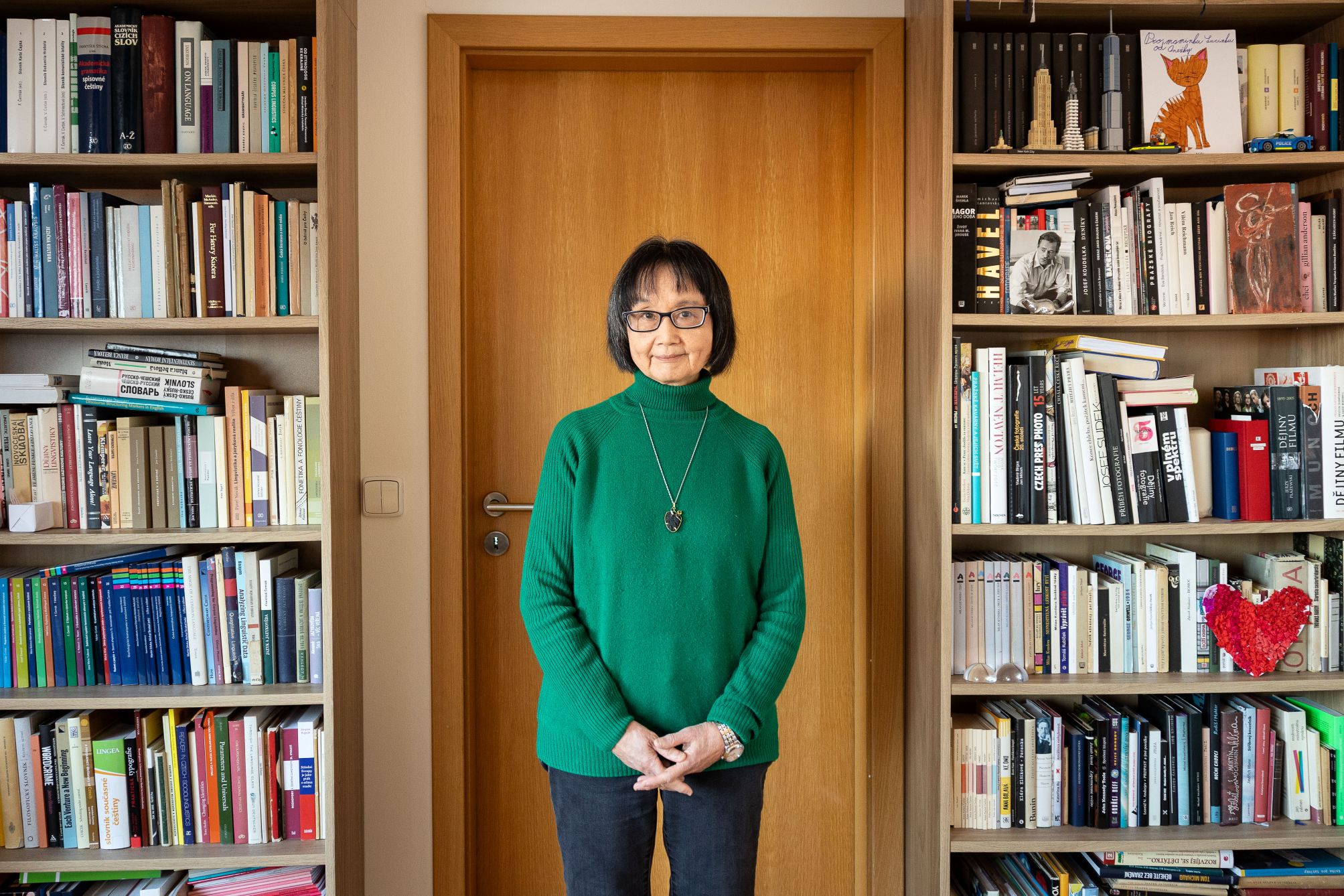
Among your Slavic studies students, is there a greater interest in Russian, Czech, or Polish? Which language do they tend to prefer?
Initially, students often don’t even know that Czech is an option. I think Russian is still the most dominant language. Some say it’s more practical, though now I’m not so sure about that…
I read that you got into Slavic studies through your interest in Russian classical music and Russian culture. What kind of classical music caught your attention? What was that initial spark?
It was mostly my grandfather, who was a conductor. He introduced Russian and Soviet composers to Japan. I used to look at scores and things like that at home. My father was also a lover of classical music; he would often call me into his study and we would listen to music together.
You studied at the prestigious Waseda University. Was your youth accompanied by music?
I originally wanted to study classical music, but I changed my mind because my hands aren’t large enough to play the piano. I’m glad I switched to linguistics. Music does help me, though, in the sense of sound. I can hear it. And I think Czech is the most beautiful language in terms of sound. It’s onomatopoeic.
That is a great honour!
It seems natural to me. It’s how I see it.
And through Russian composers like Prokofiev, Shostakovich, and others, did you also discover Czech classical composers?
We would listen to everything at home; we didn’t discriminate (smiles). I believe that my grandfather was the first person to perform Dvořák’s New World Symphony in Japan. During the war, they weren’t allowed to, because allegedly it was considered “American” music and forbidden to play.
Who is your favourite Czech composer? Dvořák, Smetana?
Probably Janáček. I’ve “felt out” his music on the piano, so I like him.
I once attended a concert in Tokyo by a Japanese pianist who studied music in the Czech Republic at the Academy of Performing Arts. I get the feeling that Japanese people really like Czech music, and that tourist interest in the Czech Republic is sometimes sparked by classical music in particular.
I think it is indeed the case. As early as the 1930s, Japanese musicians were traveling to the Czech lands or Germany to study. That connection is well-known and recognized.
On to literature. When did you first read Czech authors? Who caught your attention?
I’ve read Karel Čapek; we covered R.U.R. back at UCLA, though I think we only read one part of it. After that, I kept reading, this time directly in Czech, though not systematically. Later, I collaborated with Petr A. Bílek on literary texts, writing wrote summaries for students. I also read contemporary authors – I admire Radka Denemarková.
I’m also interested in which names are well-known in Japan. Čapek, Vančura…
Čapek is the best known in Japan. My colleague Kenichi Abe from the University of Tokyo is a translator of both Karel Čapek and Bohumil Hrabal (he has already translated about thirty Czech books – ed.); Josef Škvorecký is also well-known, and of course Milan Kundera. I read a lot of Škvorecký because of the language, and I even went to visit “his” Náchod. In America, Kundera is somewhat viewed in a French context, but in Japan, for example, the painter Alfons Mucha isn’t considered Czech; instead, his name is pronounced “Musha.”
What is the current status of Slavic studies in general in the U.S., where you are currently working?
N
I don’t want to generalize on behalf of the entire region, but I think the Cold War – and thus the “languages of the Eastern Bloc” – paradigm still persists to some extent. Language courses have historically been supported in America even politically; for example, the federal government poured money into Russian because it was strategically necessary. That framework persists to a certain extent. Unlike East Asian Studies, where language and literature are viewed in a “purer” and “more equal” light, Russian often dominates in Slavic studies.
Other Slavic languages are somewhat off the radar in the U.S., outside the major Slavic studies mainstream. In the early 1990s, there was a boom – Havel, the newly discovered Europe – and back then I had more students than for Russian! Things are different now, but the Czech program is alive and well. The Czech Republic is in the European Union. There is a demand for experts in Russian, Ukrainian… And where is Czech, I asked? They told me, “The Czech Republic is OK.” Things are changing. When you don’t have an “enemy,” funding is harder to come by.
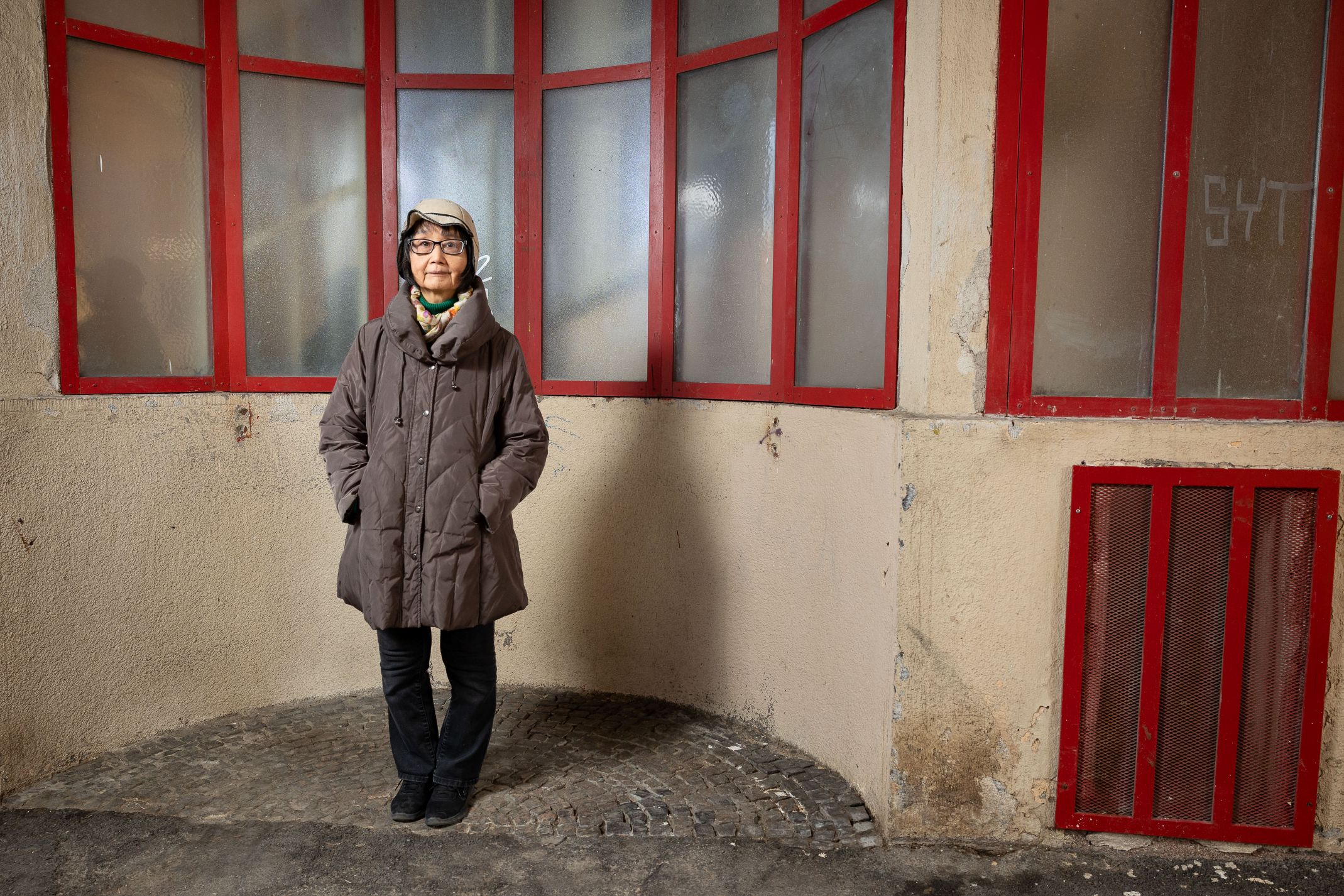
I recently spoke with a professor from Stanford University. I asked him what it’s like to do research today under the Trump administration, and he used the word “disgusting.” Funding is changing, as are NIH grants, especially for topics like climate change and vaccines… What is your take on this? How has the atmosphere at U.S. universities changed over the past year?
At universities, we are, hopefully, mostly liberal. The stance is clear. It is uncomfortable, of course. It goes against the sciences, against science in general, and against immigration. Where do we get our high-quality future scientists? Basic education isn’t very effective in America, so the U.S. has long been attracting the best people from abroad. It worked, and in the long run, this could ruin it.
I don’t want to push you into political topics, but they are somewhat close to home for you. Let me ask you this: you and your colleagues have been conducting a content analysis of disinformation. What did you find?
Yes, we have. Anti-establishment websites and tabloids latch onto topics that are mundane in the mainstream media, parasitically feeding off them. They often share some of the information with the mainstream, but then twist it in their own way, creating half-truths. They inject anti-European Union sentiment, pro-Russia rhetoric, and conspiracy theories into discussions about freedom… But it all builds up around topics that are widely discussed.
You also examined former President Gustáv Husák’s speeches. What was it like to examine the language of the Czechoslovak Normalisation period?
It was very interesting. I came across a compilation of Husák’s New Year's speeches from 1970, 1971, and so on, on YouTube. Things are repeated; the same points are made over and over, just using different wording. We conducted an analysis and compared the target corpus with reference corpora. We looked for what was abnormally frequent. When we compared it with the current reference corpus, communist and socialist vocabulary emerged as “keywords,” but without significant fluctuations, which may also reflect today’s reading, that it comes across as boring.
But when we compared it with the reference corpus from that period, certain fluctuations began to emerge as well. When something happened in Poland, the graph captured it. Toward the end of the 1980s, terms like “our,” “shared,” and similar (possession) declined, while the term “disarmament” rose sharply – a trend that even preceded Gorbachev’s visit. It was therefore interesting that this, too, may have subtly hinted at certain shifts in politics – and in advance, no less. An experienced reader might have sensed this from what was said.
I’ve read about your “needle in a haystack” method (NHM). What should someone unfamiliar with discourse analysis understand by that?
We work with very large datasets. Hay is somewhat monotonous; there’s just a lot of it. And then you find something in it that we call an “aha moment.” Partly because we have such a large amount of data, you can discover things you wouldn’t see when reading a single text. We’re continuing to develop this concept.
Which of your projects do you consider to be the most important? What do you value most?
I don’t know how my colleagues view this, but personally I think the important work is where we developed a method that originated in English-language analysis; however, it is more complicated for Slavic languages because here we have case endings, grammatical categories, and so on, which are not as explicit in English. We investigated whether we could find connections between minute morphemes, suffixes, and more general “sources” in discourse. I hope we found them.
Is that the focus of keymorph analysis with Professor Václav Cvrček?
Yes. Laura Alexis Janda from Tromsø, Norway, noticed this, and we joined her team. We then conducted a keymorph analysis of Vladimir Putin’s speeches. That’s a good move, an important step. This way, we can contribute to broader research through the use of Slavic languages.
How would you evaluate the collaboration with Charles University over the past nearly fifteen years?
It’s wonderful! Before that, I was doing mostly qualitative analysis, but it wasn’t working out for me, and I wanted a different, more “objective” way of working with the material. Then Václav Cvrček arrived as a Fulbright scholar at Brown University – and we began collaborating. It had a huge impact.
Lastly, what do you like about Czechs, the Czech Republic, and the Czech language?
That’s a big question. I think I like resilience, but the positive kind. Not “defenceless resilience,” but rather the ability to weather ups and downs – including political ones – without losing a sense of humour. Sharp humour, but positive! I think it’s a weapon. I like to cook Czech food; I’ve learned to make a lot of it. The only thing I wasn’t allowed to make was crackling. My husband, who is Czech, told me it wasn’t “for the kids.”
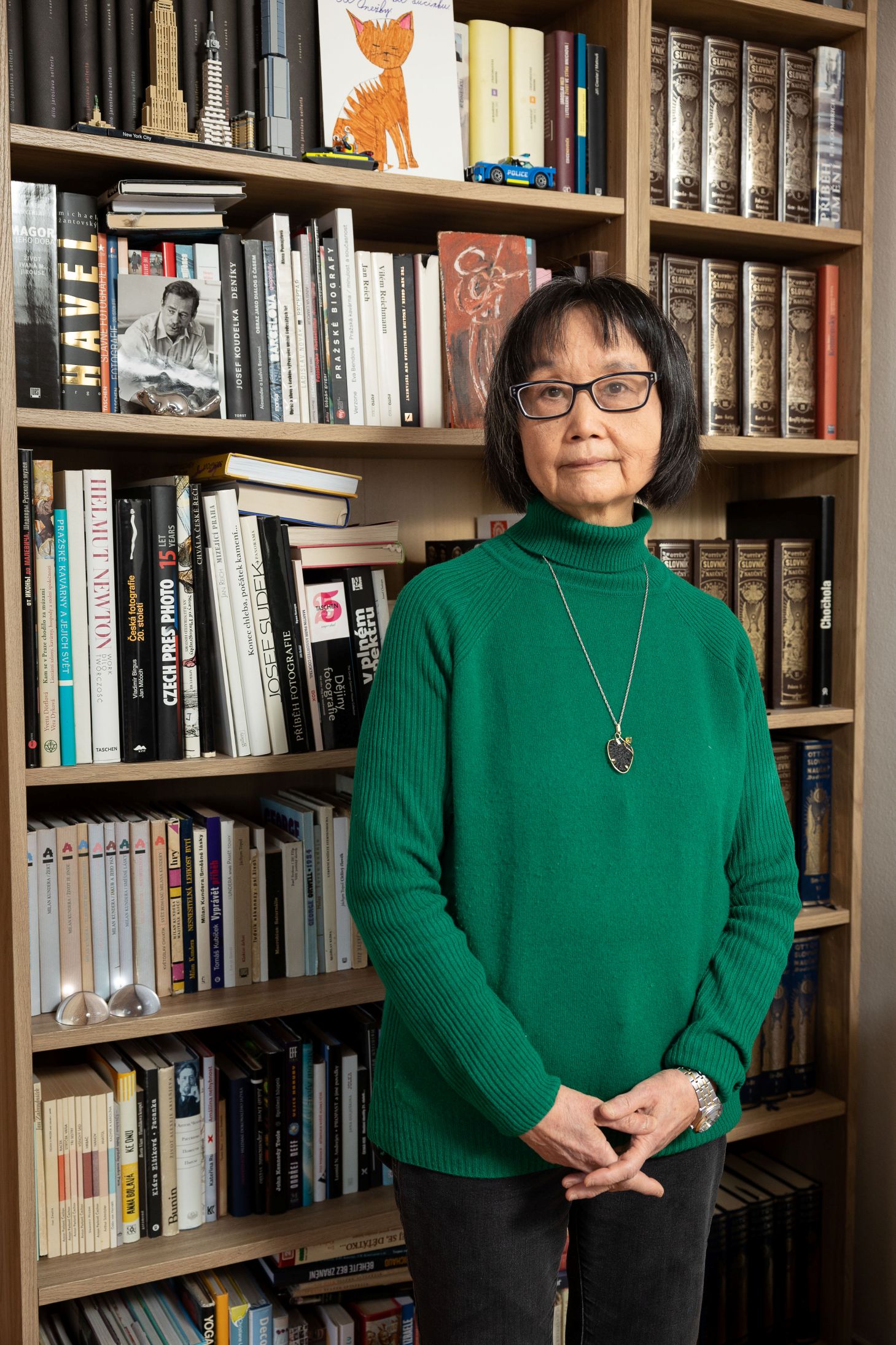
| Professor Masako Ueda Fidler |
| A Slavic and Czech studies scholar based at Brown University in Providence, USA. Her research focuses on corpus linguistics, discourse analysis, and the teaching of Czech. She holds a degree in Russian studies: she earned her bachelor’s degree in Russian literature in 1983 at Waseda University in Tokyo, followed by an M.A. in Slavic linguistics at the University of California, Los Angeles (UCLA, 1985), and a PhD from the same institution (1991). In her long-term collaboration with Charles University, she contributes to the development of corpus-based methods for the Czech language and to fostering connections among research teams in Prague and Brown. In February 2026, the Faculty of Arts at Charles University awarded her the Gold Medal for her exceptional contribution to Czech studies in the U.S. and for her contributions to the development of cooperation with the faculty. Together with Václav Cvrček, she edited the book Taming of the Corpus: From Inflection and Lexis to Interpretation (Springer 2018), which demonstrates how Czech corpora help shed light on issues ranging from grammar to the representation of gender and politics. Her article with Václav Cvrček, “Keymorph analysis, or how morphosyntax informs discourse” (2017), is also methodologically significant. Her grandfather was a prominent musician and, as a conductor, introduced Slavic composers to Japan. |