After four years in office as the first woman to lead Charles University, Milena Králíčková is stepping down as rector. “Being a rector is a service that involves seeking paths and connecting worlds. I'm sure we succeeded in some cases, but four years isn't enough time to do everything, ” she says, looking back on her time in office.
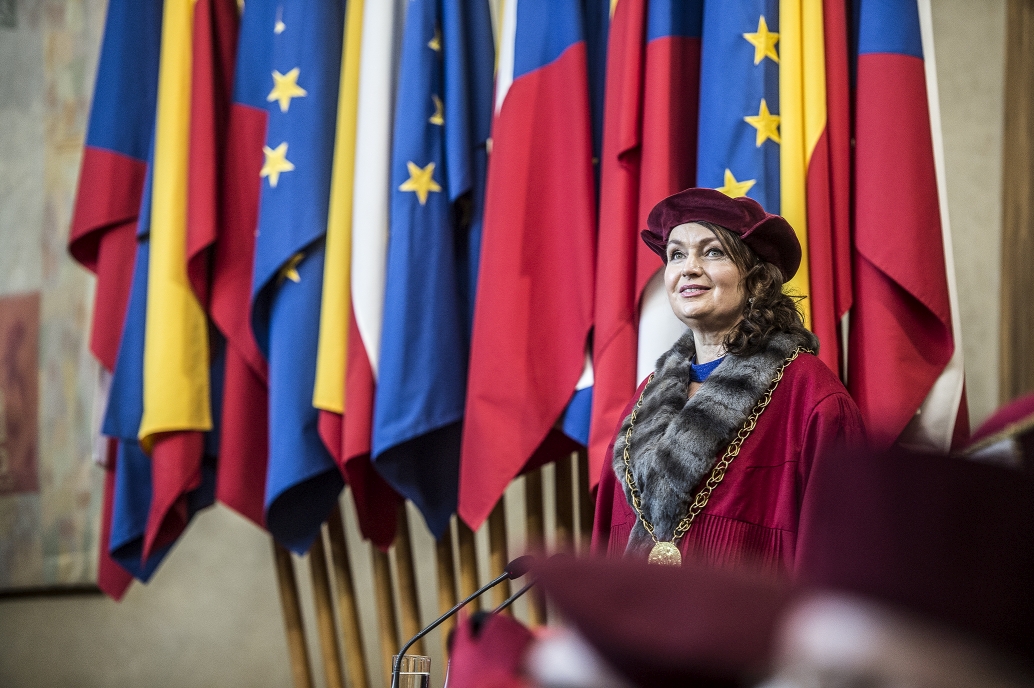
What is Charles University like at this moment? What kind of institution are you handing over to your successor?
I am handing over a university that is a national and international leader in many areas, but also one that is entering a challenging period of intense investment development. This will place considerable demands both on many of the faculties undergoing major construction projects and on the university’s leadership.
What are the strengths and weaknesses of Charles University?
Above all, the greatest strength lies in the people. I had the opportunity to visit all seventeen faculties repeatedly. The enthusiasm and the desire to push the university forward are truly our strongest assets. Throughout my term, the leadership strived to improve conditions for staff and students, aiming to become both a good employer and a good place to study. The major weakness is, without question, the underfunding of all public universities. Over the past four years we have experienced high inflation and stagnating budgets. All the more reason why I was genuinely pleased that in 2024 we succeeded in securing an increase for 2025 – roughly 800 million CZK for Charles University. This was achieved through the cooperation of the Czech Rectors Conference, which I chaired at the time, the Council of Higher Education Institutions, as well as many academics involved in initiatives such as “Hodina pravdy”. The current economic climate is difficult for society as a whole, and the fight for adequate funding will have to continue.
What do you consider your greatest achievements over the past four years? Which areas have you strengthened or advanced the most?
In addition to securing the abovementioned increase in funding – which was far from insignificant – we strengthened support for applicants for international grants. The team at the Research Department and the European Centre developed activities that provided better methodological and advisory support. In education, we expanded the system supporting young academics in their pedagogical and didactic skills, ensuring that every researcher arriving at Charles University has a foundation for high‑quality teaching. Average salaries increased by 34%. Dormitory renovations are underway. In study affairs, we introduced a new system of transfers between study programmes, enabled by changes in legislation, which should help more students complete their degrees. Support for mental health – including the creation of the Resilience Centre – and the general emphasis on well-being for both students and staff has also been crucial. We became the national leader in implementing micro‑credentials and contributed significantly at the international level to the development of the European Degree initiative.
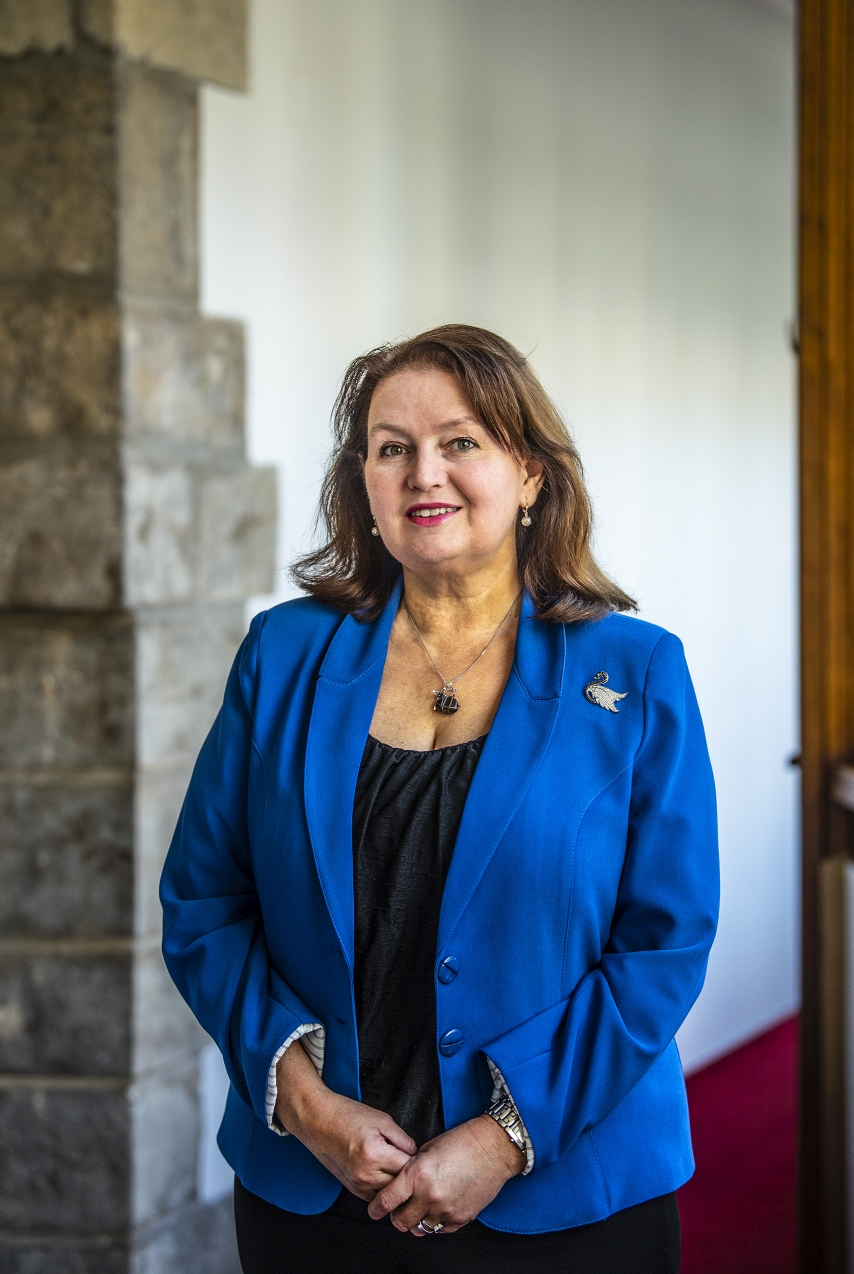
Shortly after taking office four years ago, you were asked about the three main goals you wished to fulfil – the kind of legacy you hoped people would recognise at the end of your term, to say: “Milena Králíčková was a rector who…”. You replied that you wanted to bring the university’s IT ecosystem into the 21st century, continue developing the campuses, and listen to people. Did you manage to achieve this?
My plans were certainly ambitious. To be able to fulfil all of them, I would have needed to succeed in securing a second term. For instance, modernising the information systems is not something that can be fully accomplished in four years in a way that every member of staff, every academic and every student would immediately notice a dramatic change. Nonetheless, in the field of IT we established order and processes and defined a clear development strategy. The incoming Vice-Rector, Martin Nečaský, will not be starting from scratch but will build on what was achieved under Vice-Rector Tomáš Skopal and Bursar Martin Maňásek. I am glad that the old joke – “make a wish upon a crashing SIS” – is no longer true (smiles). We now have a Charles University mobile app with more than 10,000 users, and that number will grow with every new cohort of students. So, in IT, I would say the balance is positive – although after eight years the progress would naturally have looked even more significant.
The second area – investment and construction – is, for me, both a plus and a minus. The MEPHARED 2 project will be completed on time, which required a very active approach on the part of the university’s leadership. Every large investment project comes with challenges, but this one has gone very well and is heading towards a successful completion in mid‑2026. The Albertov campus situation is more complicated. The construction has been delayed due to factors beyond anyone’s control, such as an unexpectedly extensive archaeological survey. The current completion date is set for early 2028. Securing additional funding for the Albertov campus will be a major task – and a major concern. It is now essentially certain that a loan will be needed for the final stages. I am fully aware that I am not handing this project over in a carefree state, but investment construction is inherently demanding and inevitably full of risks.
As for listening to people – I believe I succeeded. This goal is about cultivating relationships, which require continuous care. We held “Breakfast with the Rector” sessions at all faculties, visited faculty boards, and my vice-rectors were in close contact with their departments and with faculty vice-deans. At the same time, the university is such a large and complex institution that no leadership team can be present in every situation as university management – many issues must naturally be solved at the level of departments and faculties.
After four years of your leadership, is Charles University a more unified institution?
In 2024, after the tragedy at the Faculty of Arts, we experienced a moment of genuine unity – we truly stood together as one academic community, one academic family. Logically, during times of financial pressure and in the run‑up to elections, divisions begin to appear within the academic community. What matters, however, is our ability to come together again and remember that we share a common goal: internationally competitive science and education, care for our students, and pleasant environment for our staff.
Have you managed – at least within Charles University – to improve the position of women in science?
The experts on the Equal Opportunities Council worked exceptionally well. They proposed concrete measures that we gradually carried out – for example, setting up childcare groups at several faculties, enabling part‑time contracts, and various return‑to‑research grant schemes. However, I believe that both the Czech Republic and Charles University still have a great deal of work ahead of them. When we look at the proportion of women in science across the European Union, the Czech Republic is at the tail end. We must continue striving to increase the number of women in science.
As the first female rector of our university, did you personally face any situations that were more difficult because you were a woman?
I am not sure I can fully evaluate that yet. Perhaps I would be able to answer this question better in six months’ time. What I can already say, however, is that there were moments when I realised just how much difference it would make if there were more women in politics. When I was negotiating with ministers, MPs and senators, it became very clear to me that women are underrepresented not only in academia but also in politics as such. I am convinced that truly inclusive leadership – one that incorporates diverse perspectives – is of higher quality. That is why I would like to see more women not only in academic management, but in leadership roles in general, and also among those who shape public policy and the development of society as a whole.
You met many prominent women in high positions. What did those encounters give you?
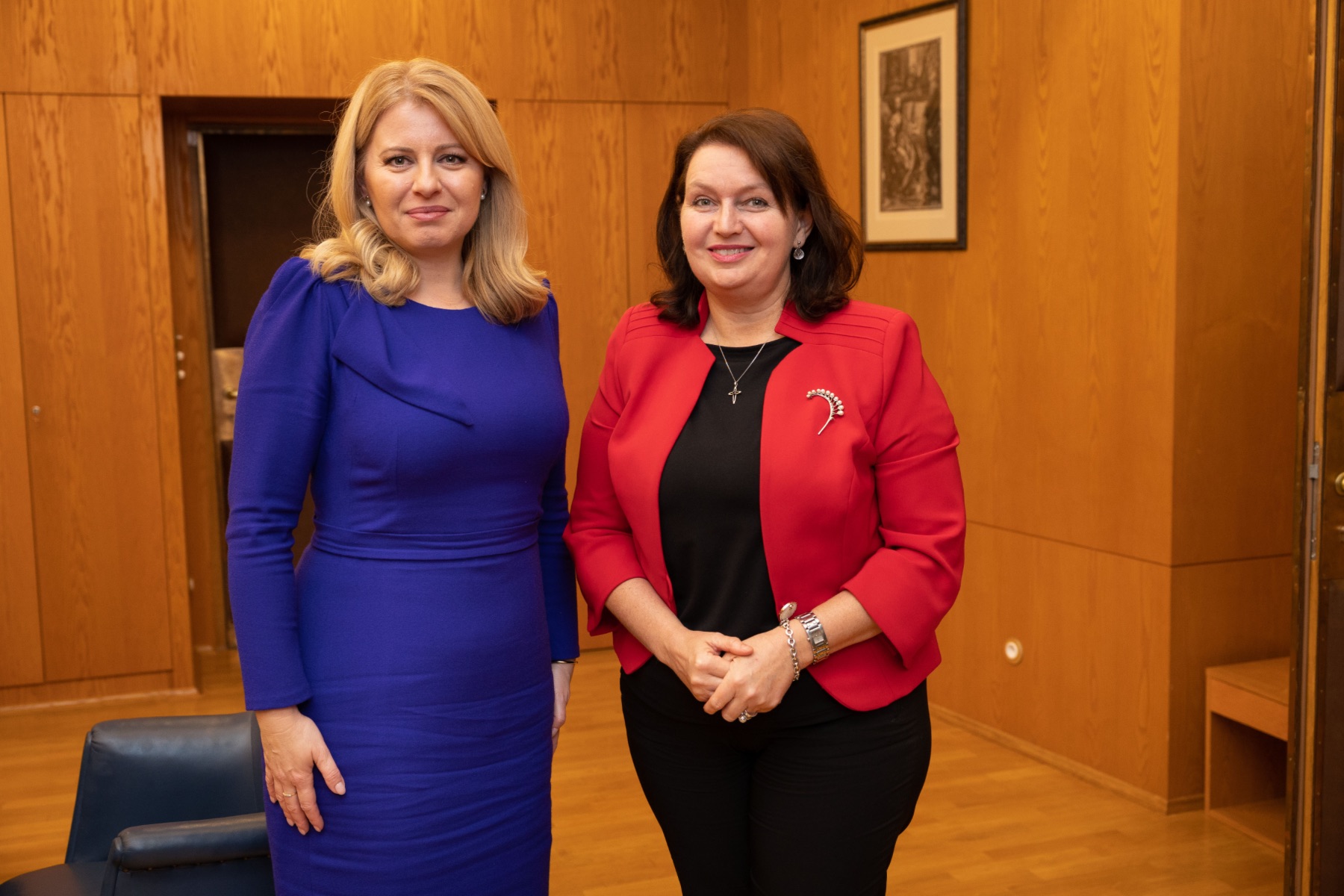
I am deeply grateful in particular for all my meetings with Zuzana Čaputová, whom I admire immensely. She is a woman who has always stood firmly by her principles, even in extremely challenging periods when her role and her work were openly questioned. I hold her in the highest regard and sincerely hope she will visit Charles University again – to me, she is a true icon.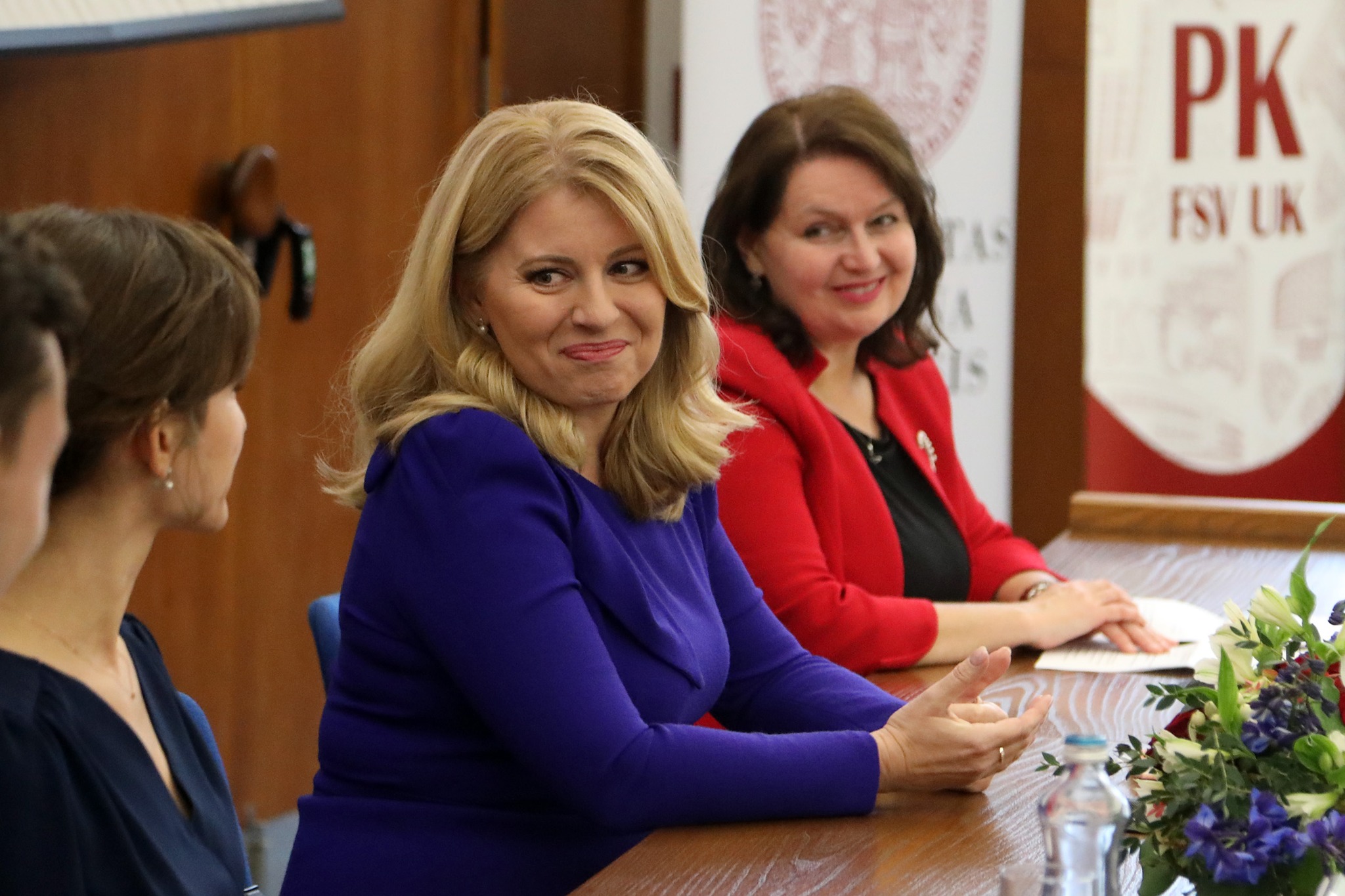
Which other meetings with statesmen or notable figures stand out in your memory?
For example, the meeting with Portuguese President Marcelo Rebelo de Sousa, who is a university professor. A remarkably energetic man who captivated the students, and his visit ended up lasting about two hours longer than planned. But in my heart, alongside Zuzana Čaputová, the meeting that will stay with me forever is the visit of Volodymyr Zelensky. He is an extraordinarily brave man, a dignified leader. I was moved when he entered my office, looked around at the papers and my team, and said: “This is a room where people truly work.” He struck me as exceptionally genuine and warm. He was also incredibly engaging when speaking with Ukrainian students, for whom the meeting was a complete surprise – for security reasons, they had not known he would be there. He is a straightforward person and a leader in the best sense of the word. He has my lasting admiration, and I will never forget that encounter.
Shortly after you took office, the COVID‑19 pandemic was still subsiding, the war in Ukraine began, and it was necessary to support Ukrainian students and staff. In December 2023, Charles University was deeply shaken by the tragedy at the Faculty of Arts. How much did these moments affect you personally?
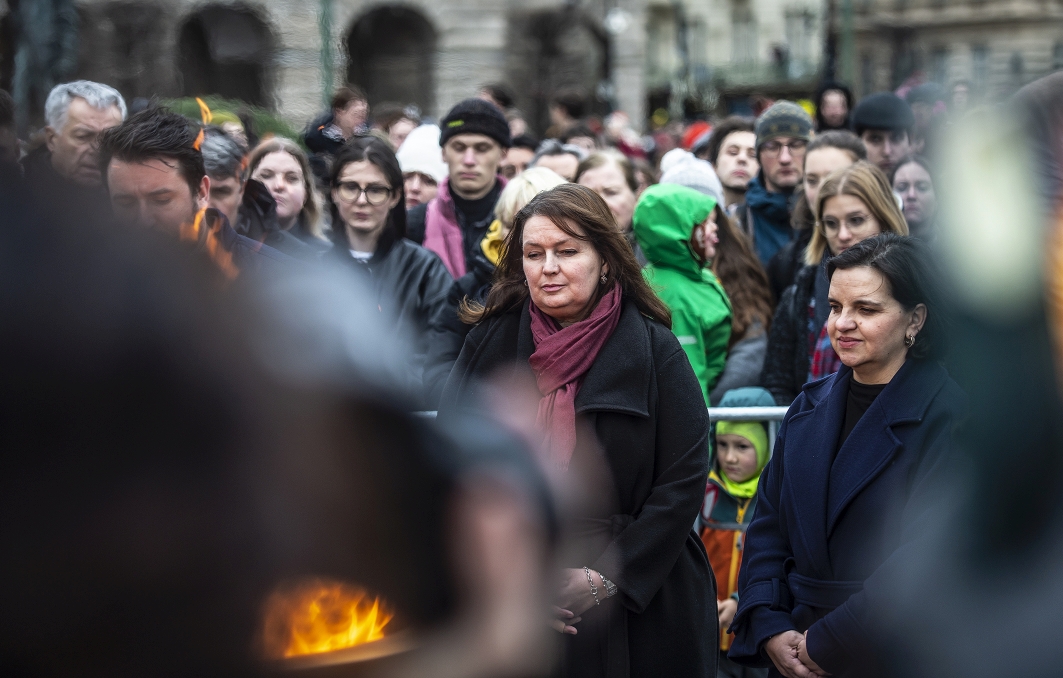
The tragedy at the Faculty of Arts affected me the most, of course. I wished we had been able, as a university, to care for absolutely everyone and meet all needs – but that is, unfortunately, impossible. One of the most valuable pieces of advice I received at the time was: “You will never be able to meet everyone’s needs. Prepare yourself for that.” There will always be people for whom what we do is not enough – not because they are demanding, but because human needs are individual, varied, and no system can fully meet all the needs of those who have been affected and who require support to heal. Another piece of advice came on the second or third day after the tragedy. We were spending long hours in the crisis team, trying to find ways to help the bereaved, the injured, and everyone psychologically affected. Then someone said: “You are sprinting now – but this is not going to be a sprint race. This will be a marathon.” And they were right.
Even now, the university has hundreds, perhaps thousands of people who still need our help because they suffered trauma. Some were not even present at the faculty when the attack happened, yet they were deeply affected. Psychological trauma layers upon previous trauma; one such experience can compound another, and all these people need care. We are still running that marathon. I am very glad that, through the initiative of the bereaved, the injured, and those affected, the Spojeni nadějí association was founded, and that we have the Resilience Centre. We are not forgetting that care must not cease.
What else surprised you about the role of rector? What was the most difficult part?
That is a question I really need to think about. There were certainly many difficult moments. These were often situations where you have to find a common denominator across the entire university, knowing that each of the seventeen faculties has valid reasons to defend its own position. One particular example was the moment when we received a very inadequate allocation for salary increases. The arguments of each faculty were entirely legitimate, and I stood there among seventeen deans, trying to find a compromise. At the same time, being a rector is a service – a role in which you are meant to seek solutions and connect different worlds, and that is what I always tried to do. Sometimes it went better, sometimes less so.
Should a rector be more of a public representative of the university, or more of an executive manager? Which did you personally lean towards?
Every rector must find the balance that suits both their personality and the current needs of the institution. There is nothing wrong with that balance being different for different people. After eight years as vice‑rector, I knew I would face a great deal of interaction with people across the university, a lot of managerial work, and also plenty of work with politicians. Over time, the proportion shifted. The most challenging period for political negotiations was 2024, when it was necessary to secure an increase in funding. At that time, I was also chair of the Czech Rectors Conference, so communication with members of the government and parliament was extremely intensive. But there is no universal recipe. Personally, I put great value on working meetings with people. I enjoyed visiting not only deans but also secretaries and department heads at the Rectorate – it always felt meaningful.
How did you manage all this workload? What was your average working day like?
Meetings took place every day from around nine in the morning, sometimes until six or seven in the evening, with working dinners often lasting until eight. As a result, I frequently sent emails at night, early in the morning, or during weekends – I hope it did not inconvenience people too much (smiles). I was able to keep going because the work genuinely brought me joy and fulfilment. I did, however, neglect my own health a little, so one of the first things I will do now is go for a preventive check‑up – something I haven’t managed in the past four years.
Which of your colleagues were your greatest support?
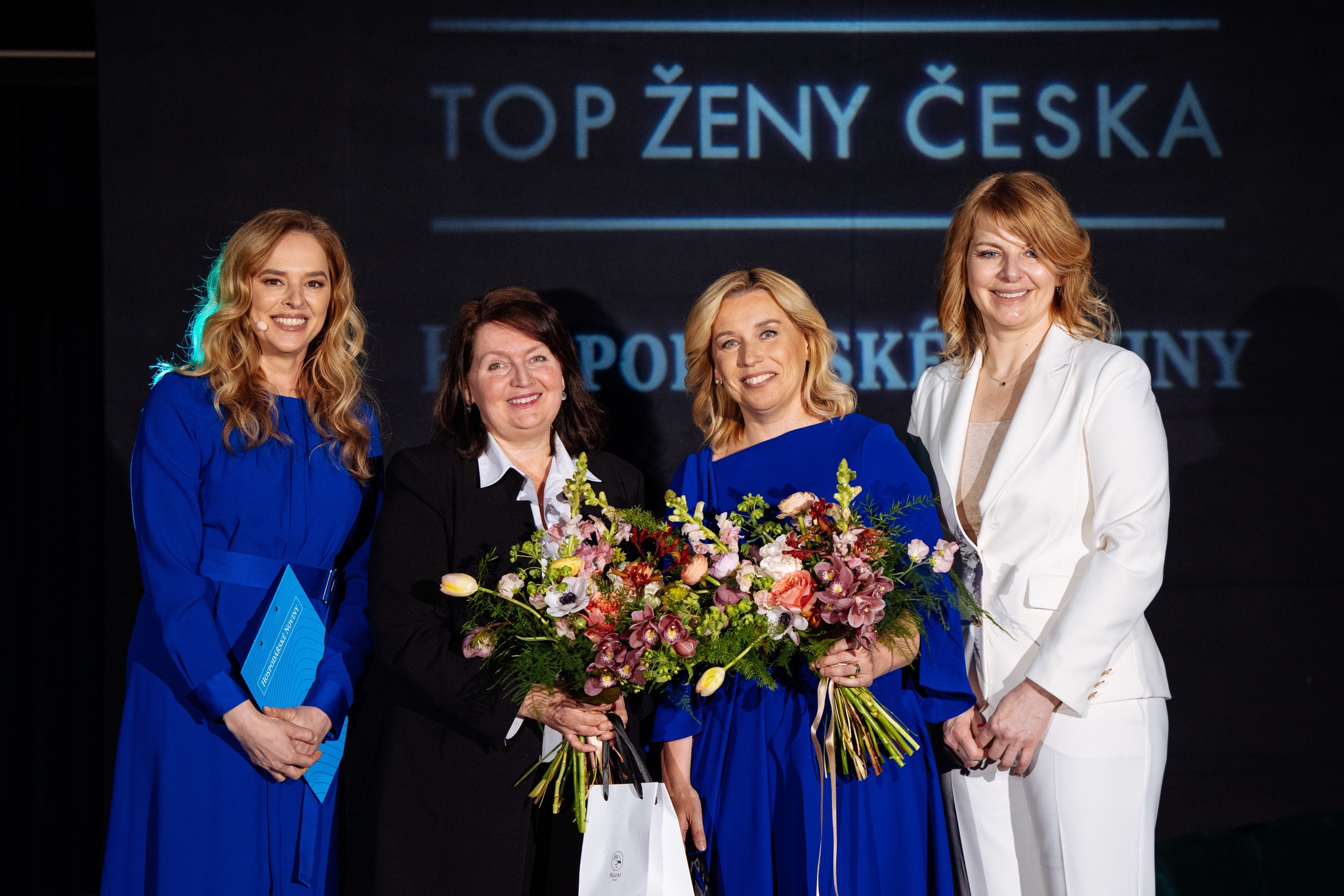
Both institutionally and personally, I relied heavily on Bursar Martin Maňásek and Chancellor Petra Štanclová. Both are exceptionally hardworking and meticulous, and they truly listen. Their commitment went far beyond what could reasonably be expected.
How did your family cope with your work over the past four years? Was it difficult to combine the role of rector with being a wife and the mother of two teenage daughters?
I am extremely fortunate to have a very supportive husband, and both my daughters have grown into highly independent, self‑reliant young women. The three of them always stood by me. I also have a wonderful mother, who has been a great support, as have my siblings. In moments of personal loss – such as when I lost the rectorial election in October last year – it meant a great deal to hear: “Life isn’t only about winning. Who we really are is revealed not when we win, but when we lose.”
Are you very disappointed that you will not be able to continue as rector for another four years?
Yes, I am. There are many things I would have liked to complete. On the other hand, I am truly grateful that I have already been meeting with Professor Zima (the incoming rector – editor’s note) and members of his team for some time now, and that we are handing things over. Some of them will be challenging, particularly the investment projects. But I believe solutions exist, and I sincerely wish Professor Zima great strength to tackle these unfinished and difficult responsibilities with his new leadership team.
Where will you be working from 1 February onwards?
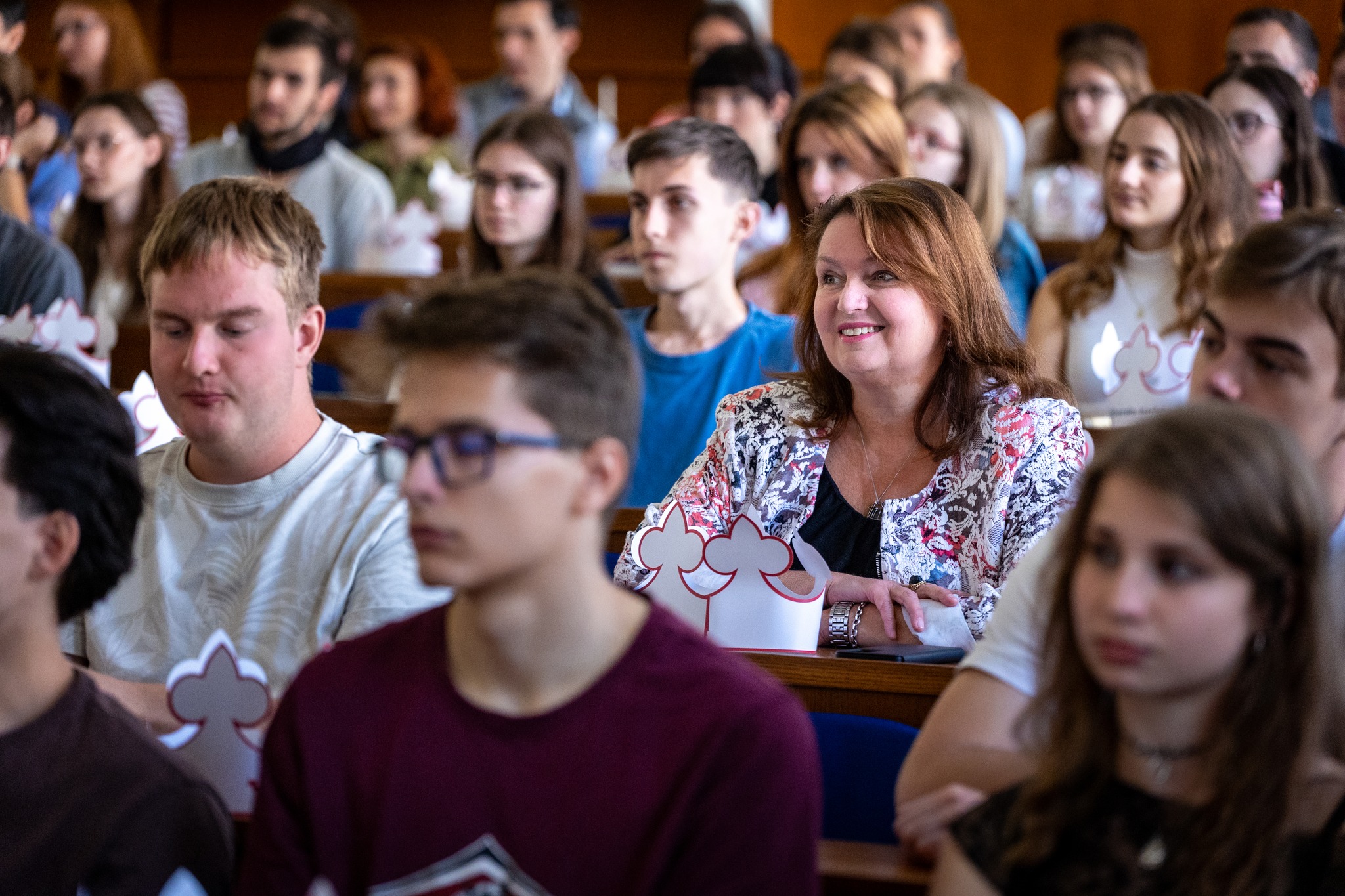
I am a graduate of the Faculty of Medicine in Pilsen, where I previously worked at the Institute of Histology and Embryology and at the Biomedical Centre. I am glad to be returning to both workplaces. I am also very much looking forward to being back among students.
Were you able to stay at least somewhat connected to research in your field during your time in university leadership?
Since December 2023 I have had almost no capacity to devote myself to scientific work or to teaching in the way I would have liked. The years 2024 and 2025 were so demanding that only now will I be trying to fully “jump back on the train”.
Before becoming rector in 2022, you spent eight years as vice‑rector in the team of your predecessor, Tomáš Zima. Will you miss the Rectorate and the active role in the university leadership?
I will certainly miss meeting the many wonderful people who work at the Rectorate – people who, over those twelve years, have grown tremendously and whom I consider outstanding professionals. I deeply value the work of non‑academic staff at the faculties and at the Rectorate.
What are the three main challenges that Charles University will face in the immediate future?
Let me start with an external factor that will require ongoing effort but is not entirely within our control: funding, and the continued struggle to reduce the chronic underfunding of public universities. Closely related to this is the biggest task I am handing over to the leadership of Jiří Zima as a work‑in‑progress – the completion of investment construction. The third key area is certainly the further strengthening of international competitiveness in research: securing more international grants, as well as advancing the international dimension of education. And we must not forget artificial intelligence. Very soon, universities will split into two groups: those that systematically develop high‑quality work with AI, and those that fall behind. I sincerely hope Charles University will belong to the first group.
What farewell message would you like to leave to our entire academic community?
First, I would like to wish the new leadership great strength, energy and success, because once you have walked in the rector’s shoes yourself, you know that anyone in that role will face a difficult task. The challenges ahead – investment construction, renewal of institutional accreditation, and support for international grants – are all demanding.
Second, I wish all academics, researchers, staff members and colleagues that they may work at the university with joy; that their work brings them fulfilment; and that they feel they, too, contribute to the significance of Charles University and its impact on Czech society. I hope that this awareness brings them genuine satisfaction.
And to our students, I truly wish that studying at Charles University becomes a positive milestone in their life journey. We do not offer only education and information, but also values. Having observed the university for the past twelve years as vice‑rector and rector, I am convinced that we are heading in the right direction.
| Prof. Milena Králíčková, MD, PhD |
|
From February 1, 2022, to January 31, 2026, she holds the position of Rector of Charles University, and from August 1, 2023, until the end of her term as Rector of Charles University, she is the Chair of the Czech Rectors' Conference. From 2013 to 2022, she served on the collegium of Rector Tomáš Zima as Vice-Rector for Academic Affairs at Charles University. She is a graduate of the Faculty of Medicine at Charles University in Pilsen and spent a year at Harvard in the United States as part of the Fulbright Program. After completing her doctorate, she worked in reproductive medicine and embryology at the Gynaecology and Obstetrics Clinic of the University Hospital in Pilsen and taught at the Institute of Histology and Embryology. She is now returning to the Faculty of Medicine of Charles University, where she previously served as the head of one of the research programs at the Biomedical Center. |