

What happens when PhD students leave the familiar environment of their research fields and start working on problems they have never encountered before? The 4EU+ Entrepreneurial & Intrapreneurial Project Management programme brings together researchers from eight European universities and a wide range of academic backgrounds.
At Charles University, the programme is coordinated by the Centre for Knowledge and Technology Transfer in close collaboration with the 4EU+ Local Office, connecting the initiative with the university’s broader efforts in knowledge transfer, innovation and collaboration beyond academia. Over eight months, participants worked in interdisciplinary teams on real challenges proposed by external partners, often exploring topics far outside their own research areas and learning how different types of expertise can be combined to develop practical solutions.
“As the programme’s lead coordinator for Charles University and a tutor, I have the opportunity to observe how, over the course of each cycle, individuals from diverse academic, professional and cultural backgrounds gradually become genuine teams capable of tackling complex challenges together,” said Veronika Haissingerová from the Centre for Knowledge and Technology Transfer at Charles University.
Since joining the programme in 2024, Charles University has successfully completed its second edition, with preparations for the next cycle already underway. For Haissingerová, one of the programme’s greatest strengths is that it gives PhD students the opportunity to develop competencies that are often difficult to acquire through specialised research alone. “Participants learn how to lead teams, manage international projects, communicate across disciplines and make decisions in uncertain situations. They also discover how their research knowledge can be applied outside academia and contribute to solutions with real societal or economic value,” she added.
Real Challenges, Global Industry Partners
“We entered the programme with high expectations. As a corporate partner, we brought a real strategic challenge and expected high-quality analysis, new perspectives and concrete proposals that could help us further develop our approach to corporate financial health. Those expectations were met. The students’ work was of a high standard, offering an inspiring perspective on the future of financial health as well as a well-developed prototype solution for George Business. To me, this demonstrates the value that partnerships between academia and business can create when they are built around a real challenge and bring value to both sides,” said Adam Daniel, Product Owner for Corporate Financial Health Advisory and Entrepreneurship Academy at Česká spořitelna.
The programme connects academic expertise with real-world challenges from industry and other sectors. This year, teams worked with companies and organisations including Boehringer Ingelheim, TCA SpA, Česká spořitelna, SUEZ, TFI PZU and Quantum4Purpose on topics ranging from healthcare and sustainability to finance and emerging technologies. Working with external partners required participants to consider not only the creativity of their ideas, but also their feasibility, implementation and potential impact.
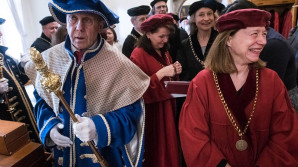
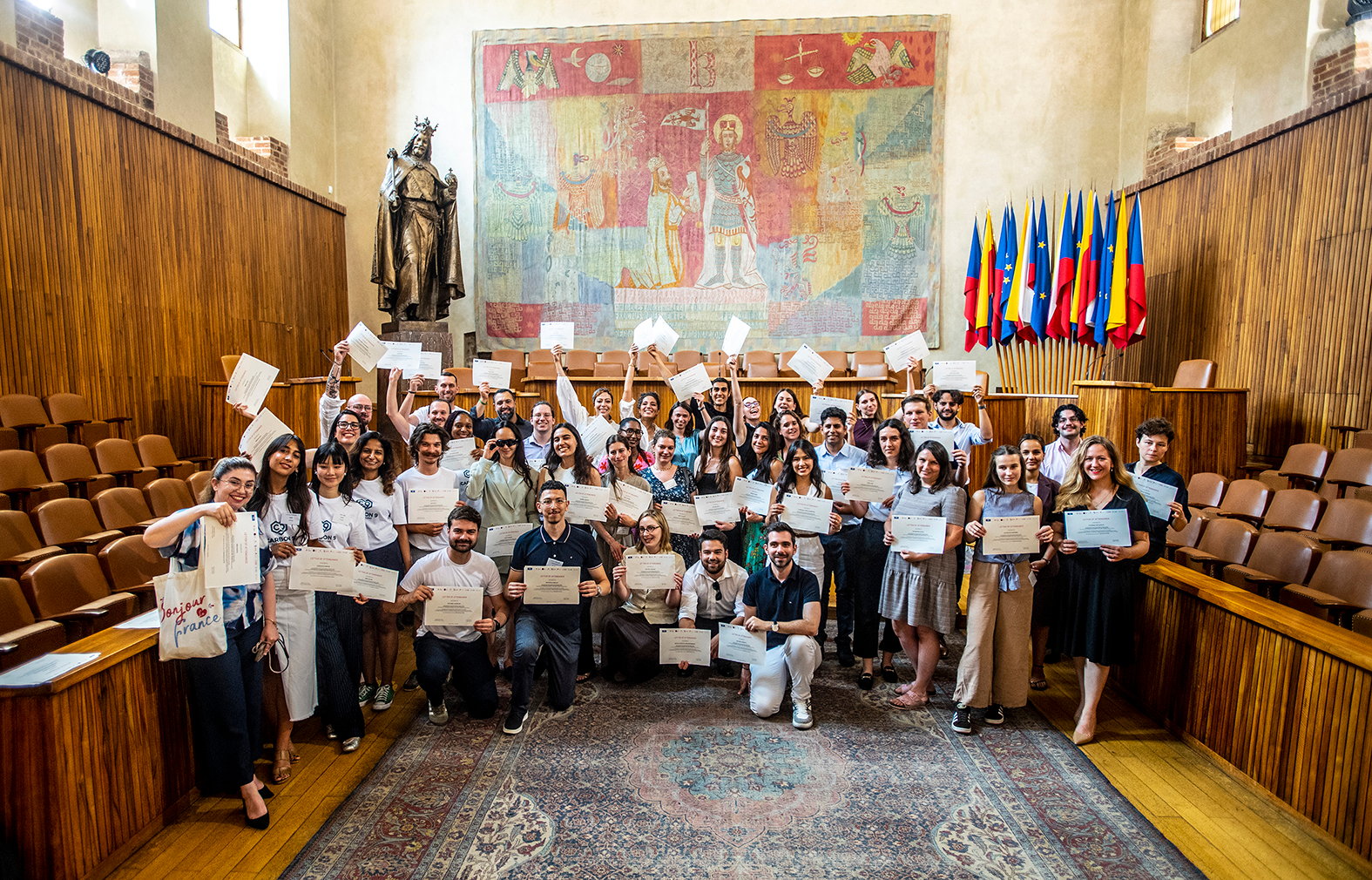
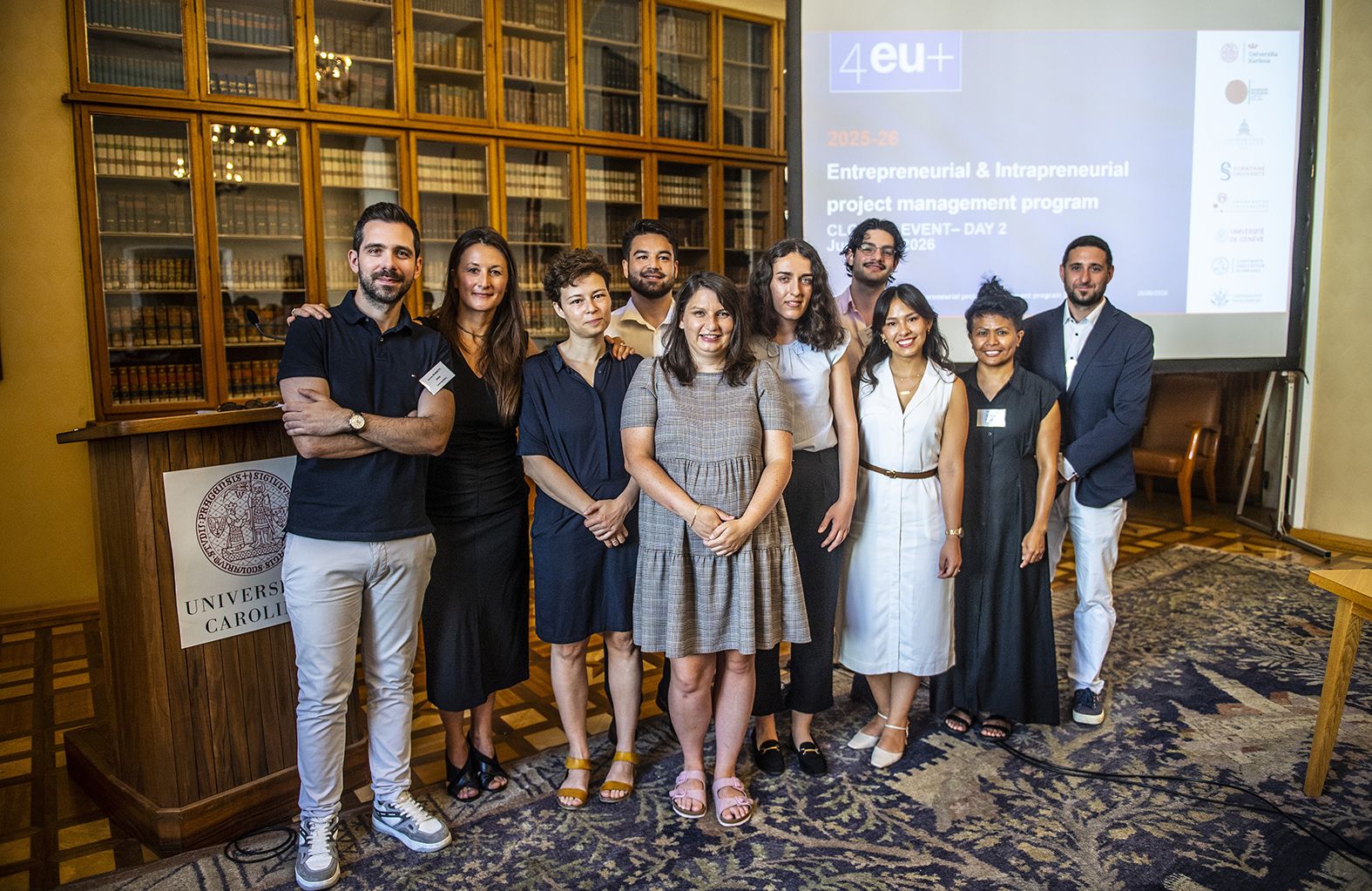
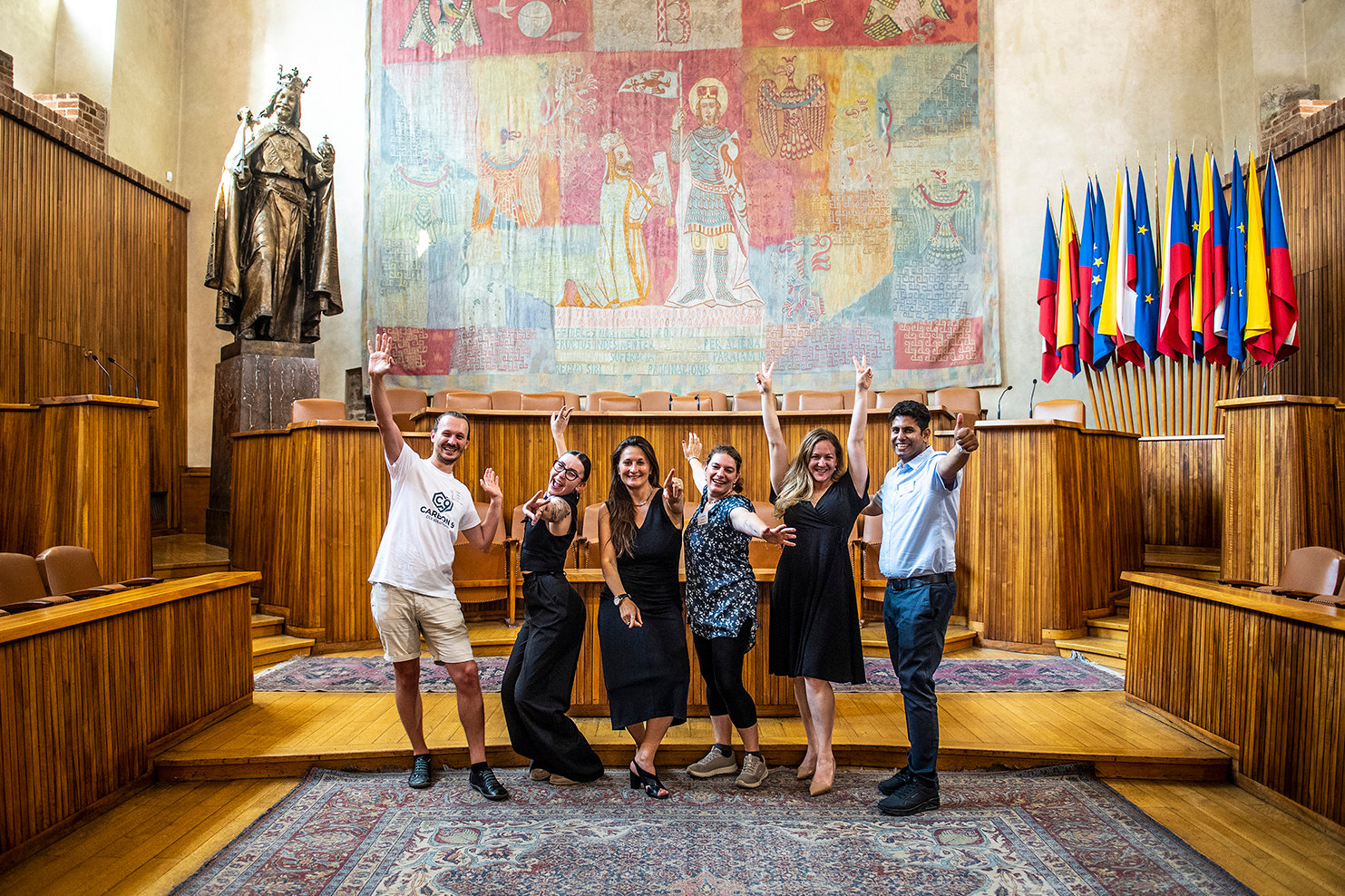
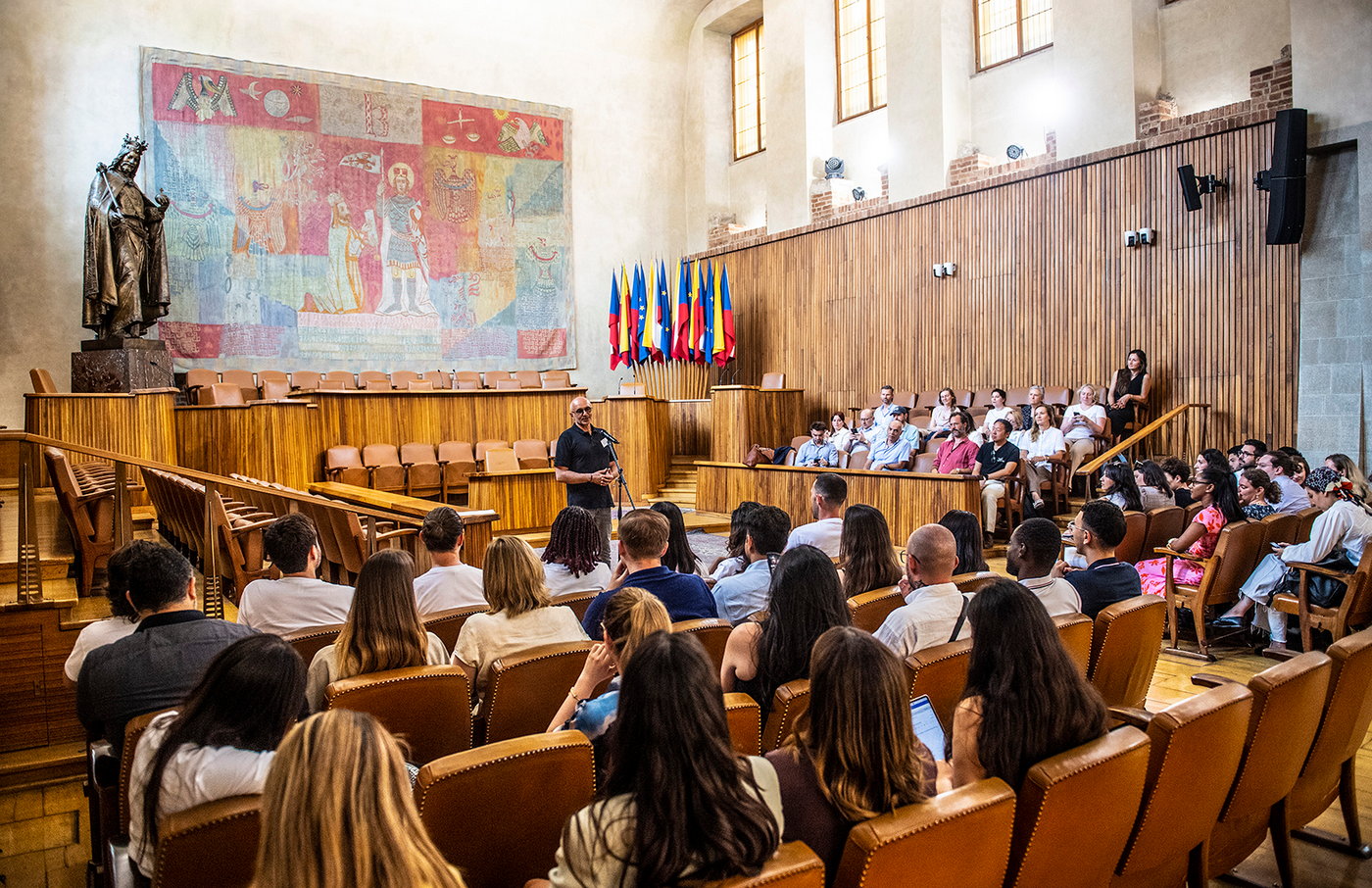
The latest programme cycle concluded in Prague with a final event organised by the Centre for Knowledge and Technology Transfer of Charles University and the 4EU+ Local Office. Hosted in the historic spaces of Charles University’s Carolinum and Schebek Palace, the event brought together participants, tutors, partners and organisers to present project results, exchange feedback and reflect on their experiences.
“The programme demonstrates how the role of universities is evolving. Universities are not only places where knowledge is created, but also environments where expertise is shared, connected with external partners and translated into solutions that can contribute to society,” added Veronika Haissingerová.
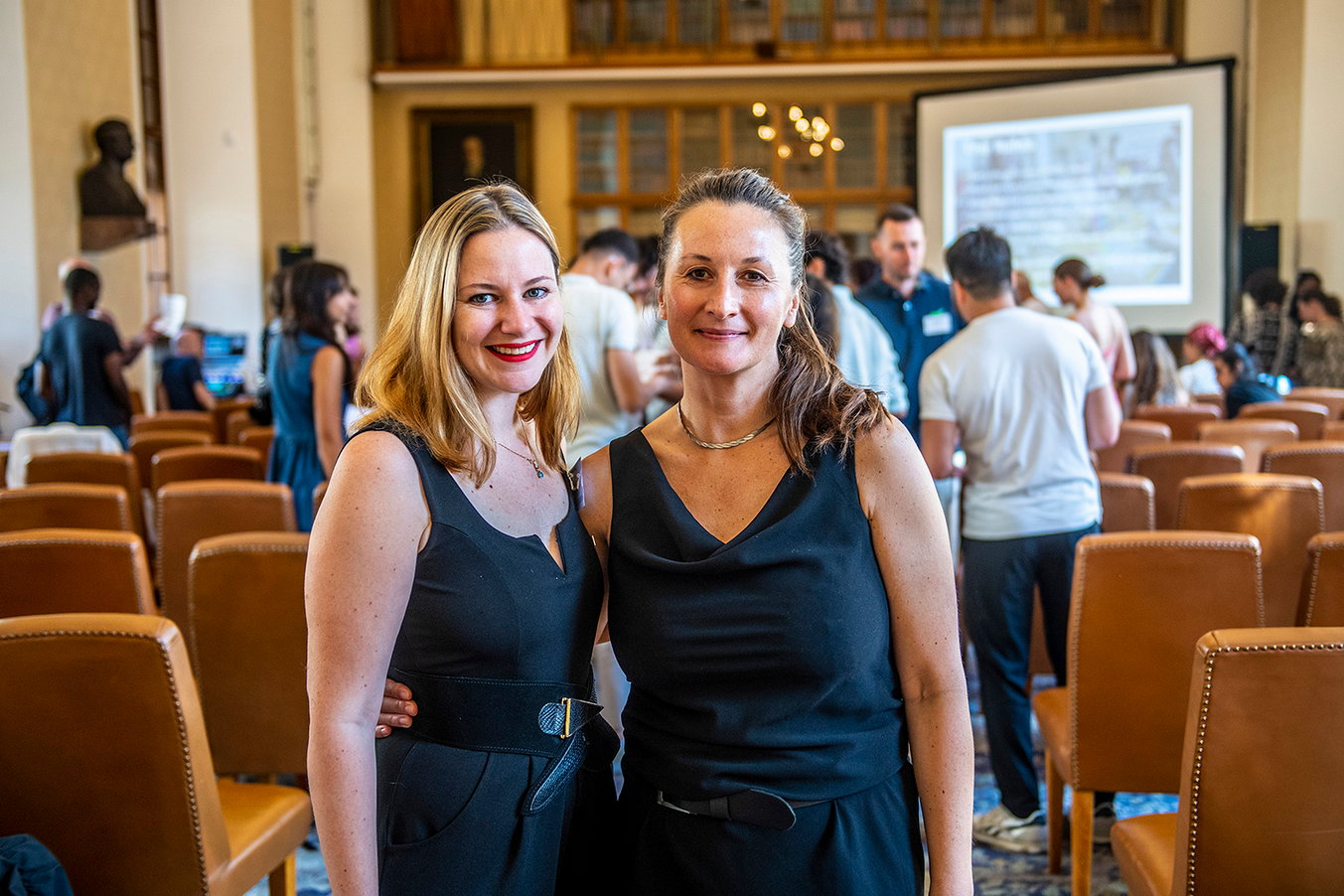
“The 4EU+ENTREP programme gives students and early-career researchers a unique opportunity to move beyond academic theory, develop their entrepreneurial skills and gain practical project management tools in an international environment. For Charles University, it is also an example of the opportunities created through our partnership within the 4EU+ Alliance and of how European collaboration can strengthen connections between research, education and innovation,” said Karolína Šedivcová, Head of 4EU+ Local Office.
But let us hear directly from the programme’s participants sharing their experience, impressions, and takeaways for their forthcoming research or practice careers.
Anna: I like to complicate my life and make it more adventurous
For Chemistry Joint PhD Student Anna Hlukhaniuk, exploring ideas beyond her research field is not a distraction from science, but another way of developing as a researcher. She is pursuing a joint PhD between Charles University and Nantes University, conducting her research in collaboration with the Institute of Macromolecular Chemistry of the Czech Academy of Sciences. Alongside her research on composites for multimodal cancer treatment, she joined the programme to develop new skills, collaborate beyond her usual field and challenge herself in an unfamiliar environment.
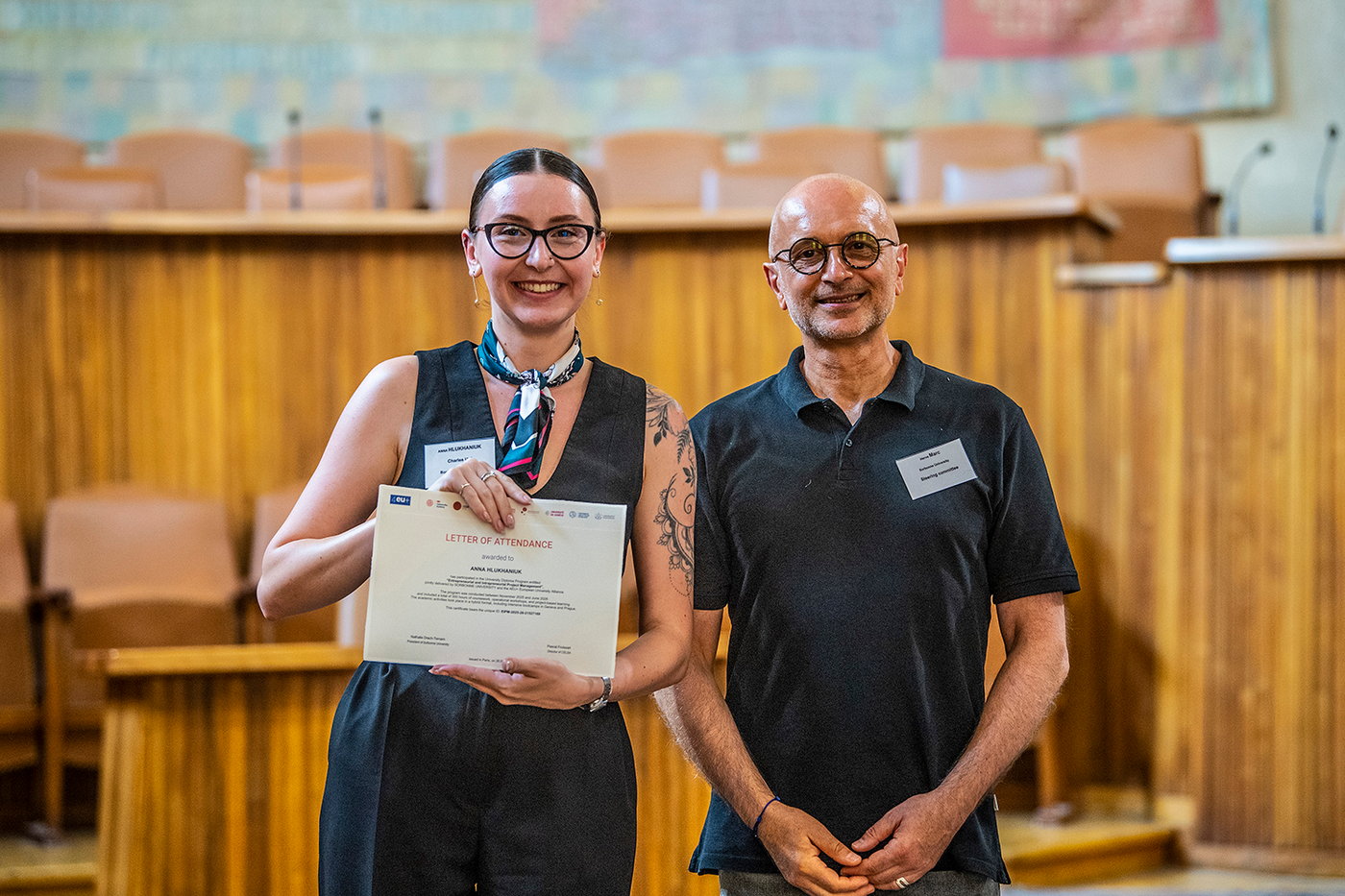
Why did you decide to apply for the programme?
I like to look for opportunities, thinking ahead about my future career and what else I could do and what I am lacking in my setup of skills. A friend of mine participated in this programme last year and recommended it to me. She described it as an eye-opening experience. I always wanted to improve my management skills and soft skills, so it felt like a perfect match for me.
What changed the most for you after completing the programme?
I gained many professional and personal insights. The programme was an intense experience because we worked with people from very different fields, countries and backgrounds. I think there is something like professional distortion: when you spend too much time in your own field and talk mostly with people from the same area, you start seeing things only from one perspective. When you step outside this environment, you realise how differently people can approach problems.
The programme showed me a lot about time management, responsibility and teamwork. Everyone had full-time jobs, PhDs, side projects or families, so we had to fit the programme into already busy lives. It made me reflect on how I communicate, how I work with people and how I contribute to a team.
How did working in an interdisciplinary team influence your thinking?
Coming from chemistry, I am used to a very specific way of working. We have our own habits when it comes to writing articles, preparing documents and presenting our work. During this programme, I learned many new tools and ways of working from people in other disciplines that I would never have encountered in my own field. I also realised that people approach the same problem very differently. In our discussions, everyone brought the perspective of their own discipline, and together we had to find a common solution.
One important lesson for me was that sometimes a project moves into an area where you are no longer the expert. Then you have to trust your teammates and say: “I believe in you. I’ll support you.” I usually like working independently and taking responsibility myself, so learning to rely on others and delegate was a valuable lesson.
What was your team’s challenge with the corporate partner?
Our challenge with Boehringer Ingelheim was centred on the One Health concept, which looks at the interconnected health of people, animals and the environment. We had to propose a solution that the company could realistically apply.
The challenge was that One Health is such a broad topic. We had to decide whether to focus on a global issue, a European perspective or one specific country. There were so many interconnected problems that it was difficult to choose where we could make a meaningful contribution.
At one point, we became overwhelmed because everything felt important. We wanted to propose something that was both meaningful and feasible, so in the end we had to be brave, choose one direction and commit to it.
What was your experience working with the company?
It was my first experience working with a corporate partner in this kind of setting. They were very supportive and open to our ideas, but they also gave us the space to create our own solution. I appreciated that they did not simply guide us towards a specific answer, but instead asked us to explain what we had learned and why we were proposing a certain direction.
During the closing ceremony, they gave us honest feedback about the strengths and limitations of our proposal, which I really appreciated. They pointed out both the potential of our idea and some practical challenges, especially related to regulations and the complexity of applying One Health principles in the pharmaceutical sector.
What moment will you remember the most?
One evening, we were working on a project issue, but then we started talking about life and making jokes. I remember thinking: “I really like these people.” We could have difficult discussions about work, but at the same time we could switch and just talk about life. That moment showed me that we had created a real connection.
What was the biggest personal challenge?
The biggest challenge was learning to balance responsibility with taking care of myself. There were moments when we worked after work, during weekends and late evenings. Sometimes you feel exhausted and cannot contribute as much as you want. I realised that protecting your boundaries is important because exhaustion affects the quality of your contribution. In teamwork, you want to create something valuable, so taking care of yourself is also important.
What did you learn about yourself?
During my PhD, I became very focused on research. Research has many challenges, and sometimes you start doubting yourself and whether you are good enough. Through this programme, I felt a bit like my younger self again. I remembered that I can try different things and that I do not need to be afraid of failing. I also realised that I have many soft skills that I had forgotten about. In science, you focus on experiments, data and publications, but communication and teamwork are important. The programme reminded me that I have a good foundation in these skills and that I want to continue developing them.
Why should students apply for this programme?
It is a personal and professional test. It allows PhD students to go beyond their classical research environment and see different ways of thinking. You meet people from startups, companies and different fields, and it can inspire you to believe that you can do something different. You can continue with research, but you can also think about entrepreneurship, starting a company or combining different career paths.
What makes this programme unique is the combination of teamwork, interdisciplinary learning and human connection. You can do online courses, but you are mainly working on your own. Here, you are connected to a team, and you cannot just skip the teamwork and do everything by yourself. You have to communicate, collaborate and find solutions together. It is a very eye-opening experience because you meet people you would probably never have the chance to meet otherwise. You learn from different fields, discover new ways of thinking and learn more about yourself. It is challenging, but if I had the chance to do it again, I definitely would.
Adam: Finding Confidence Through Action
Adam Šíma is a Social Geography PhD student at the Faculty of Science at Charles University, where he uses machine learning and natural language processing to study development processes and politics. Because much of his PhD work is independent and computer-based, he joined the 4EU+ Entrepreneurial & Intrapreneurial Project Management Programme to gain practical experience in an international setting. The programme gave him the opportunity to tackle an unfamiliar topic with an international team and a corporate partner, and to step outside his comfort zone.
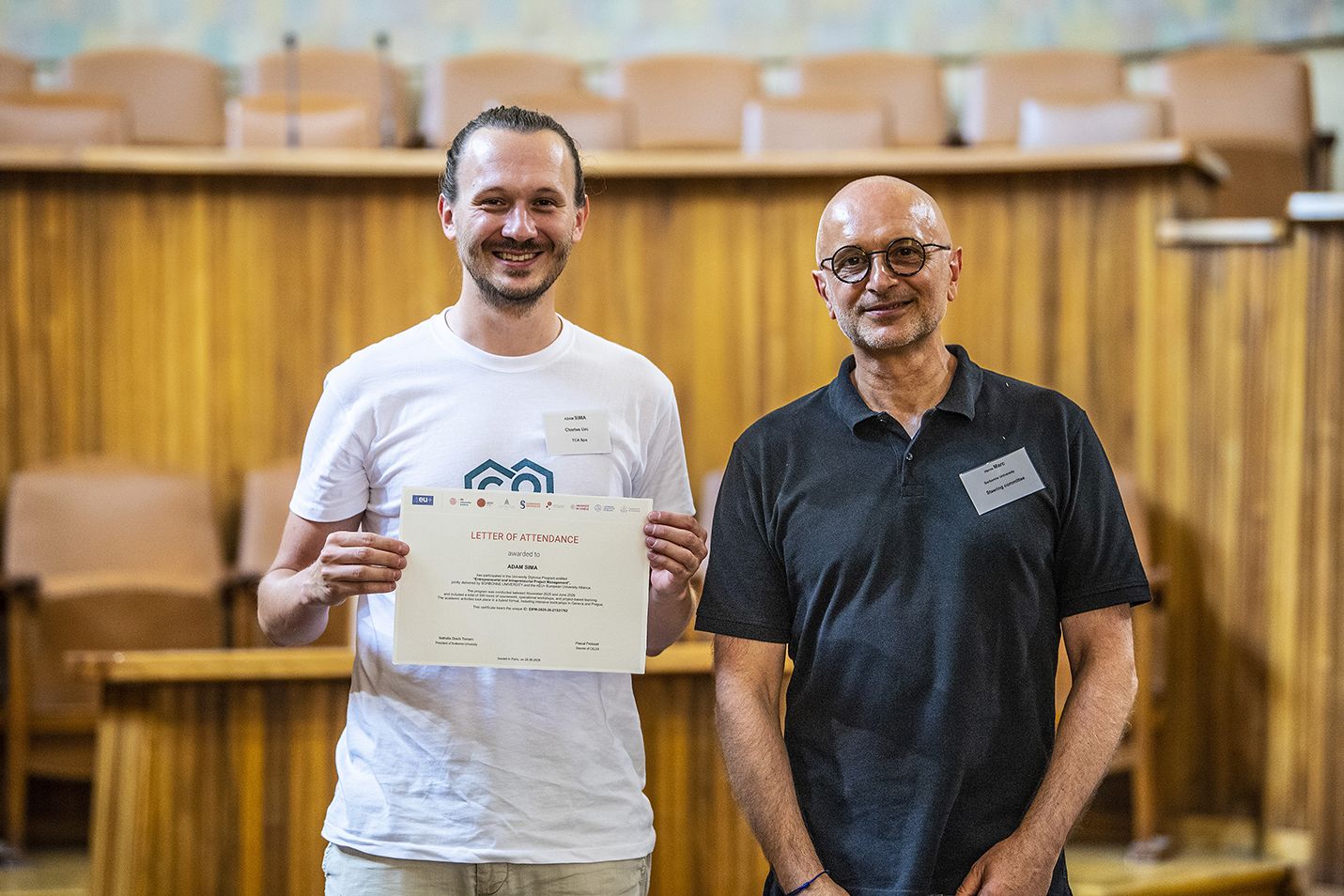
Why did you decide to apply for the programme?
I applied because I wanted to gain practical, international experience and see how I could apply the skills I had developed during my studies. I was especially attracted by the combination of entrepreneurship, teamwork and problem-solving. One of my main motivations was to challenge myself by working with new people. I was nervous about public speaking, so I saw the programme as an opportunity to improve in this area and become more confident.
What changed the most for you after completing the programme?
Usually, a normal day during my PhD means that I just sit alone and work on the computer. I do not often get into these kinds of situations, so this programme was a great opportunity to develop a very different set of skills. It taught me to think about a project from the very beginning to the final presentation, its feasibility, communication and how to lead the process. I would call it a kind of “complex thinking”. I also see an improvement in public speaking. During our weekly team meetings, I could not prepare every detail perfectly in advance, so I had to learn to improvise, speak up and simply get on with it. Being in this situation pushed me to grow. I think these are the kinds of skills that can be learned, but it is also a lifelong journey.
How did working in an interdisciplinary team influence your thinking?
At the beginning, I was a bit afraid because we were put into a group of nine people from various cultural backgrounds and different academic disciplines. However, the whole process went much more smoothly than I expected. We worked on the project for almost eight months and didn’t have a single problem in the team.
We split into three small units: technical, economic, and legal. I was part of the technical team, which for me was a disaster because I had absolutely no technical background, but it was the same for the others. One thing I learned is: don’t worry too much. There are so many things that can happen, and you have absolutely no control over them, so just work on it, do the best you can, and in the end, it will be great.
What was your team’s challenge with the corporate partner?
We worked on a project for TCA SpA, an Italian company active in precious metal recycling. Our task was to explore whether carbon capture and storage could be a realistic option for them. We looked not only at the technology itself, but also at the whole process, where emissions come from, how CO2 could be captured, transported, stored or potentially used, and whether such solutions would be economically and practically feasible for a relatively small emitter.
It was a very technical and concrete problem that was completely outside my field. I studied social geography, and suddenly we were dealing with an industrial CO2 challenge. At the beginning, it was a huge panic moment because I had absolutely no idea how to approach it. But we had about eight months, so we started digging into the topic, reading literature and collecting information.
At some point, we realised that we had to stop researching and start thinking about a solution based on the knowledge we had already gained. The biggest lesson for me was that a good project is not always about finding the perfect solution. Sometimes it is equally important to understand the feasibility of different approaches and why some solutions may or may not work.
What was your experience working with the company?
It was my first time working with a corporate partner. The main thing I learned was that these people are really busy. If you want something from them, you just have to be persistent.
This became clear when we started interviewing field experts. At the beginning, we sent one email and waited a week. Our mentor, Davide, was like: “No, no, no, follow up with them, value them, send dozens of emails, dozens of messages.” And it worked. It simply worked.
In the end, the partner was extremely helpful and provided us with all the materials we needed. The feedback they gave us after the Prague final presentation was very positive. They appreciated the work we had done and invited us to visit the company in Tuscany. Even after the project has ended, we are continuing the collaboration and will present our findings to a wider team within the company.
What moment will you remember the most?
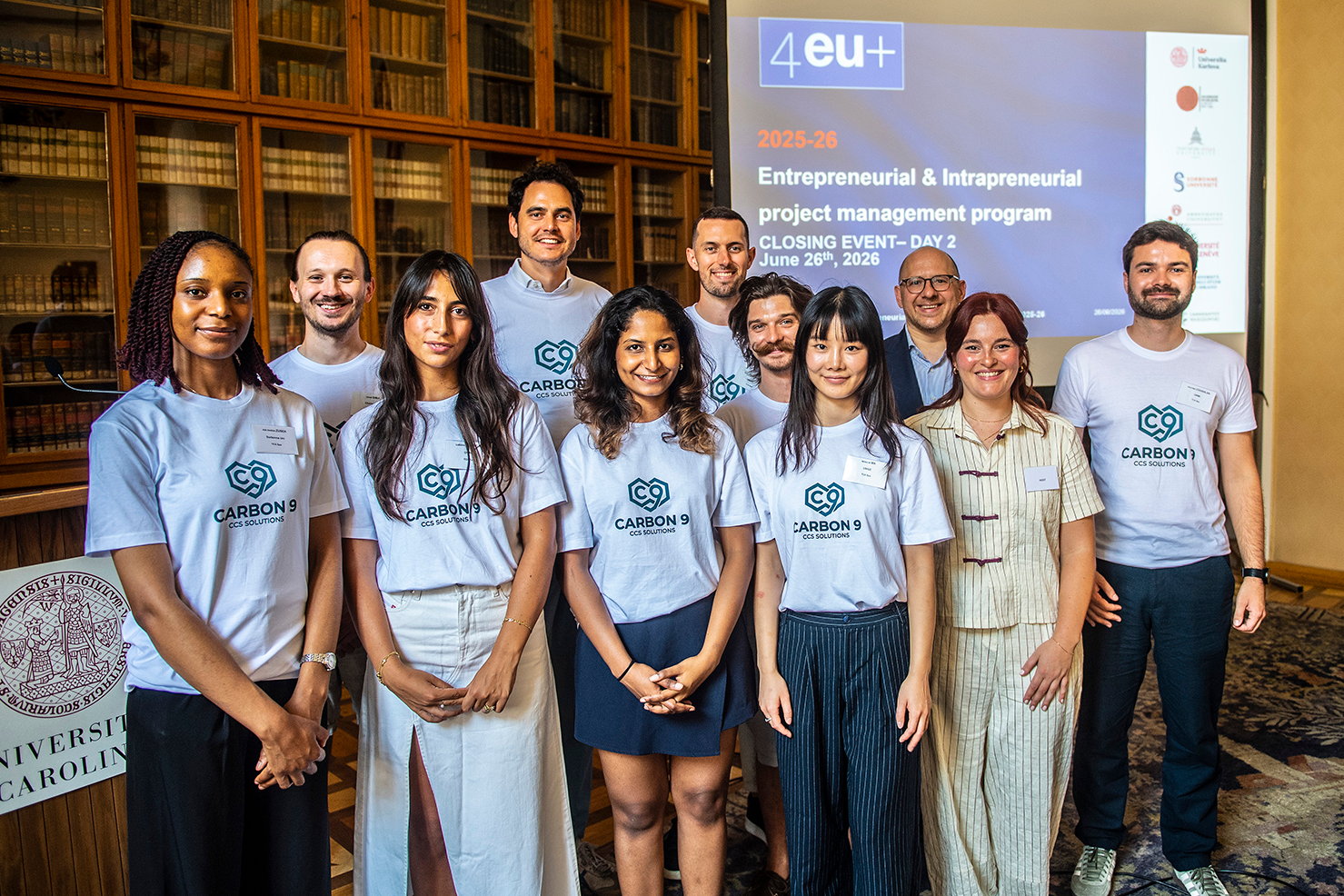
The whole Prague final meeting. It was so great to see each other after being in touch every week via Zoom. It was such a relief to see each other in person. All the members of our team decided to stay for the weekend after the conference, and I showed them around Prague. That experience sums up the programme for me. We built such confidence in the team that we even printed our own T-shirts for the final presentation. Even after the project ended, we are in touch, and I believe we will stay friends.
Why should students apply for this programme?
If this programme hadn’t existed, I would have missed the people and the connections we made. I would recommend it to the type of students who are ready to step out of their comfort zone, work on a real project which can have a real impact. It’s not only about lectures, it’s about the project, the teamwork, the uncertainty, the communication, and about turning complex problems into some practical outputs.
Ajit: What Happens When You Don’t Get What You Wanted?
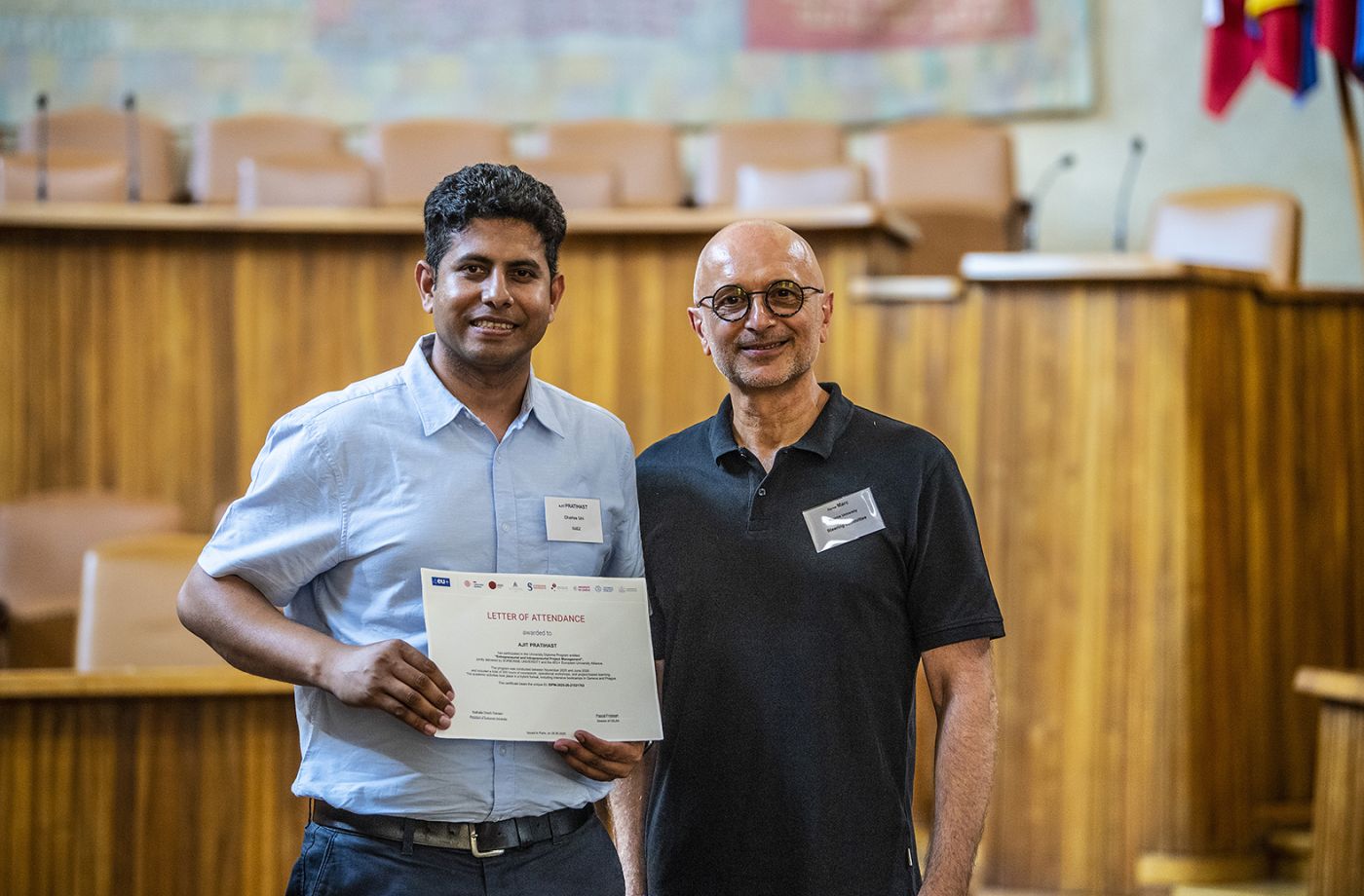
Ajit Kumar Pratihast is a pharmacist by training, and holds two master’s degrees: one in Pharmaceutics and another in Nutrition and Health, specialising in Molecular Nutrition and Toxicology. He is currently pursuing a PhD in Skin Barrier Research. When he joined the 4EU+ Entrepreneurial & Intrapreneurial Project Management Programme, he expected to work on a challenge connected to his scientific background. Instead, he was assigned to a completely different area: exploring a smarter and more circular future for end-of-life cars and wind turbines together with SUEZ. Although the topic was far from his expertise, the challenge became a valuable learning experience within the programme. It influenced the way he approaches problems, collaborates with others, and thinks about leadership.
Can you give me a brief summary of your challenge with the corporate partner?
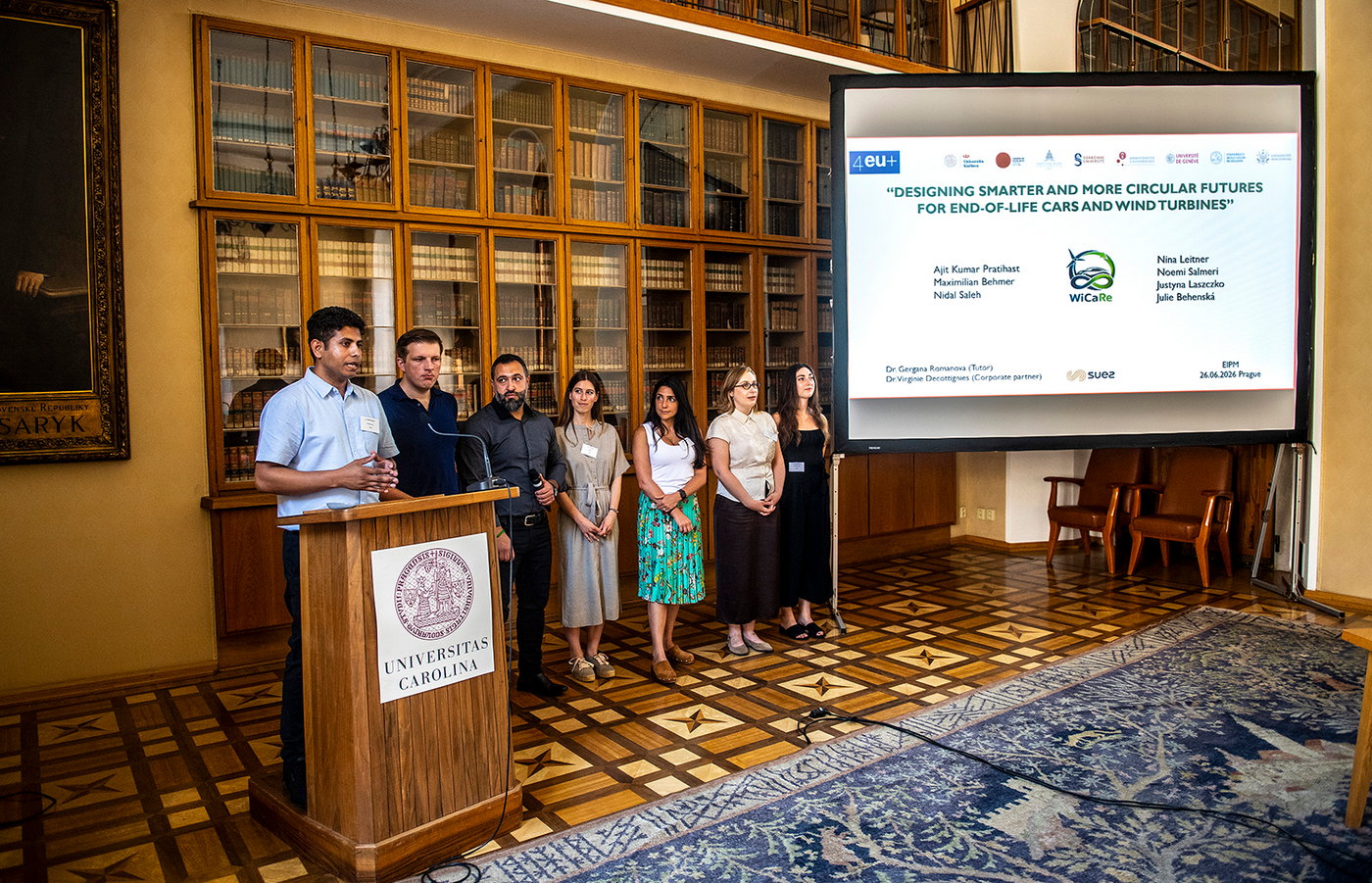
Our corporate partner was SUEZ, based in Paris, a company responsible for managing waste and drinking water. Our corporate innovation challenge was to design a smarter, more circular future for end-of-life cars and wind turbines. The challenge was assigned randomly, so we didn’t choose it. My first reaction was: “I don’t want to do this,” because it wasn’t my field – another challenge, related to pharmaceuticals, would have matched my background much better. The weekly lectures played a key role in helping us understand how to approach the challenge. We began by identifying the relevant stakeholders – understanding who was connected to the problem and narrowing it down before conducting interviews. Through this structured process, our understanding of the problem gradually became clearer.
Why did you decide to apply for the programme in the first place?
Before joining the programme, my experience had been almost entirely within natural sciences. I had very limited exposure to project management, so I was excited about the opportunity to learn how projects are organised and how teams work together to solve complex problems. As a PhD student, I can imagine myself taking on leadership responsibilities in the future, such as leading a research group or managing projects. Learning how to coordinate people with different backgrounds felt like an important skill to develop.
One thing I was initially uncertain about was the programme’s online format. Since most of the programme was designed to take place online, I wondered how effective teamwork would be between people who rarely met physically. However, the programme team explained that this was intentional: future collaborations are increasingly global and learning how to work effectively online is itself an important professional skill.
How did this compare to your usual routine?
My daily PhD work is very different. I mainly work in the laboratory, conducting experiments, meeting supervisors, and supervising diploma students. Usually, I work quite independently on my research project. In the programme, the innovation challenge was entirely team-based. Seven people were working together on a challenge where none of us had prior expertise. In science, we often seek evidence-based explanations to answer specific questions, whereas innovation challenges are more open-ended and can have multiple viable solutions. In my PhD, I work in both wet lab and dry lab settings, conducting experiments in the laboratory and using computational tools for data analysis. In this programme, however, we worked in what was referred to as a “field lab,” where we explored real-world problems by engaging directly with people through interviews and user research. This was a completely new way of thinking and working for me.
How did your team divide the work?
We did not assign roles at the beginning. Instead, after a few discussions, people naturally took responsibility for tasks that matched their strengths. For example, some members focused on note-taking, while others organised interviews or contributed in other ways. The main responsibility we assigned was deciding who would lead each interview.
I initially led interviews with our corporate partner to understand the problem, then moved into a coordinating role by organising meetings and helping the team when needed. This was a new experience for me because, although scientific research also requires a thorough understanding of the problem before testing hypotheses, this programme placed a much stronger emphasis on exploring the problem before considering possible solutions. As highlighted in one of our lectures, we were encouraged to “fall in love with the problem” rather than rush toward solutions.
How did working in a multidisciplinary team shape your thinking on the SUEZ challenge specifically?
Working in a multidisciplinary team changed the way I looked at the SUEZ topic. Coming from a natural science background, I am used to searching for clear answers – something is either right or wrong. However, working with people from humanities, medicine, and chemistry showed me that real-world problems are rarely that simple. Each person brought a different way of thinking: chemistry gave us insight into materials, medicine brought attention to possible health impacts, and humanities encouraged us to look beyond technical answers and consider people and behaviour. Bringing these views together allowed us to understand the situation more deeply and shape our final idea.
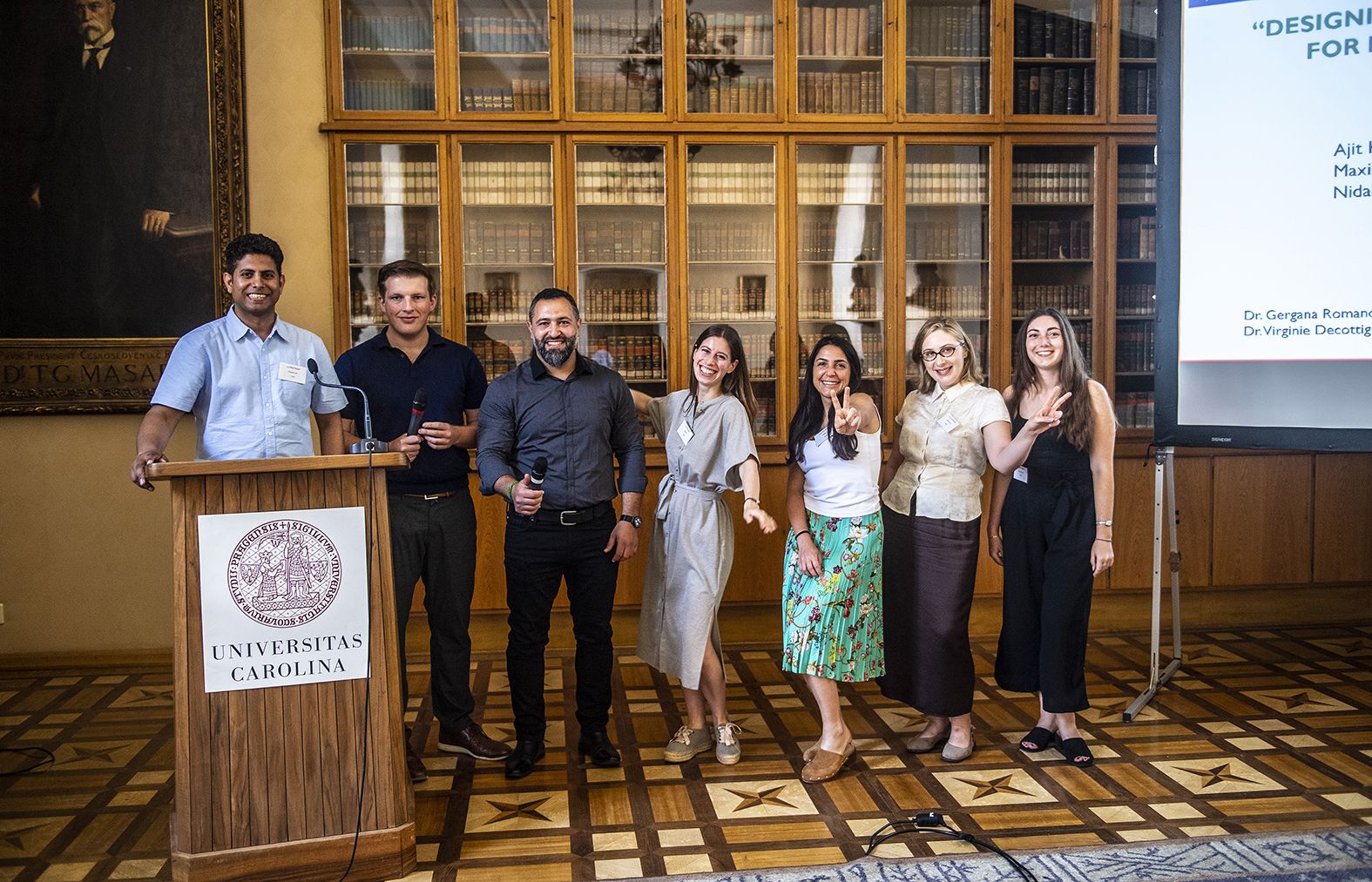
What made us a strong team was everyone’s commitment. Despite having full-time jobs and PhDs, everyone made time for regular meetings. One member even joined while riding her bike, and our medical doctor sometimes connected after finishing work in the operation theatre whenever she had a short break. These moments showed how dedicated everyone was to the project. For me, what kept me going was the curiosity to discover where we would end up. The whole process was new, and every meeting revealed another piece of the puzzle. It felt a bit like a web series – you don’t know what’s going to happen in the next episode, but that's exactly what kept me pushing.
What was your experience working with the company?
I had previously taken one brief, similar course where the partner had limited availability because they were busy. This time was completely different. Although our partner could not join the boot camp, which was initially disappointing, she turned out to be actively engaged throughout the project. We met roughly twice a month, and she always took our work seriously, encouraged us and showed that the project mattered to the company. That helped us realise that our work could have a real impact rather than simply end up as a report. During the midterm evaluation, she was genuinely impressed by how well we understood the problem and by the number of interviews we had conducted. Later, when we presented our solution, she was positively surprised that it was meaningful and had potential for further development. She even came to our closing ceremony.
So what did the topic you didn’t choose end up producing?
At the beginning, this was not the challenge I wanted because it was outside my field. However, it led us to discover a very interesting problem: composite materials used in wind turbine blades and lightweight vehicles are extremely difficult to recycle. These materials contain valuable fibres and resins but separating them is challenging. In many cases, the materials were produced 10–15 years ago, and it is not always clear what they contain, which can make processes like cutting or shredding risky for workers.
Our idea was to create a system that could identify the different components of the composite material and evaluate how recyclable it is. We developed the “solution framework” by looking at different factors, including health, safety, and other relevant criteria. Our partner reacted positively to the idea and saw potential for further development. The project is continuing beyond the programme – the team is looking into registering their own organisation to carry the work forward, with plans to move into a pilot phase to test the idea.
Looking back, what did you take away from a challenge you never wanted in the first place?
The biggest lesson I learned was the importance of approaching problems more flexibly. I now make a conscious effort to step back when faced with a challenge and consider it from multiple perspectives, including how someone with a different background or expertise might approach the same situation.
Another important takeaway was the value of effective communication. I realised that communication is not only about expressing your own ideas but also about understanding how they are received by others. In scientific research, it is easy to become attached to a particular approach because it is supported by evidence or previous experience. However, working on this project reminded me that complex real-world challenges often benefit from diverse perspectives and collaborative discussion. I have already started applying this mindset in my interactions with my supervisor, students and colleagues.
This experience also strengthened my confidence in my own abilities, particularly as a leader. While we may recognise our own strengths, receiving positive feedback from others can further strengthen our confidence. Having an experienced corporate partner acknowledge the value of our work gave me greater confidence in my ability to take responsibility for projects and pursue leadership opportunities in the future.
What role did your tutor play in getting you there?
We were lucky with our tutor, Gergana Romanova. She was present in almost every meeting but intentionally took a step back, allowing us to navigate the process independently while observing how we collaborated and communicated. She offered guidance only when she felt it was truly needed. For instance, when one of our members stopped attending the meetings, Gergana approached the situation with empathy and reached out to her privately instead of addressing it in front of the group. Her approach reminded me of a guiding star – always present, observing from a distance, and ready to illuminate areas we might have overlooked while allowing us to find our own path.
What would you tell a student who might get assigned a challenge they didn’t ask for?
Be open, stay curious, and be willing to push your boundaries. If you want to work on a real-world innovation challenge and explore something outside your usual field, this programme can teach you something you may never have studied or expected to encounter. It can help you grow in terms of knowledge, collaboration, and the connections you build with others.