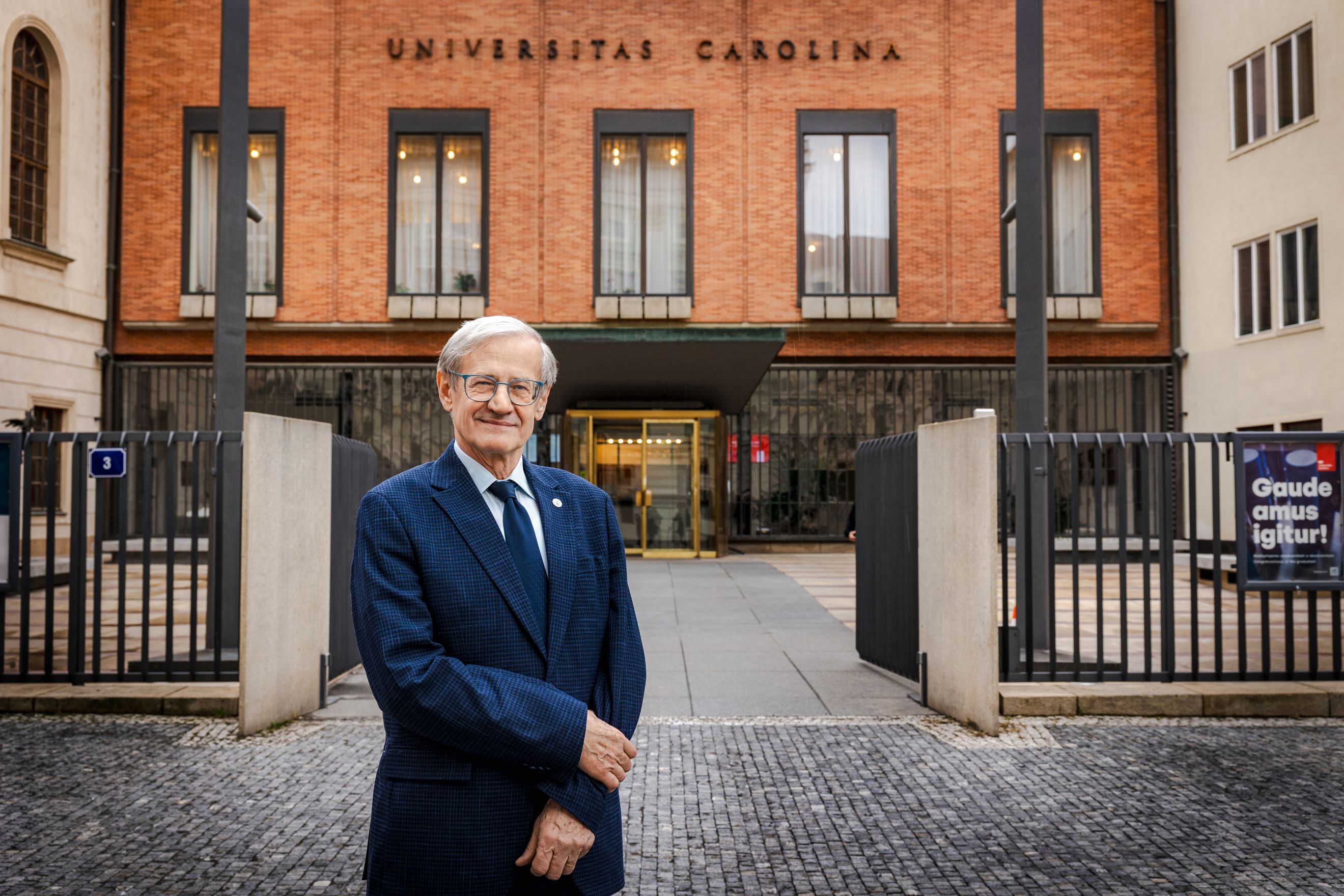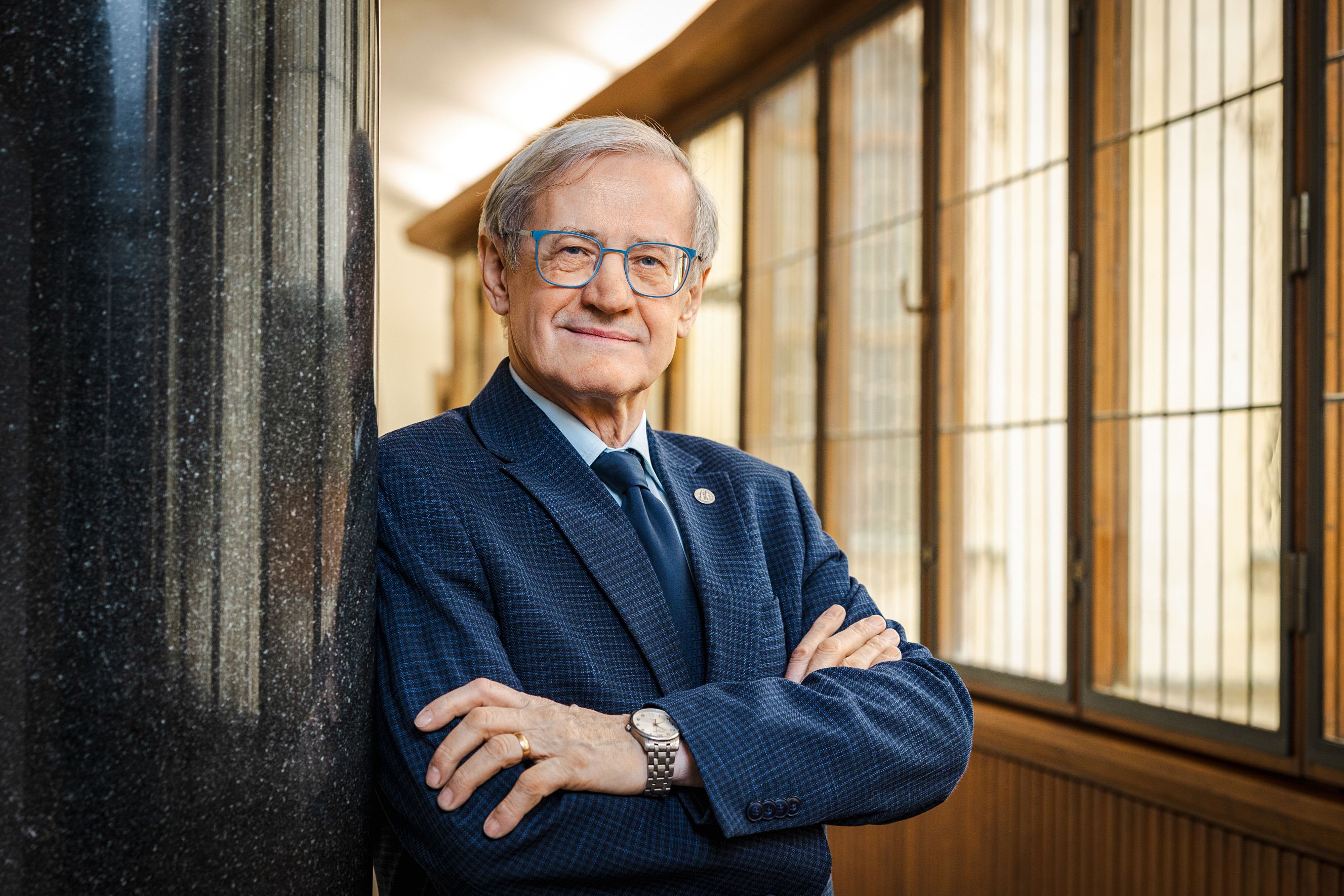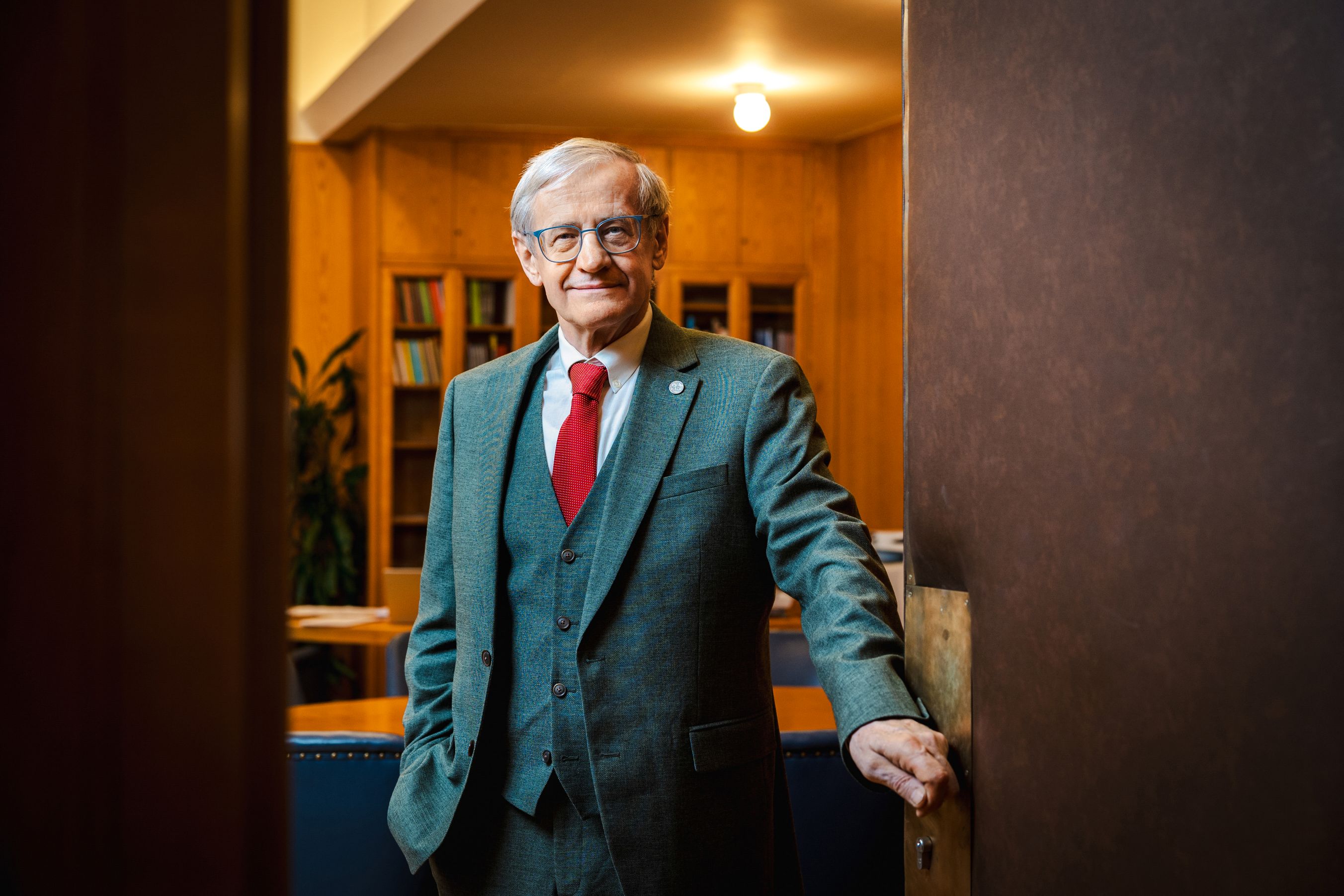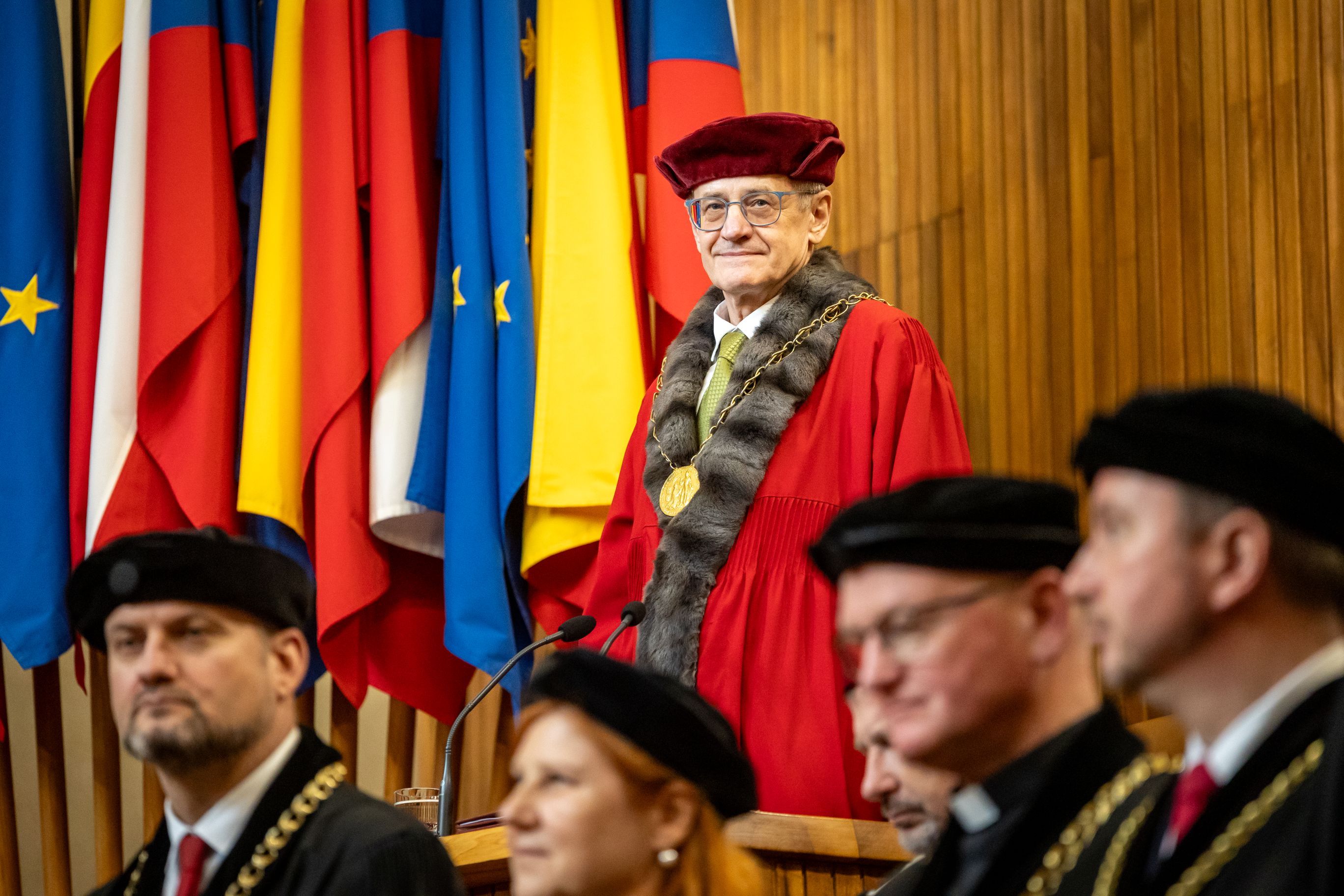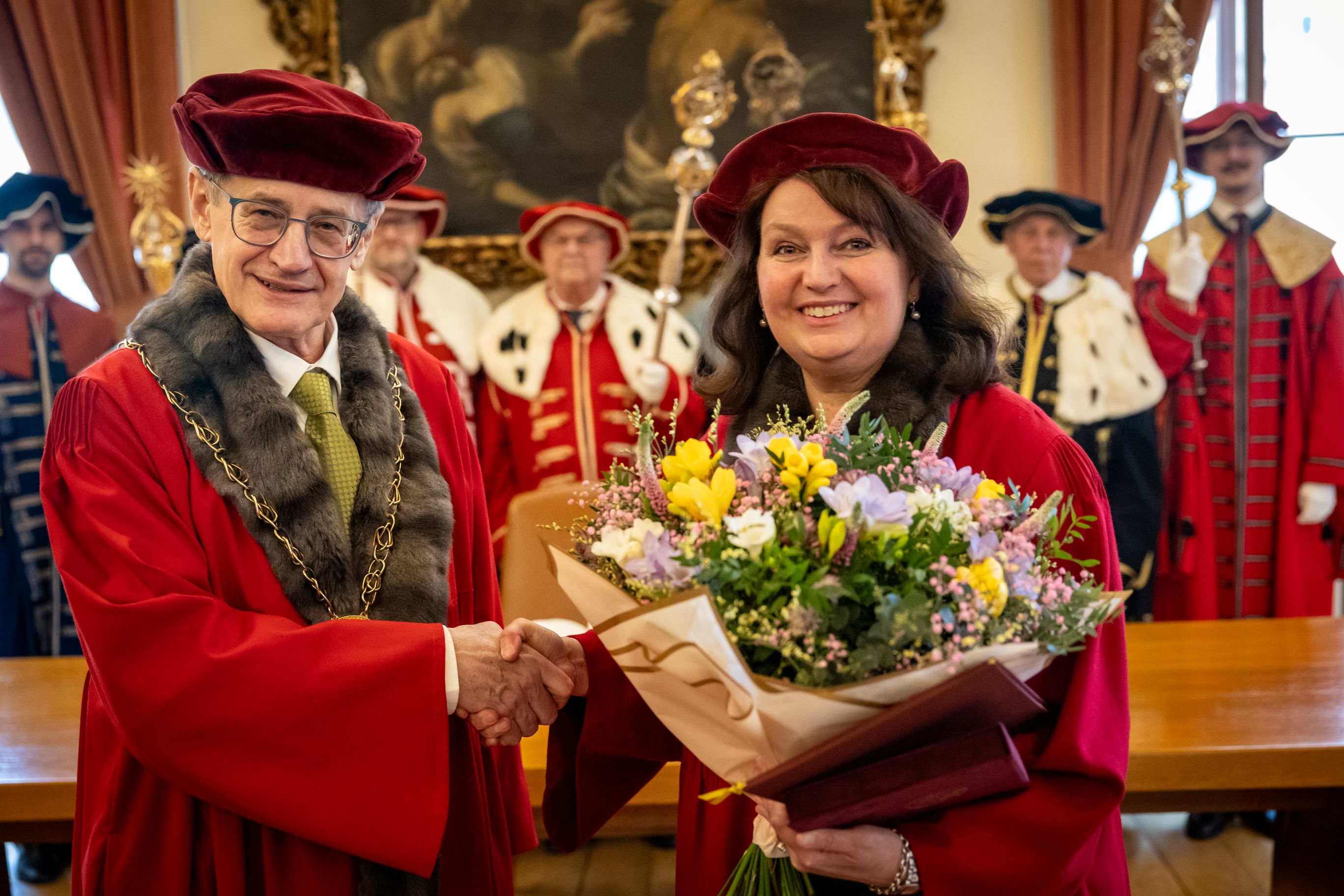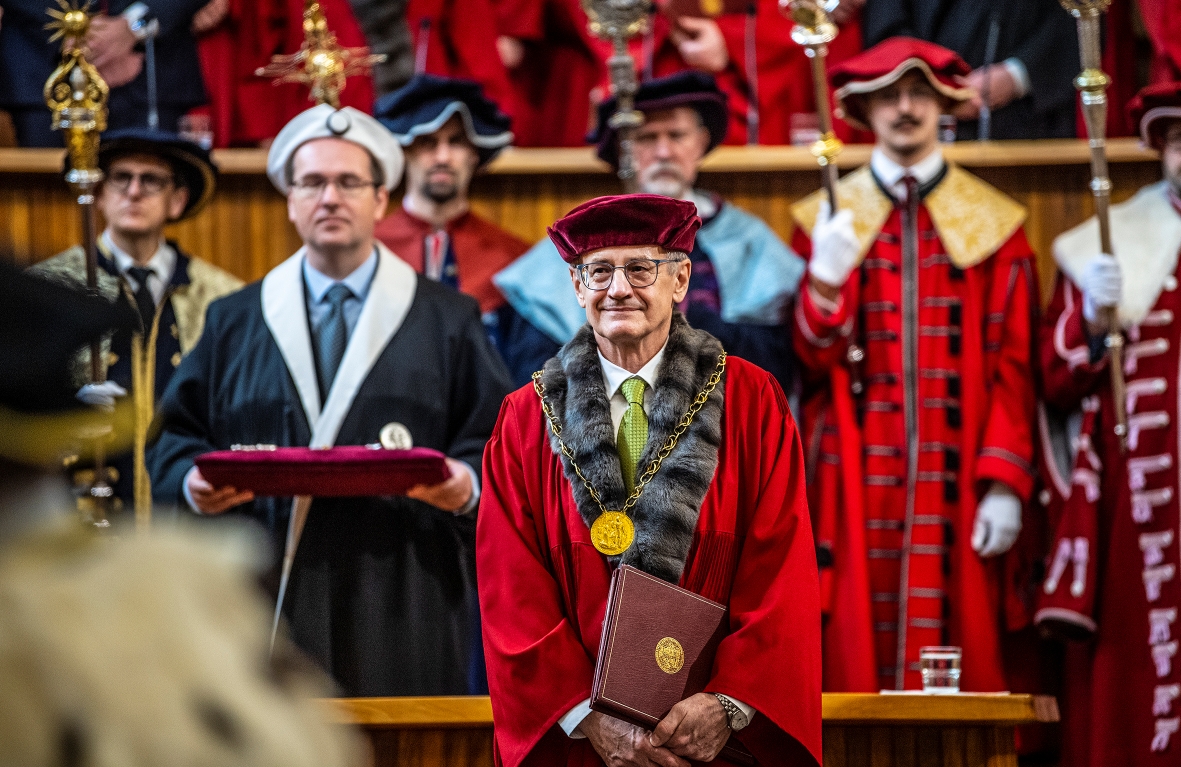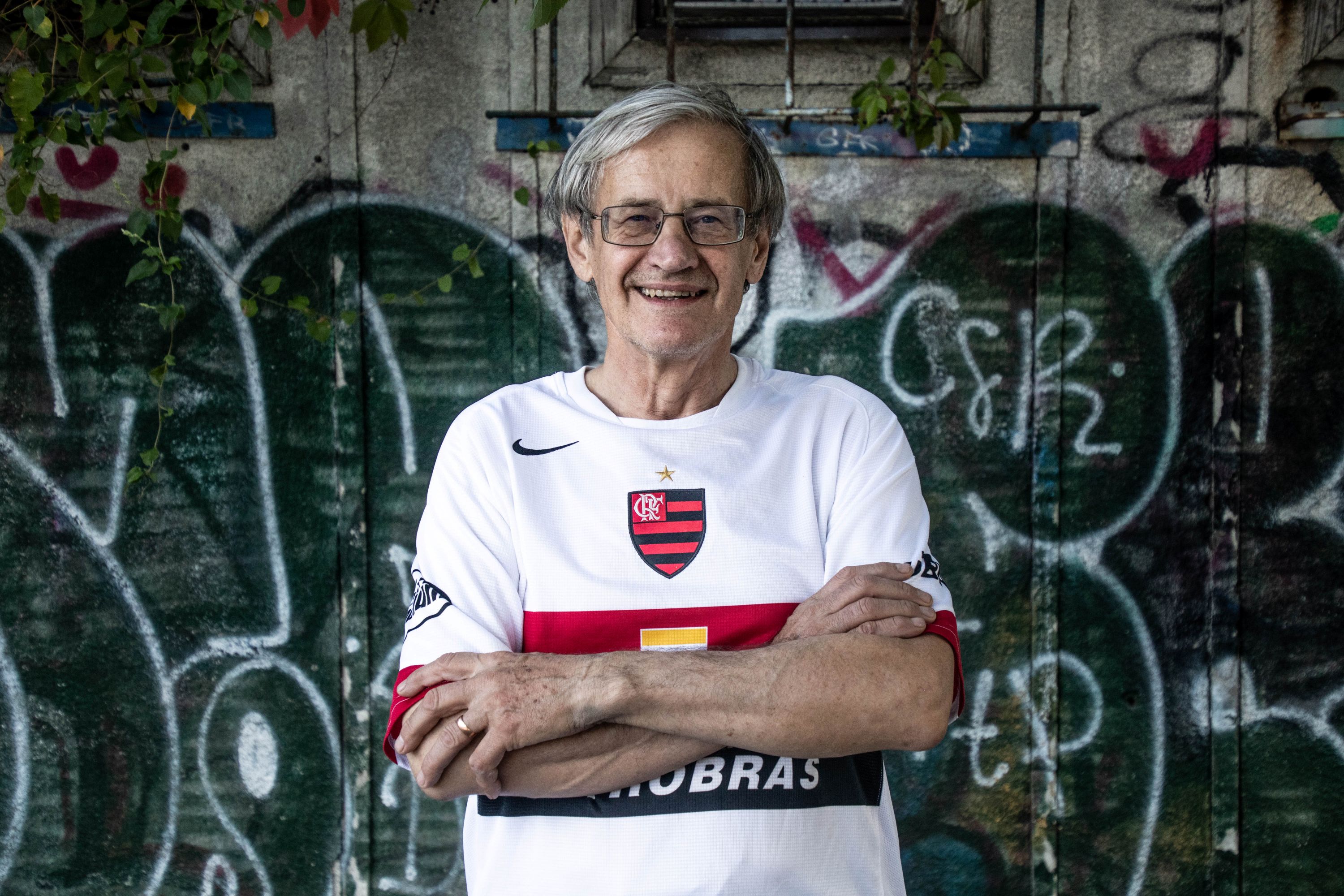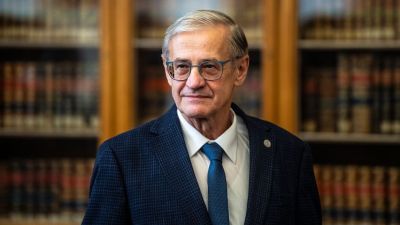


“One of my long-term priorities is the construction of the Albertov Campus and resolving the entire situation regarding the loan,” says Professor Jiří Zima, the new Rector of Charles University, in this interview.
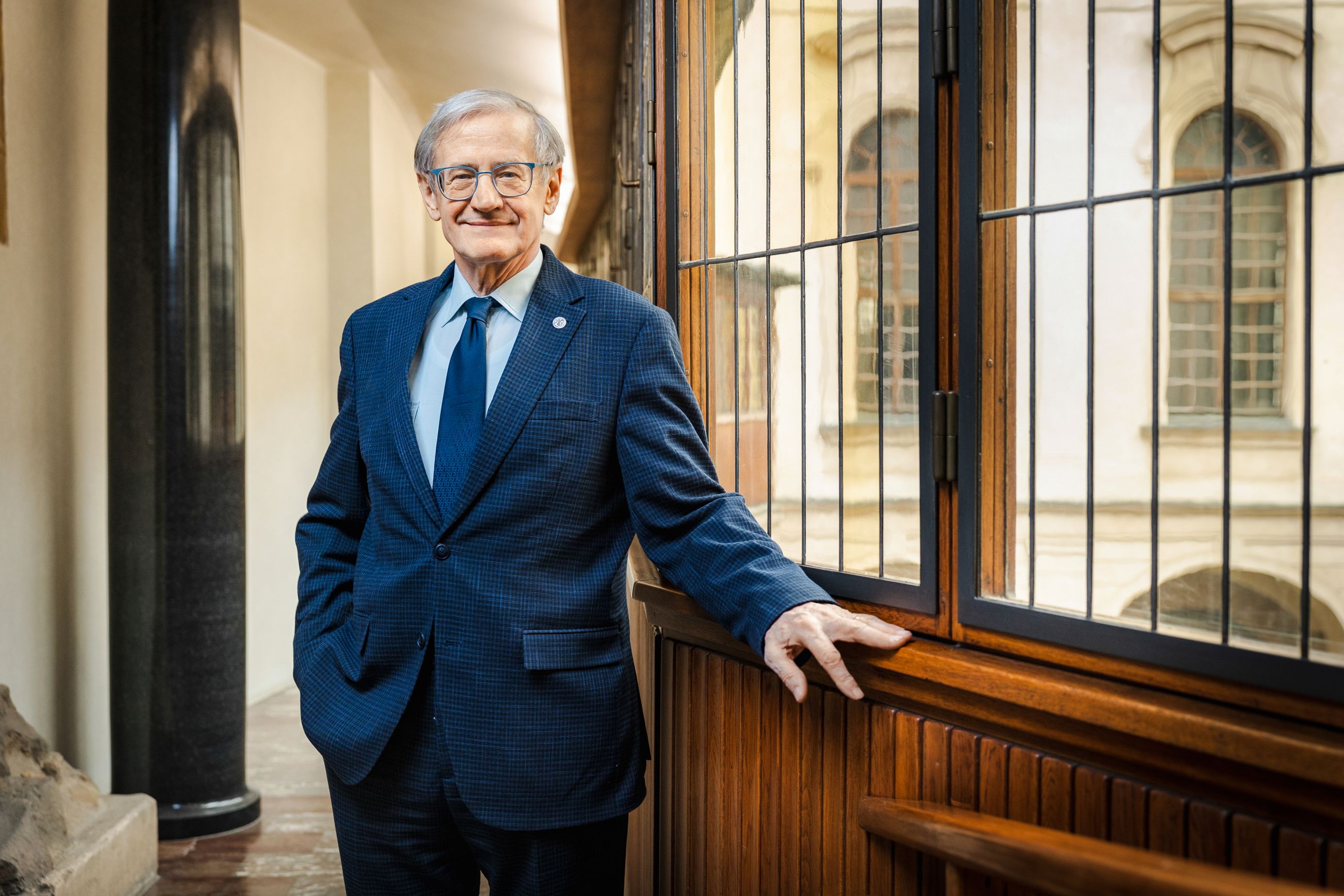
Rector, you’ve had your first few weeks in office. It’s 7:30 a.m. now, and we’re starting our Forum interview. What has your typical workday been like since you took office?
Starting work at 7:30 a.m. is quite normal for me. Right now, I live relatively close to the Carolinum, so I’m used to arriving to the office very early. It’s a habit I picked up back when my workday started at 7:30, and I just can’t seem to shake it (laughs).
How many meetings do you usually have in a day?
I’m starting to meet with the deans one-on-one to discuss the issues each of them is facing in their respective departments. So yesterday it was one meeting after another, and today is the same. Hopefully tomorrow will be a little better, but then again, we have a faculty council meeting…
What has been the biggest change in your responsibilities as Rector?
I have a lot more formal duties, at least for now, which is understandable. A lot of things need to fall into place: resolving the workload of the vice-rectors, for example, took quite some time to ensure it works well with the faculties. Various prominent figures want to meet with me, which is part of my role as rector. In addition, I’m of course dealing with strategic issues across the university.
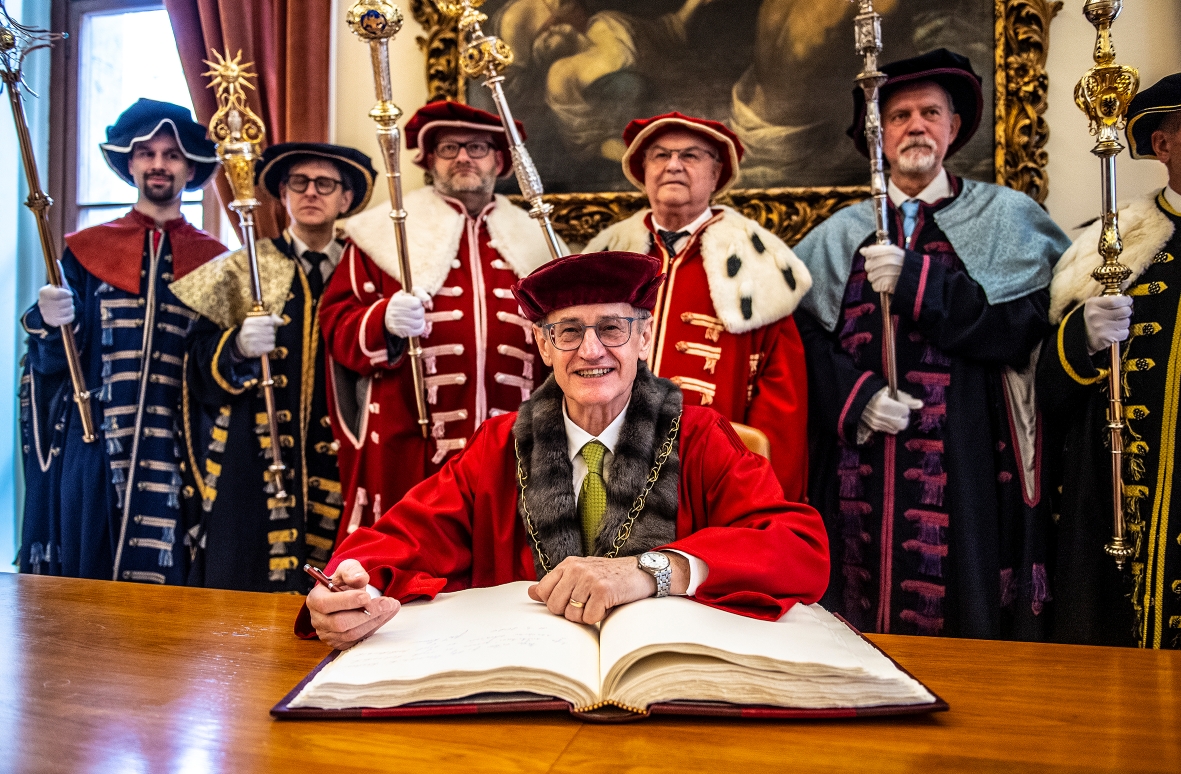
For nearly a month and a half, you served as the de facto dean of the CU Catholic Theological Faculty. How did that role add to your workload beyond your duties as Rector? And what happens now that the forced administration of the Catholic Theological Faculty has ended?
Yes, that’s correct. It was an issue that kept me very busy, of course, but I didn’t attend all the meetings by myself; I delegated the task to two vice-rectors, who negotiated all the necessary arrangements. Together, we tried to resolve the long-running disputes at the faculty. At the end of last week, however, the Ministry of Education terminated the forced administration of the Catholic Theological Faculty, and authority was transferred back to Jaroslav Brož, who will serve as dean of the faculty until the court’s final decision. I believe that in the coming weeks, stability will be restored at the faculty, and all parties involved in the lengthy dispute will work together in the best interest of the entire faculty. And I will be able to devote myself fully to my duties as rector.
What are your three main priorities now, at the start of your term?
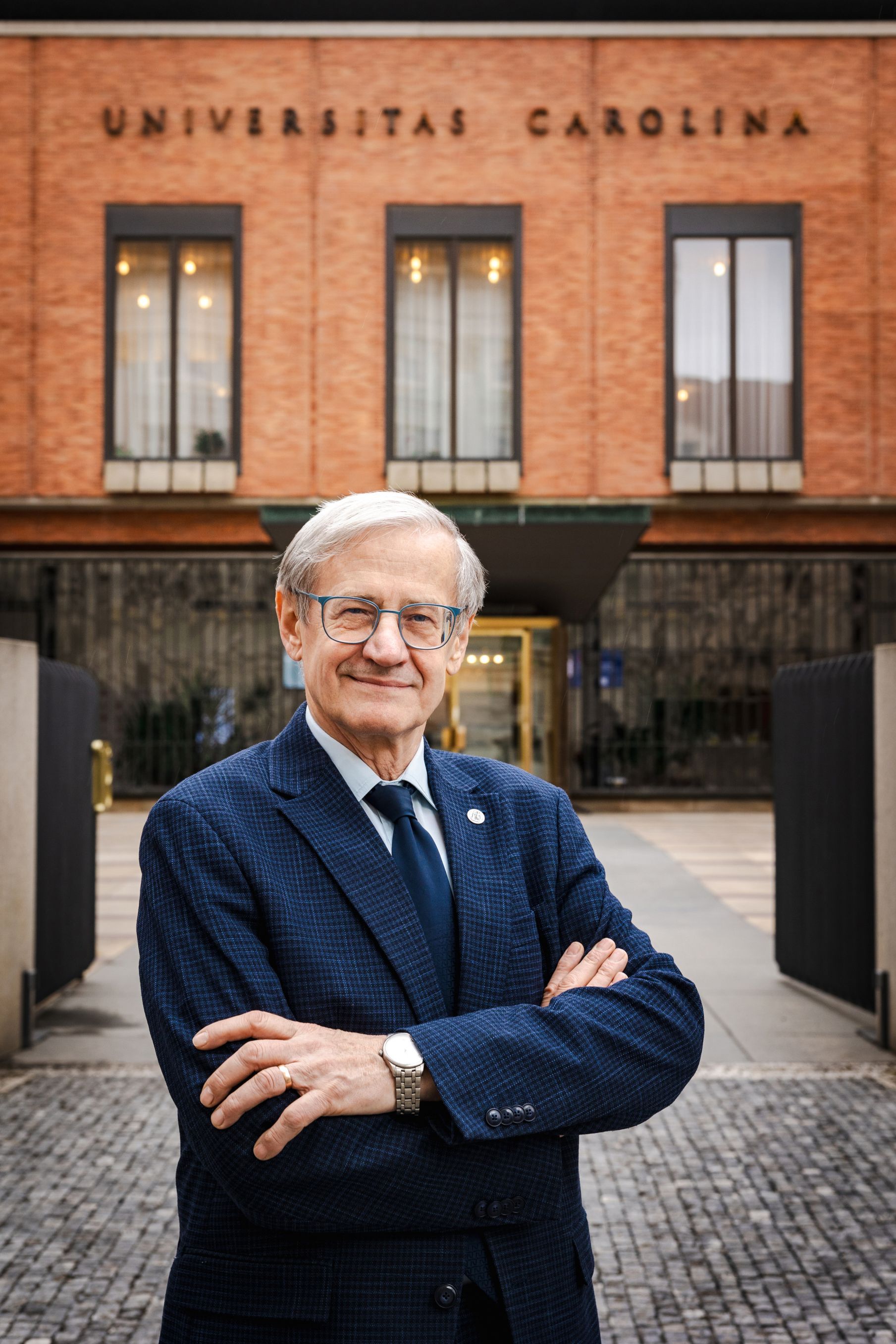
From a distance, the situation at the Rectorate seemed quite tumultuous. So I need to familiarise myself in detail with everything that is necessary. I am arranging meetings with the heads of the Rectorate’s departments; that is one of the important things. Another priority that we all recognise is digitisation and the Student Information System (SIS). I believe I have the best person I could find for this agenda (referring to Vice-Rector Martin Nečaský – ed.), so I hope we’ll make progress on this soon. And then I see a huge problem – perhaps I should have mentioned it first and foremost – the Albertov Campus. Unfortunately, we’ve reached a point where we know we’ll have to take out a large loan, because otherwise we won’t be able to build the campus, and that must not happen.
We’ll certainly get to that, Albertov is a key issue. But first, could you tell us what your long-term priorities for the entire four-year term are? Do you think they’ll remain the same as the current ones you mentioned earlier?
We need to make further progress in internationalisation. So that our students don’t consider it an obligation, but rather a tremendous opportunity. And the same applies to our staff. Already at the Faculty of Science, I began to sense that lately not as many people were eager to go abroad to gain experience. Today, the options are such that people travel wherever they need or want to go, and there isn’t the same enthusiasm for “going somewhere” as there was shortly after 1989. Back then, anyone who had the opportunity would go anywhere, just to get to a renowned institution abroad.
What is the second priority?
We need to make the university more open, not only in terms of its relationship with society and its third mission, but we must also strive to attract postdocs from abroad to Charles University and to bring back our successful alumni. This is a complex issue, because we will need to provide them with housing, offer them a reasonable “package” to get them started, and give them prospects for the next few years.
Alright. And what is your third long-term priority?
Above all, I wish for the university, our alma mater, to calm down, because it seems to me that the atmosphere has become somewhat heated. I want people to feel free to speak up about problems. If you’re afraid to point something out, the problem just keeps brewing. But if you speak up, you have a chance to make things better.
Your Board has two more Vice-Rectors than the previous one. Does that mean higher payroll costs? And how will transparency regarding compensation be ensured?
There’s no point in withholding information when you know that if someone requests it under Act No. 106 (on Free Access to Information – ed.), you’re required to provide it. We’ve done a preliminary calculation, and even though we have more Vice-Rectors, the costs for the Board come out lower than they were in the previous term. We also need to finalise the wage regulations. I promised that. We’ll start with the regulations for the Rectorate and for the compensation of its senior staff, including the Vice-Rectors.
Criticism of the previous administration was also directed at the fact that the Rectorate had allegedly become “bloated”. Will you be downsizing?
First, we need to hold meetings with the department heads. We’re planning some changes to the administration of the Rectorate, but we want to come out with those once we’ve thought them through and have everything ready. I’ve also heard that there are “way too many people” here, but first I want to know exactly what’s going on and ask the managers what those people do and what purpose they serve. For example, whether they’re here just for specific, short-term projects and will leave afterward, and so on.
Your team newly includes a Vice-Rector for the Third Mission – Martin Vlach from the Faculty of Mathematics and Physics. What does the “third mission of the university” mean to you personally, and how would you describe it to the general public?
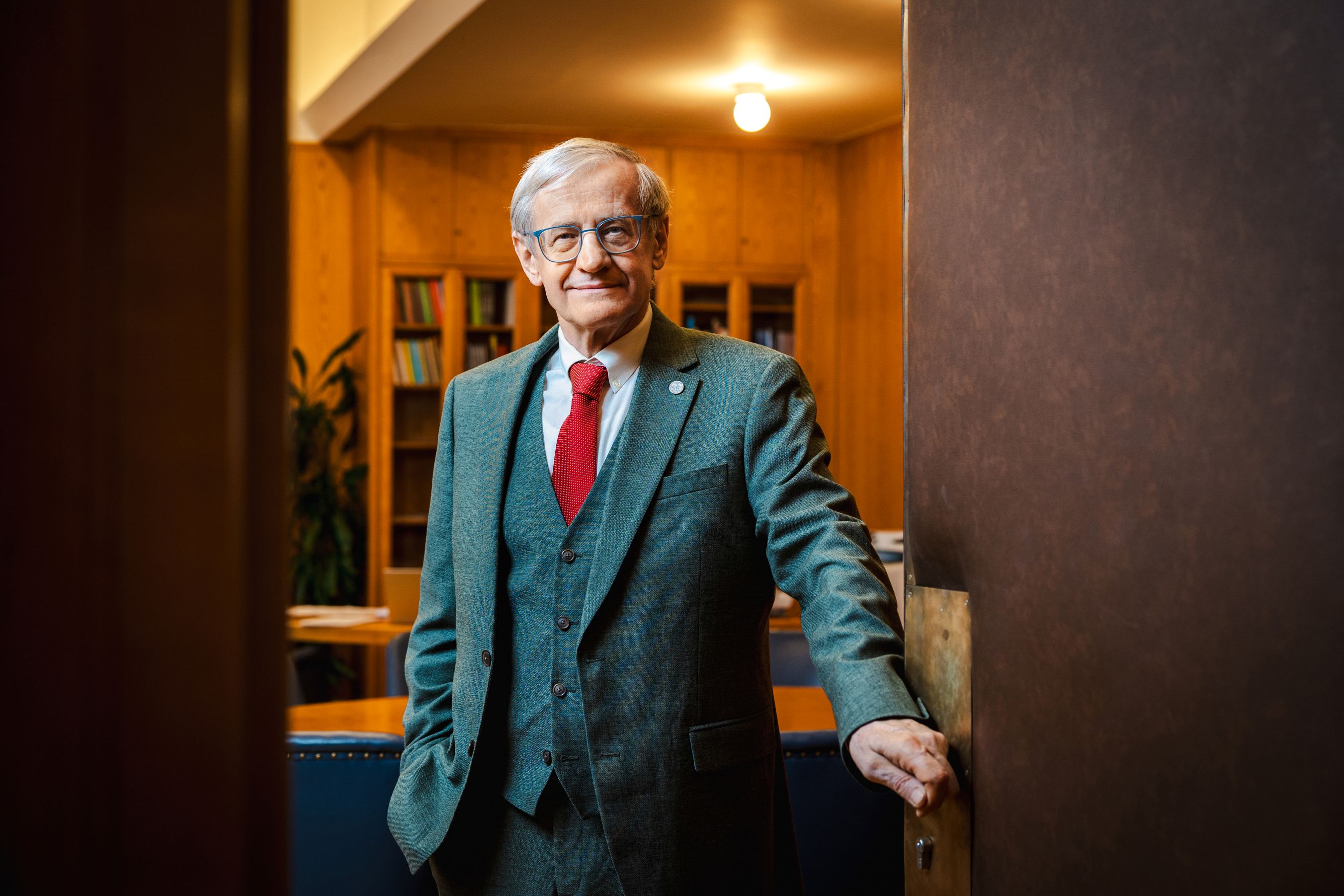
For me, the university’s third mission means that we are supported by public funds, and the university should give back to society in some way. It encompasses everything related to public service. Of course, we educate students and young researchers; those are our two main roles, there’s no doubt about that. That doesn’t change, and remains essential. But there is also a third role that we must fulfil through a range of beneficial activities. For example, the university has not yet established a deeper cooperation with Prague, the regions, or the public sector; we also need to improve services for alumni and their education.
Many of the outreach and community activities have been based at the Kampus Hybernská. There’s the Didaktikon centre, various exhibitions, workshops… Do you see potential in developing Hybernská?
Didaktikon, which is visited by children from schools, has been a tremendous success. Schoolchildren from the Central Bohemian Region would also like to visit, but there is no longer any available capacity. I want to support initiatives like this, and I think it’s something that’s visible and serves as excellent publicity for us as well.
Let’s move on to a different campus, the Albertov Campus. You’ve already touched on the fact that credit is being discussed and there may be a need for up to five billion CZK. It is a burning issue. Do you feel like a crisis manager?
I see this as a big problem, but I decided to run for Rector knowing that, if I won, I would have to deal with it. As Dean, I was in charge of two major construction projects, so I know how long construction takes in the Czech Republic and what needs to be done. When I saw that construction hadn’t even started at Albertov and that the building was supposed to be inspected and approved in a year and a half, I knew it couldn’t end well. And all the steps that subsequently came to light only confirmed my fears. I sense unease at the university because we have to find this money somewhere, borrow it somewhere, and then, of course, pay it back. If it’s three billion, it might take twenty years. That means a fairly substantial sum every year. And where we’re going to get that money is what we’re dealing with now. It must not end up with faculties that already lack sufficient funds having even less. That won’t do. So we are considering various scenarios to ensure the university can manage this.
Could this huge loan limit investment in other faculties?
The faculties involved in the Albertov Campus (the First Faculty of Medicine, the Faculty of Mathematics and Physics, and the Faculty of Science – ed.) are not the only ones that are building or planning to build. Several other construction projects are already well into the planning stages. One project, no matter how large, must not halt investment projects at other faculties. We need to think this through, resolve the issue, and try to negotiate assistance, perhaps even from the state. I have Jan Dobrovský as Vice-Rector Construction and Public Funding on the Board; he has experience with European projects and is already working on this very intensively. We will have to negotiate with banks – there’s no question about that – and strive to secure the best possible terms for Charles University, because without that, it won’t work.
Where do you think things went wrong? The project has been in the works for well over a decade…
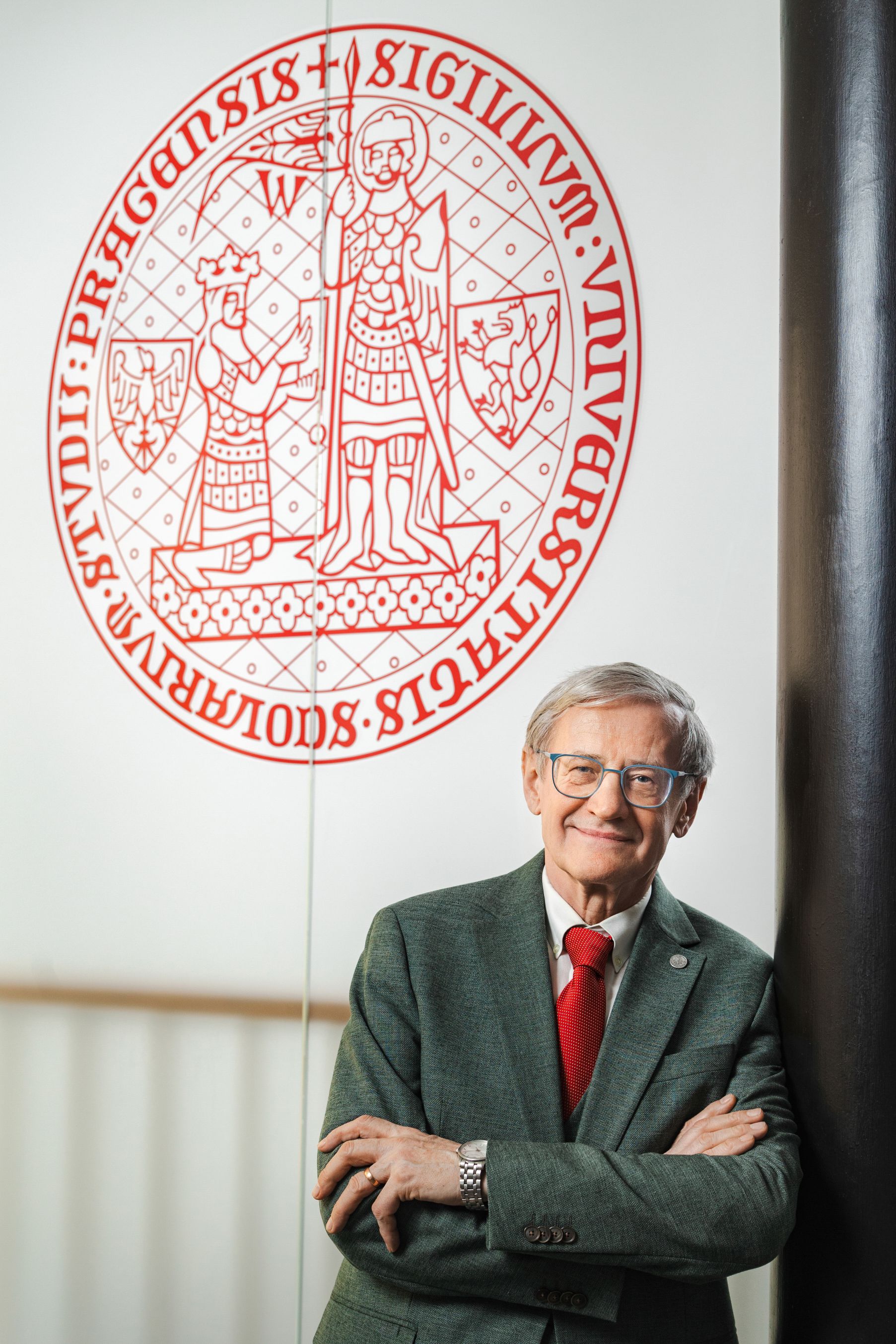
In 2006, I was appointed Vice-Dean for Development at the Faculty of Science, and at that time the concept itself was born, although it wasn’t yet called the Albertov Campus. The initial plans included two buildings: the Biocentrum and the Globcentrum, and the costs were estimated at around two billion. Today, you couldn’t even get a single building for that price, let alone its equipment. Several mistakes were made. As a university, we didn’t take the risk of incurring ineligible costs, and we didn’t break ground in time, even though the money was there, but the building permit hadn’t been issued yet. And then the archaeological survey took an awfully long time and wasn’t particularly extensive, plus it could have started earlier. And these mistakes simply piled up.
How do you want to approach the hotly debated topic of artificial intelligence (AI) in the classroom?
Artificial intelligence, when used knowingly, can be very helpful. But it also provides those who wish to misuse it with sophisticated tools that enable them to do so. That is what we will focus on. For example, questions are being raised about whether bachelor’s theses should still be required; some universities in the Czech Republic have even abolished them. But we can’t just abolish bachelor’s theses like that, because our accreditation is tied to the thesis. We have to follow the currently valid rules, or change those rules first.
And if it were entirely up to you? Would you abolish bachelor’s theses?
If it were up to me, I certainly wouldn’t eliminate them in experimental fields where you need to measure things and do something new. You need data and results, and it has to be verifiable. But in other fields, I’m not expert enough to say, for example, “we can eliminate them in philosophy.” No. I’d be very cautious there and would want to consult with people who engage with these topics every day – which I don’t.
Academics often dislike them, but they still peek at them and discuss the rankings. How important are university rankings to you – let’s say the major ones like THE, QS, or ARWU?
Nowadays, it’s a necessity, though I’m not exactly losing sleep over it. Charles University has long been ranked at around 250th or 260th place in some prestigious rankings. But when you consider how many universities there are in the world (exact numbers vary, but estimates range from twenty to forty thousand – ed.) and how much money is poured into science in places like China, I see the fact that we’re sort of “stagnating” as a sign that we’re holding our own. The world isn’t standing still, and we know the situation with university funding in the Czech Republic – there’s not much money. If we’re able to maintain a roughly stable level, I don’t consider that such a major problem. At the same time, though, I’m not saying we shouldn’t work toward a better ranking.
The public is always questioning why the venerable Charles University isn’t at least in the top 100.
Actually, when you look at the big picture, we rank among the top 1% of the best schools in the world. I don’t think that’s bad at all, considering how small our country is and how we’re funded.
What are your goals for internationalisation? And where will your first visit abroad take you?
I think my first trip abroad will be to Budapest, because there’s going to be some kind of meeting there (laughs). Eventually, I’d like to travel elsewhere in the world to strengthen our partnerships, but the start of my term as Rector is hectic – right now, I’m needed here more. And how to strengthen internationalisation? We need to put more money into it. For example, at the Faculty of Science, we have an endowment fund that, together with IOCB-Tech, supports student trips abroad. We need to do this across the entire university; we have the Charles University Endowment Fund. Expenditure in this direction is truly necessary. I think it’s an important experience for anyone who goes abroad. You face various challenges there, and when you overcome them, you know you can handle it. It boosts your self-confidence, you meet lots of people, and it moves you forward. Likewise, it is necessary to attract more people from abroad, and we will focus on that as well.
We also have an International Advisory Board. Will you heed the advice of its members?
Their advice should be followed. These are people who belong in their positions and already know a great deal about Charles University. I’ve already spoken with them. We have a two-day meeting in June, and the views and opinions of these experts are very useful for the university. I want to establish something like a Charles University strategic panel, comprising people from both inside and outside the university, and I’d like them to work together because they are looking ahead.
Will you support technology transfer and collaboration with the professional and industrial sectors?
Definitely, I think that’s one of the important ways forward. But it always depends on the people who are willing to get involved. When you’re sitting “up there” and someone from another organisation comes along with a good idea, you can sign a memorandum of cooperation. But if you can’t find people who actually want to do it, you won’t be able to follow through, and it usually ends up being useless. I used to be in charge of patents and related matters. Faculties have their own delegated autonomy, so we handled some inventions solely under the faculty. There’s the inventor, and then there’s someone who tries to sell it. And the inventor isn’t just “the one who came up with it.” There’s the faculty, the university, and you have to have a clear plan for how the proceeds will be divided if it’s a success. There has to be trust between those who invented it and those who sell it, so that the profits don’t go only to the “sellers.” Otherwise, no one will get on board.
Without research, there will be nothing to transfer or apply to practical use. How do you intend to promote excellence and cutting-edge science at Charles University, for example in the context of ERC grants?
I would like to continue supporting people who aspire to apply for prestigious ERC grants. That is essential. However, it is certainly not our goal to have, at any cost, too many people whose applications would not be successful. We should not end up with tons of applicants submitting mediocre proposals. We must submit high-quality projects. Professor Zdeněk Strakoš has done and continues to do a great deal of work in this regard. I promised that we want to increase the number of ERC grants for Charles University by fifty percent over four years. We must focus on this.
There are studies that mention how many discoveries we are missing out on because female scientists leave the field too often or too early. How do you plan to strengthen the position of women in science at our university?
Women should definitely be supported in their careers. I know this from my own household: we have three children. And in my generation, it was mostly women who took care of the children. Today, the entire burden of childcare no longer falls exclusively on women. However, one of the things I want to support is daycare for the children of female scientists who are mothers, so that they don’t have to end their careers because of motherhood.
You turned seventy in February. How do you stay in shape, mentally and physically?
I try to eat healthy, even though it’s not always possible. I used to play a lot of sports. I enjoyed soccer; I played it in Spořilov for about twenty years. I enjoy gardening, we have a cottage where we go, and I chop wood. I also do physical labour. And I try not to gain weight and make sure I get enough sleep. So far, I’ve been successful! At around eleven o’clock, I start looking for my bed, and then I usually sleep until six…
What are you reading right now?
I took German in grammar school, but unfortunately I’ve lost a lot of it. But we have friends in Germany, and when I’ve been in touch with them, I’ve felt my German slipping. So I started reading in German again. Back when I used to travel to Regensburg, where we had a partnership, I would buy a book there every year. Right now, I’m reading one by Frank Fabian. I open it in the evening, read for a while, then it slips out of my hand, and the next day I sometimes read the same part again because I don’t remember it (laughs).
And one final revelation: why do you sometimes sign your name with a drawing of an ant?
I was given that nickname by my classmates way back in grammar school. We were working a summer job harvesting potatoes. I was gathering potatoes and filling the sacks quickly so I could “get it over with” as soon as possible. And since I was always gathering, they called me “Ant.” It stuck, and everyone calls me that now. When I write to them, I sign it with the abbreviation JZ-M, so they know right away that it’s their classmate “Ant” writing.
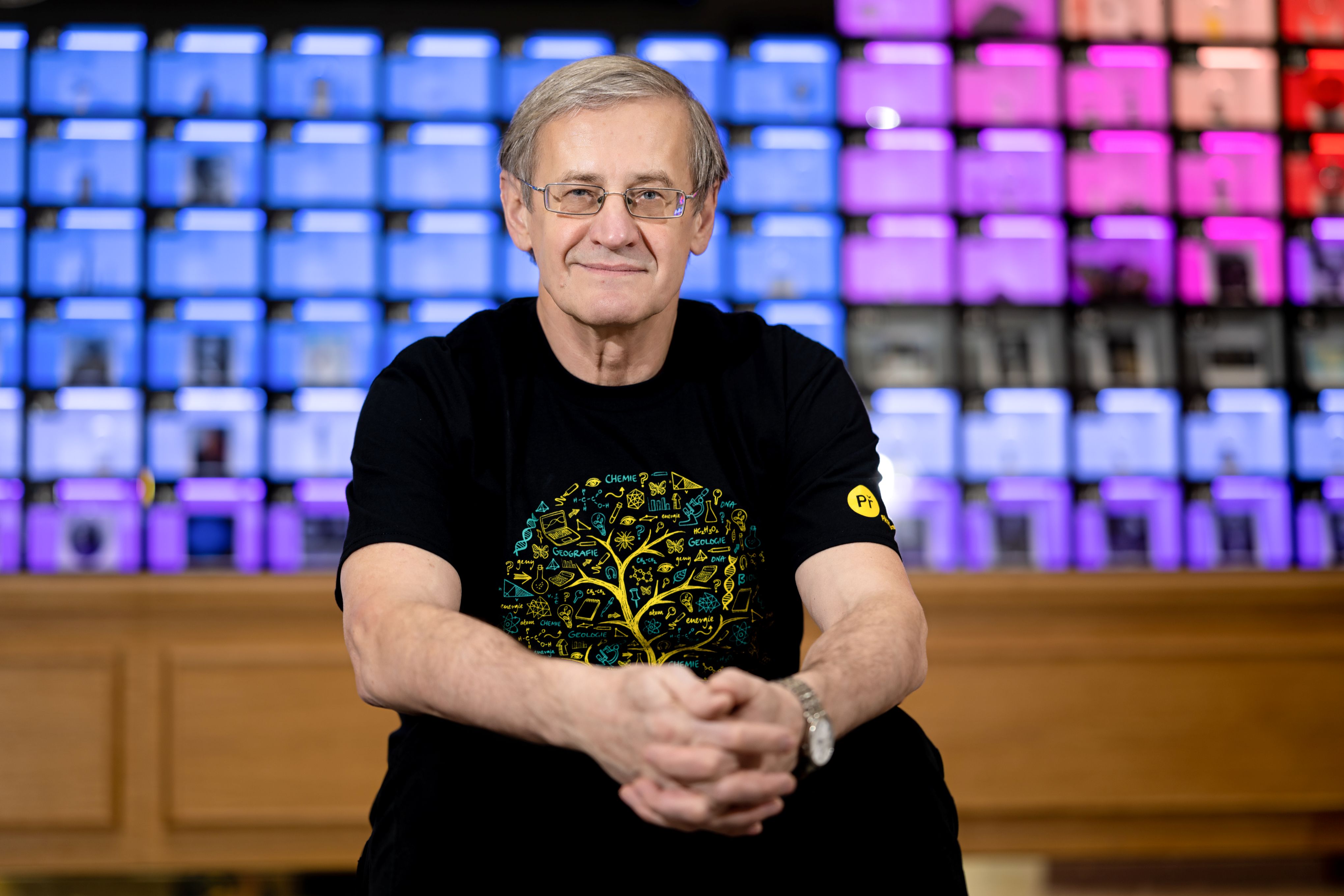
| Professor Jiří Zima |
| Since February 2026, he has served as rector of Charles University. An analytical chemist, he has been associated with Charles University for virtually his entire professional career. He studied analytical chemistry at the Faculty of Science of Charles University (1975–1980), where he subsequently earned his doctoral degree (1980) and his Candidate of Sciences degree (1985). He became an associate professor in 1998 and a full professor in 2009. Since 1985, he has been working at the Department of Analytical Chemistry at the Faculty of Science, Charles University, where he is engaged in teaching, research, and supervising master’s and doctoral theses. Within the faculty administration, he served as Vice-Dean for Development (2006–2012). From 2016 to 2024, he served as Dean of the Faculty of Science at Charles University. On October 31, 2025, he was elected by the Academic Senate of Charles University as candidate for the position of Rector of Charles University; his term as Rector began on February 1, 2026. He has received numerous professional awards for his scientific and pedagogical work. |