

On Wednesday, November 19, the National Information Day on ERC Grants took place at the Carolinum. Its aim was to present to the Czech scientific community the mission of the European Research Council (ERC), which organizes the most prestigious European individual grant competitions to support top-level research. The event was intended primarily for those interested in upcoming ERC calls, representatives of Czech universities and research organizations, as well as project support staff.
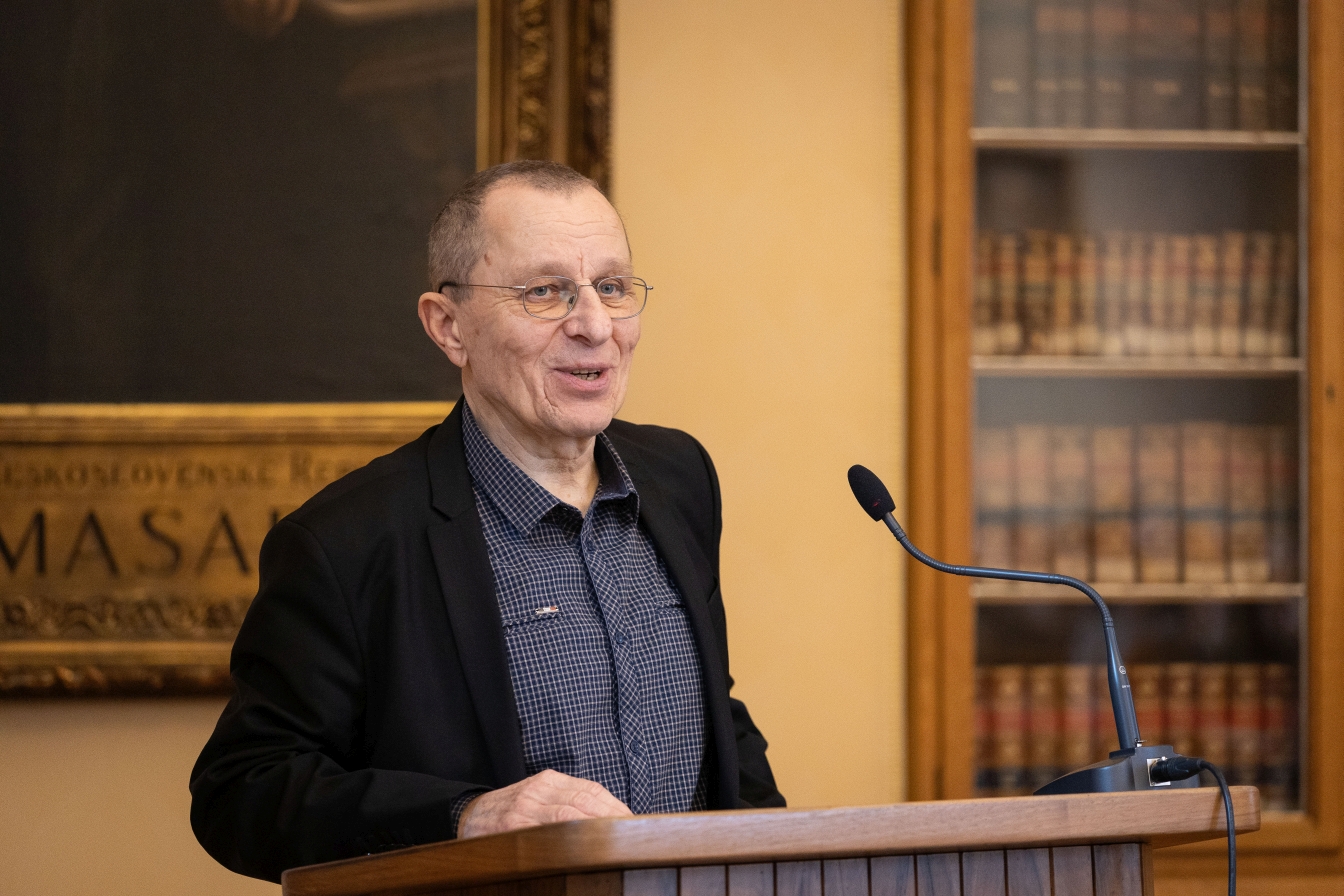
The opening speaker was Zdeněk Strakoš, coordinator of the Expert Group for Supporting ERC Applicants and former member and chair of an ERC evaluation panel. He reflected on the role of science in society, on what criteria “healthy” science should meet in general, and on the barriers that contribute to Czech researchers still not obtaining as many ERC grants as they could. He also spoke about the role of the Expert Group for Supporting ERC Applicants, which offers a helping hand through workshops, mentoring, and consultations, and about what can be done at the state level. “ERC offers help. But we are all responsible for the environment that helps our talents grow into leaders. It is up to us. Nobody else will do our part of the work,” he emphasized.
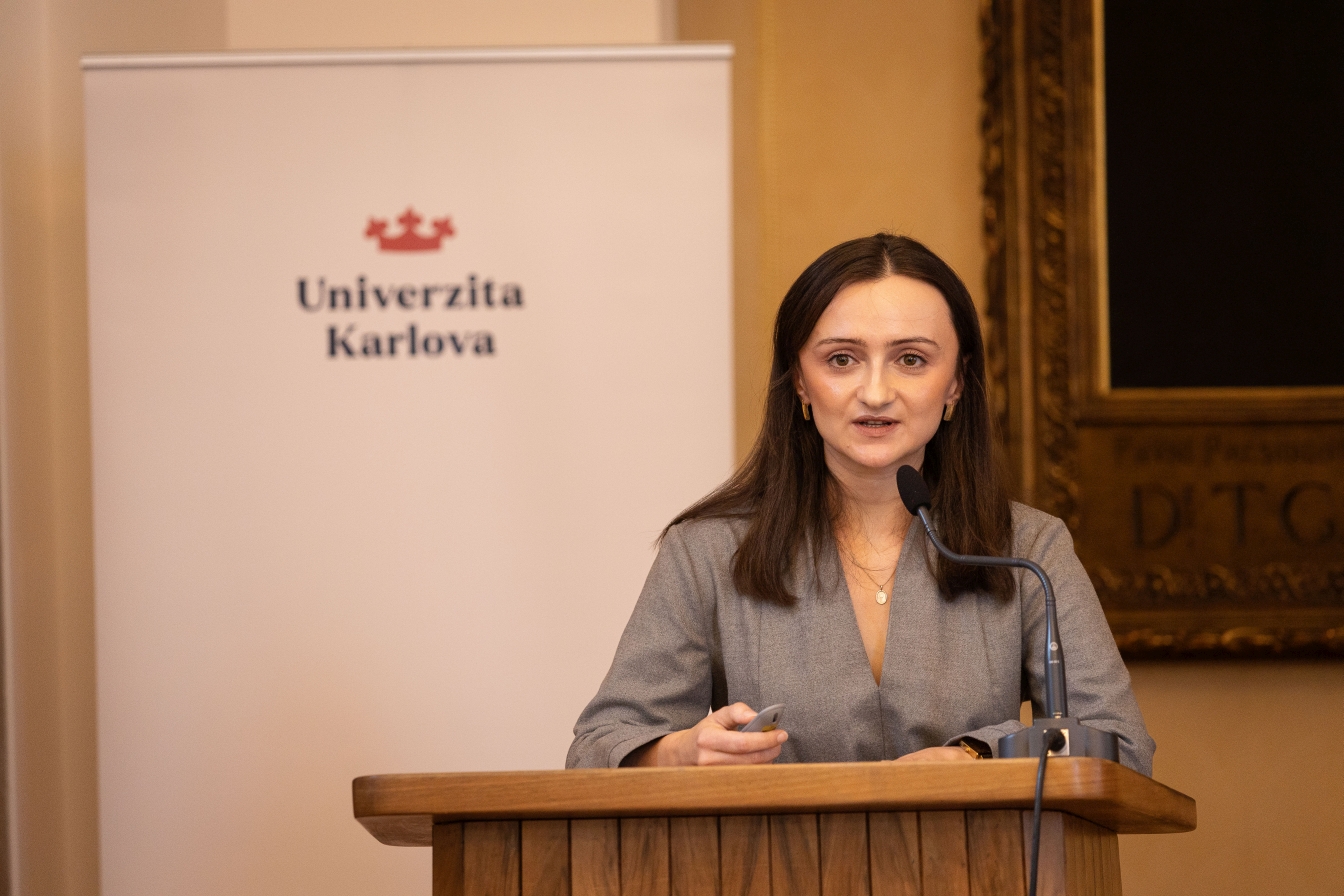
Ludmila Tysjačna, the national contact point for ERC from the Technology Centre Prague, introduced the latest rules for submitting applications to those who are just getting acquainted with ERC, including a new feature for the upcoming period – the ERC Plus grants.
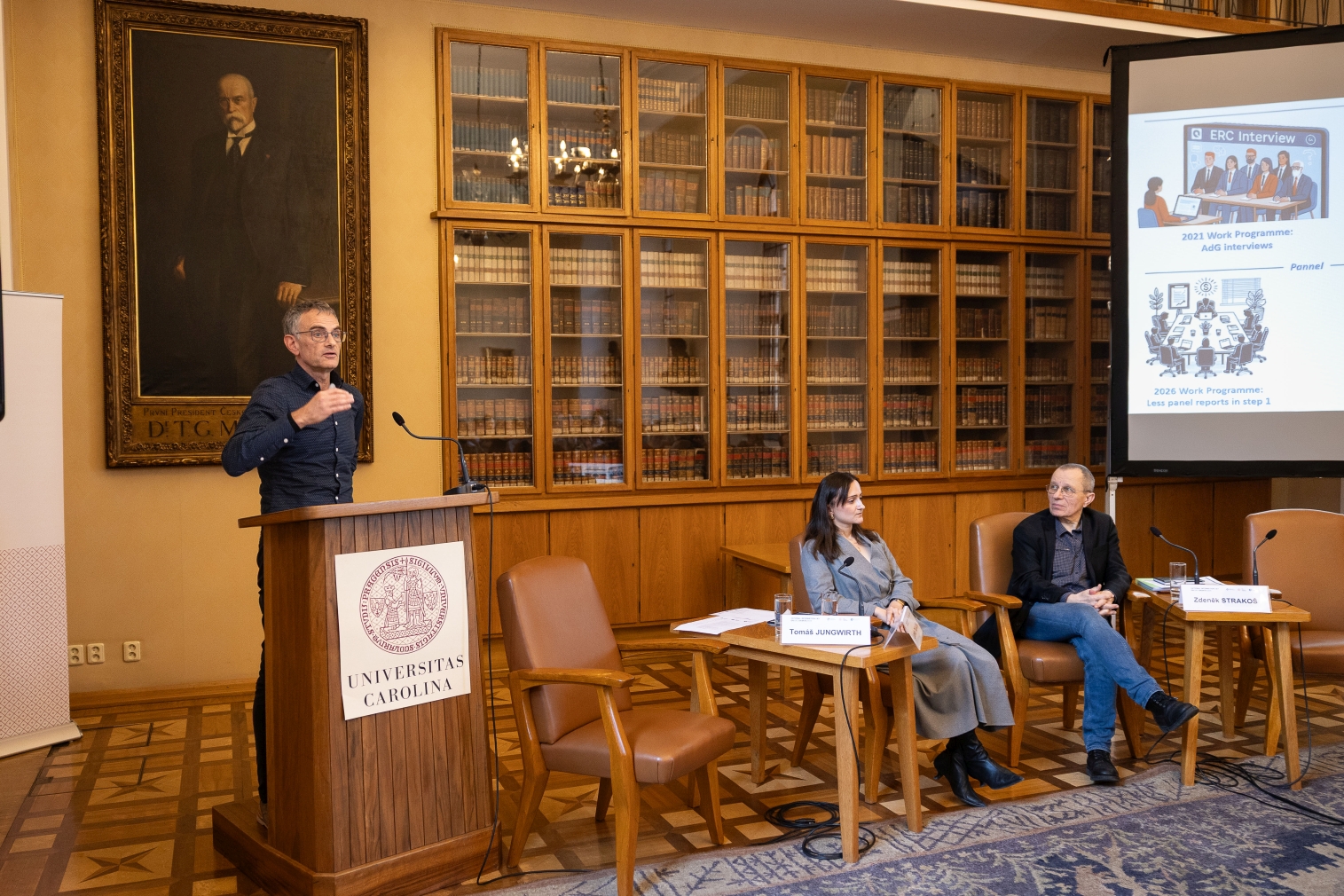
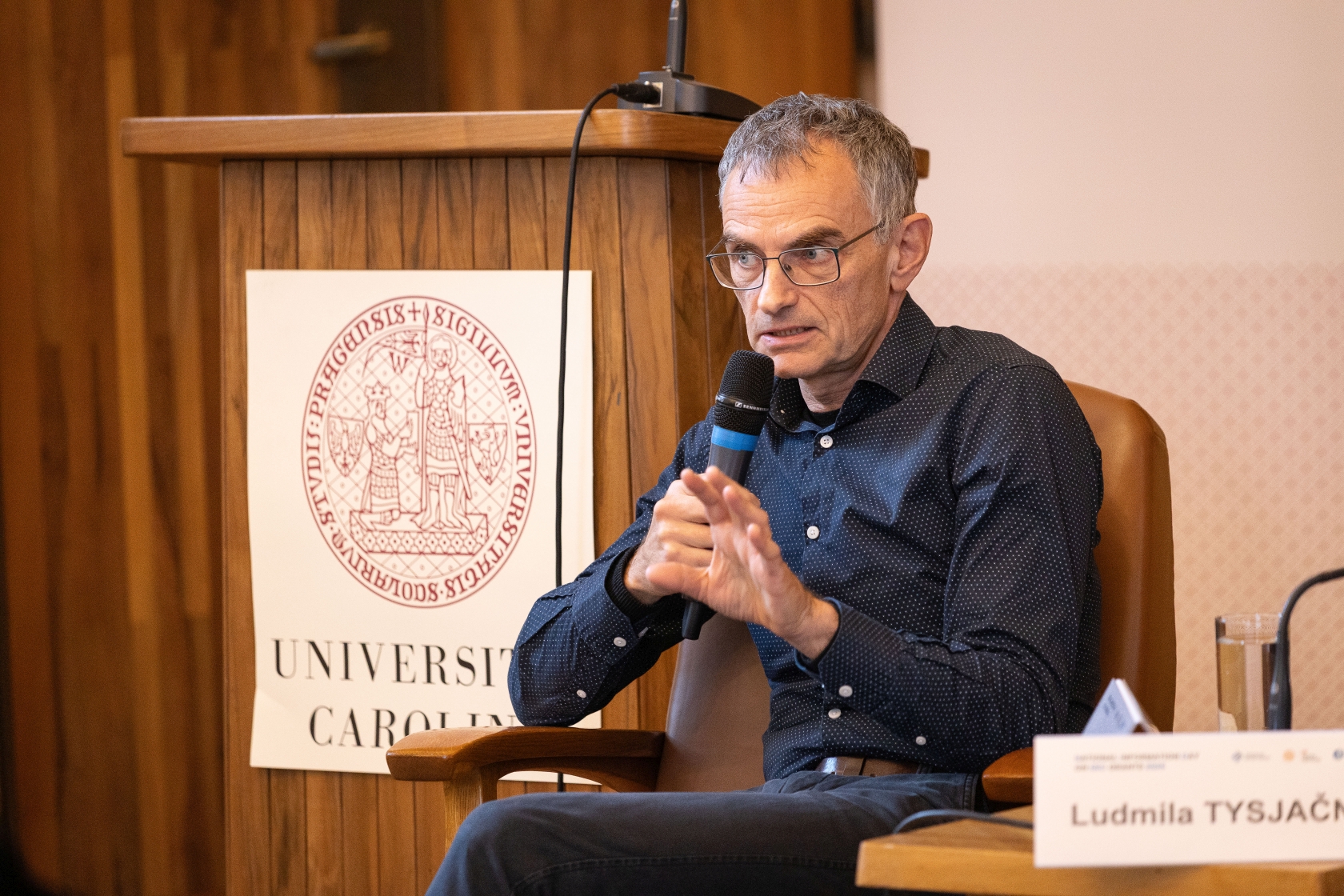
The morning block concluded with Tomáš Jungwirth, a successful holder of two ERC Advanced Grants, member of an evaluation panel, and also a former member of the Scientific Council, ERC’s main governing body. In his presentation, he guided participants through changes in the ERC evaluation process and project proposal structure that have occurred in recent years, and shared valuable advice and experience on how to impress evaluators in international competition.
Talk to your members of the European Parliament
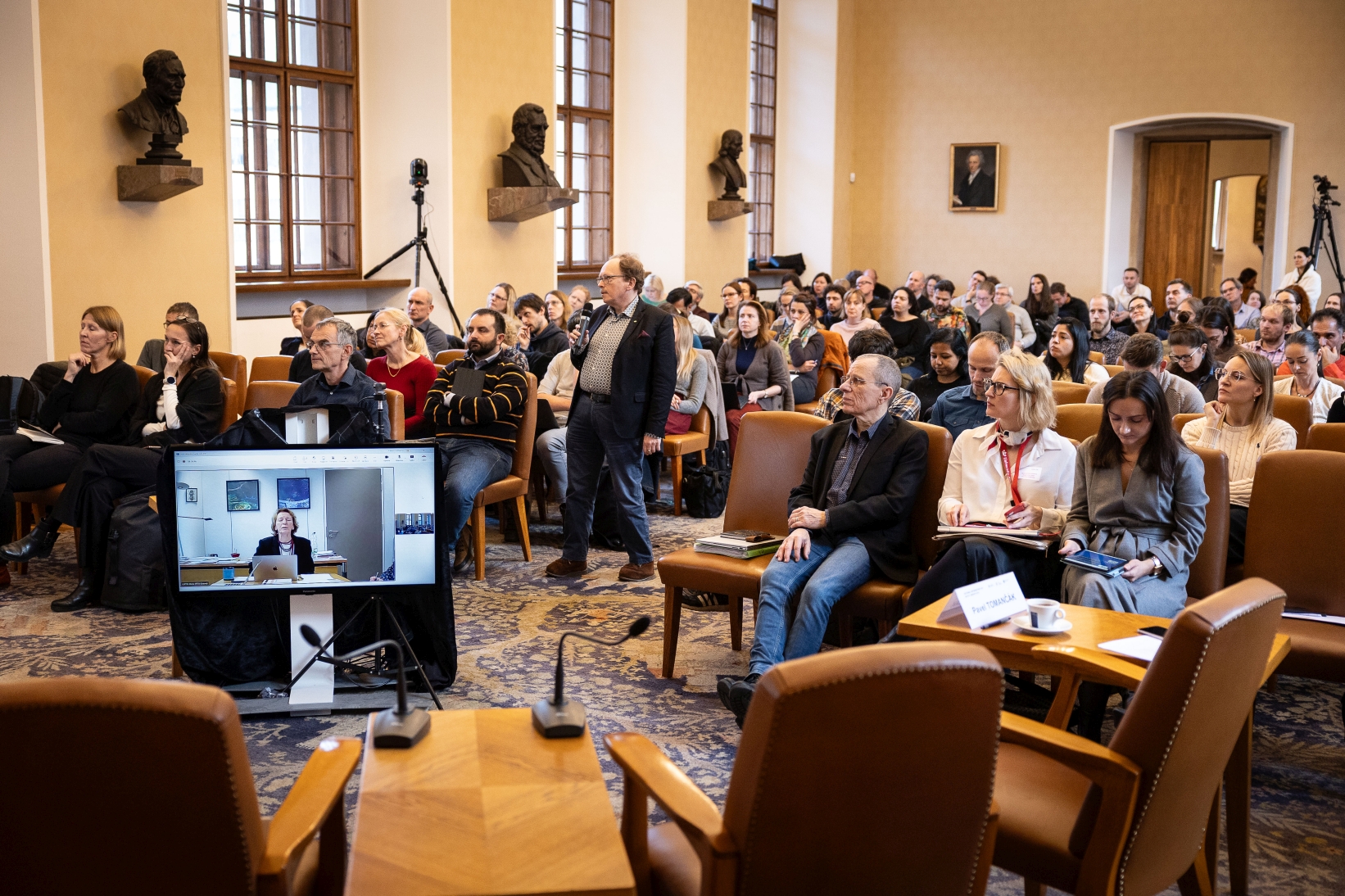
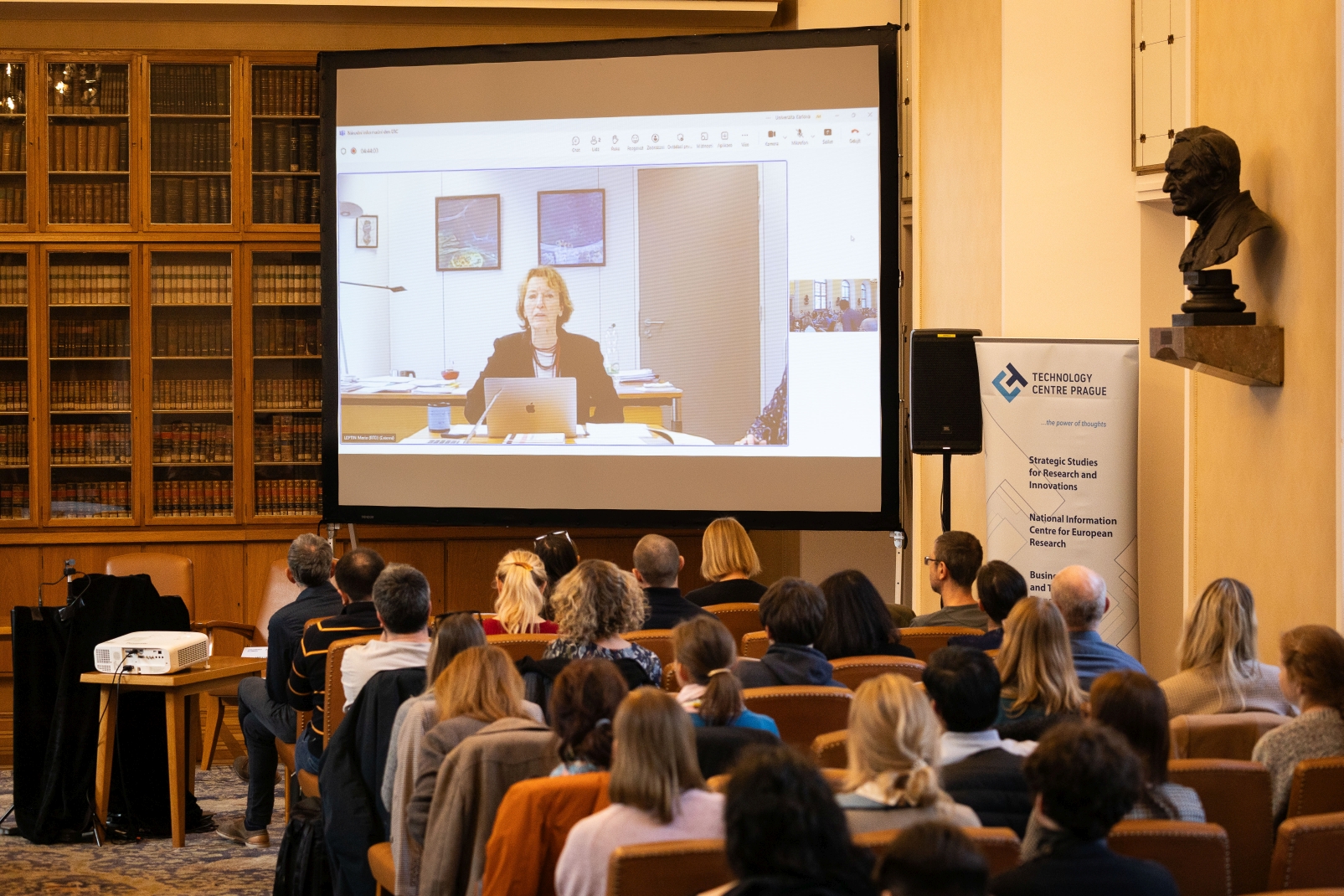
A special highlight of the program was an online address by ERC President Maria Leptin. She focused on explaining changes in the submission of ERC grants and the subsequent evaluation process, which also accommodates applicants from less successful countries. These changes give them the opportunity to better describe their professional journey and diverse achievements. Increasing emphasis is placed on the scientific ambition and creativity of the project. Maria Leptin also mentioned the upcoming ERC Plus super grant, designed for truly exceptional projects that cannot be realized through existing schemes. The ERC Plus grant will provide funding of up to €7 million for 7 years. Only 30 projects will be supported under this scheme (for comparison: in other ERC schemes – Starting, Consolidator, Advanced, and Synergy – over a thousand applications are supported in total). She also stressed the importance of connecting science and society: “Find out who your Members of the European Parliament are. Talk to them. Bring them into your labs, into your research groups. Tell them what you are working on and why it is important for Czechia and Europe to fund your research,” she urged the representatives of the scientific community.
The subsequent panel discussion, moderated by Pavel Tomančák, member of the Expert Group for Supporting ERC Applicants, ERC StG and AdG grantee, ERC panel member, CEITEC consortium and Max Planck Society, focused on the readiness of the Czech research environment, institutional support, and necessary systemic changes. The panel featured ERC holders Libor Barto, Kateřina Čapková, Elisabeth Hehenberger, Tomáš Jungwirth, and Adam Williamson. During the discussion, participants shared numerous insightful observations, highlighting in particular the need to create a supportive and motivating environment within institutions, including ensuring professional project support, was emphasized. The extremely important ERC-CZ national program, funded by the Ministry of Education, Youth and Sports, was also mentioned. The program is intended for applicants whose projects were highly evaluated in the ERC competition but for which there were insufficient funds available in the given call. However, its practical implementation requires a significant simplification of the administration.
Zdeněk Strakoš sums up the ERC National Information Day with the following words: “In order to succeed in international competition, our scientists must not only be involved in cooperation, but must also lead it at the highest global level, which applies in full to the ERC grants obtained. We are facing a difficult period in terms of science funding in Czechia. Together, we should strive even more for ERC grants. This will help talented scientists working in our country to mature into the leading figures we so badly need for the future. We are a small country. In order to fully exploit our potential in ERC calls, there must be no room for closed-mindedness or rivalry between institutions and individuals when supporting applicants. Unconditional mutual support and assistance must be imperative.”
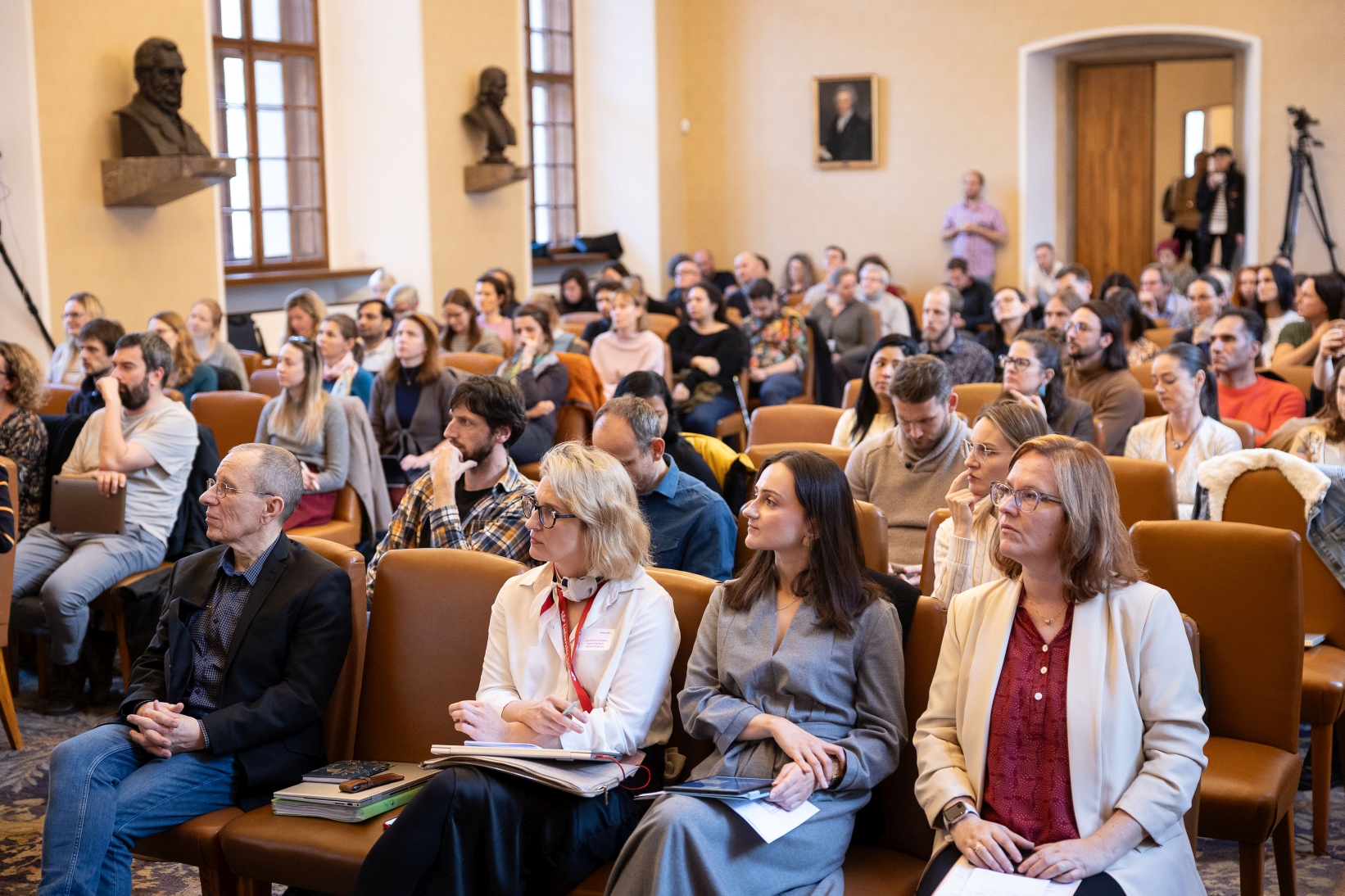
The event was co-organized by the Technology Centre Prague, the Expert Group for Supporting ERC Applicants, and Charles University.